How to Choose the Right Grass Protection Mats?
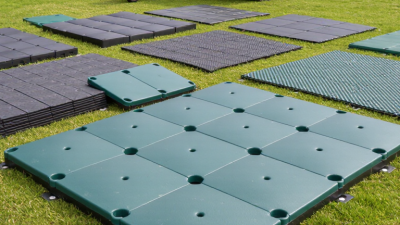
Choosing the right grass protection mats starts with the ground beneath them. A firm, dry lawn can tolerate different demands than soft soil after rain. A delivery van, a packed event crowd, and a wheelbarrow also create different pressures. The wrong mat may shift, trap moisture, or leave flattened tracks. Small details matter.
Dr. James B. Beard, a respected turfgrass scientist, offers a useful principle, paraphrased here rather than quoted verbatim: “Protect the growing turf, not just the visible blades.” That distinction helps guide this choice. Look at load capacity, mat size, surface grip, drainage openings, and how long the mats will stay down. Check the maker’s specifications against your actual equipment and site conditions. A rating alone does not tell the whole story.
There is no perfect mat for every lawn. On wet ground, even a strong panel can press soil tightly and slow recovery. That risk is easy to underestimate. Before covering a large area, test a small section and inspect the grass afterward. Notice whether water drains, edges stay level, and tires cross without slipping. This guide explains how to compare grass protection mats for landscaping, construction access, garden work, and outdoor events. It also considers storage and reuse, because a mat that is awkward to handle may stay unused. The best choice is practical, not merely impressive on a product page.
Identify the Site Conditions and Type of Grass Protection Needed
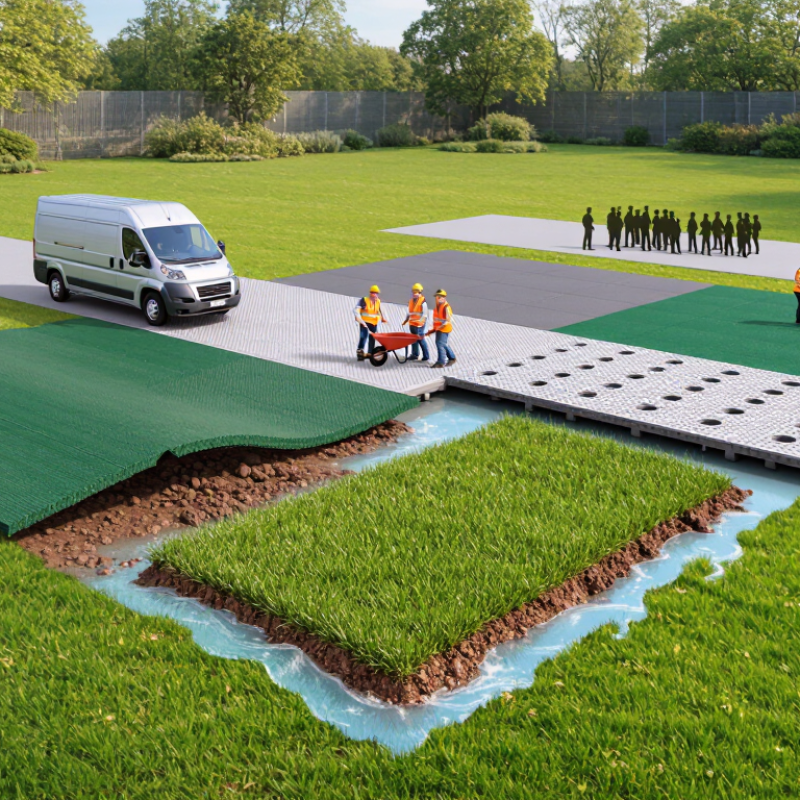
Before selecting grass protection mats, examine the site when it is likely to be used. Note whether the ground is level, sloped, damp, or often soft after rain. Check how people or vehicles will cross it, and estimate how long the grass will remain covered. Small details matter. A narrow access route for foot traffic needs different support from a path carrying loaded equipment.
Match the mat’s load capacity and surface design to the expected use. For pedestrians, lighter panels may be sufficient; vehicles require products rated for their weight and movement. On wet or compacted soil, look for a design that spreads pressure without trapping excess water. Open-grid mats can admit some light and air, but they do not remove the risk of stressed grass beneath prolonged coverage. The grass type, root depth, and season also affect recovery.
Inspect the lawn before installation. Thin patches, shallow roots, and existing ruts can signal that the site needs lighter traffic or a shorter covering period. Check that panels sit flat and do not create raised edges where people could trip. After use, lift them carefully and look for flattened blades, muddy areas, or damage to the soil. I have found that site conditions can change quickly after rain, so an earlier assessment may need revisiting. A mat that works well on firm ground may perform poorly on saturated turf.
How to Choose the Right Grass Protection Mats? - Identify the Site Conditions and Type of Grass Protection Needed
| Site condition |
Typical use or traffic |
Suitable protection type |
What to check |
| Firm, dry, level lawn |
Short-term pedestrian access or a small gathering |
Lightweight, permeable ground-protection panels or temporary turf mesh |
Choose a surface that provides grip and spreads foot pressure. Secure edges and inspect the grass after use. |
| Firm lawn with frequent foot traffic |
Walkways, queues, or repeated access over the same route |
Interlocking pedestrian panels or a purpose-designed grass reinforcement mesh |
For longer-term reinforcement, confirm that the mesh is suitable for the intended installation and grass growth; some systems require ground preparation and time to establish. |
| Damp soil or recently watered grass |
Pedestrians, hand carts, or occasional light equipment |
Rigid, load-spreading panels with a slip-resistant surface |
Wet ground can deform more easily. Check the ground firmness, panel connection, and rated load; avoid sharp turns and sudden braking. |
| Soft, saturated, or muddy ground |
Repeated access or wheeled traffic where rutting is a concern |
Heavy-duty ground-protection panels selected for the expected ground and vehicle loads |
A mat does not increase the soil’s underlying strength. Assess ground-bearing capacity and use a qualified site assessment for heavy or repeated vehicle traffic. |
| Uneven ground, roots, or shallow depressions |
Temporary pedestrian route or light wheeled access |
Flexible panels for minor contours, or rigid panels over a properly prepared, even base |
Remove trip hazards where practical. Do not bridge significant voids or allow panels to rock; uneven support can concentrate loads. |
| Sloping lawn or route |
Pedestrians or equipment moving uphill and downhill |
Panels or mats with suitable traction and a secure connection system |
Check the product’s slope guidance, surface grip, and anchoring method. Do not use a mat that can slide or separate under traffic. |
| Vehicle access across turf |
Cars, delivery vehicles, or powered equipment |
Vehicle-rated load-spreading panels designed for the vehicle and site conditions |
Compare the vehicle’s wheel loads and turning forces with the product’s stated ratings and installation requirements. Do not rely on a pedestrian mat for vehicle use. |
| Grass covered for an extended period |
Multi-day events, storage, or a temporary work area |
Permeable panels where appropriate, with planned inspection and exposure breaks |
Cover can restrict light and airflow and may stress or discolor grass. Follow the product guidance, limit cover time where possible, and check the turf regularly. |
Selection note: Match the mat to the actual soil condition, traffic type, expected load, slope, and duration of use. Check the manufacturer’s published load ratings and installation instructions; site conditions can substantially affect performance.
Compare Mat Materials, Designs, and Grass-Growth Compatibility
Grass protection mats differ in material, opening size, and how they carry weight. Rigid polypropylene or polyethylene grids spread foot and wheel loads, but tightly spaced ribs can shade shoots and trap damp debris. Coir or jute mats let more light and water reach the soil. They also break down, so they suit temporary paths better than repeated vehicle access. Check the product’s actual aperture, not just its label. Grass needs room to emerge.
The FAO’s 2015 Status of the World’s Soil Resources reports that about 33% of global soils are moderately to highly degraded, with compaction among the pressures identified. This is not a mat-performance rating, but it makes load distribution and drainage worth checking. USDA NRCS soil-quality guidance identifies bulk density and infiltration as useful indicators of compaction and water movement. On site, compare the soil beneath a test mat with nearby uncovered soil after rain. Does water still soak in? Do shoots reach the openings? Not every lawn responds alike. A dense, shaded lawn may struggle beneath a grid that works well in open, sunny turf. I would avoid assuming that a larger opening always means healthier grass; fit, traffic, and soil moisture all matter.
Match Load Capacity to Vehicles, Foot Traffic, and Equipment
Choose a grass protection mat by the load it must carry, not just the vehicle’s advertised weight. A loaded van, for example, puts different pressure on the ground than a person walking across it. Check the mat’s rated capacity and whether that rating applies to static loads, moving loads, or both. Movement matters. Braking, turning, and uneven weight distribution can increase stress on the mat and the turf beneath it.
For foot traffic, consider how many people will pass over the same route and how often. A garden gathering may need less capacity than a regularly used access path. Small wheels are tougher. Wheelbarrows, carts, and compact equipment concentrate weight across a smaller contact area, so confirm that the mat suits their wheel loads. For machinery, check axle loads and turning requirements rather than relying only on total machine weight. A common planning mistake is to size mats for the average day, then overlook delivery vehicles or wet-weather use.
Ground conditions also affect performance. Soft, saturated soil can shift under loads that seem modest on firm ground. Match the mat’s capacity to the heaviest expected use, then check its dimensions, joining method, and manufacturer’s load guidance. If the figures are unclear, ask for clarification before installation. That extra check can prevent a mat from flexing, separating, or damaging the grass. Even a careful estimate can miss something. Revisit it when site use changes.
How to Choose the Right Grass Protection Mats
Compare the approximate mass of typical users and equipment before selecting a mat system.
These representative masses are not mat load ratings. Actual suitability depends on wheel or track contact area, axle loads, movement, ground conditions, and how the mats are installed. Check the manufacturer's rated capacity for your specific application, and allow for dynamic loads.
Assess Drainage, Installation, and Reusability Requirements
How to Choose the Right Grass Protection Mats?
Assess Drainage, Installation, and Reusability Requirements
Start by checking how water moves across the area. After rain, look for puddles, soft soil, and slopes that direct runoff. Choose mats with openings suited to the site, so water can pass through instead of collecting underneath. A permeable mat still cannot fix poor drainage or compacted soil. That detail is easy to miss.
Installation should match the ground and expected use. Firm, even ground helps mats sit flat and reduces tripping edges. Check how they connect, whether anchors are needed, and how vehicles or foot traffic may shift them. Test a small section before covering a large lawn. It may reveal a problem, though not every site behaves the same way.
Tips: After rain, inspect beneath a lifted mat for standing water or crushed grass. For repeated use, choose a mat that can be cleaned, stacked, and stored without cracking. Record where you place each section; reinstallation is easier when you know which areas need extra support. Reusable mats still need inspection before each use. A damaged connector can leave gaps.
Check Mat Dimensions, Safety Features, and Overall Value
How to Choose the Right Grass Protection Mats?
Check the usable dimensions, not just the panel size. Measure the full route, turning areas, and any soft edges where wheels may sink. A 1.2-by-2.4-metre panel covers 2.88 square metres before overlaps or gaps. Small layout errors add up. Confirm that connectors stay secure and edges sit flat, especially where people carry equipment or push carts. Textured surfaces and drainage openings can help manage wet grass, but they do not make every surface slip-proof. The U.S. Bureau of Labor Statistics recorded 450,540 private-industry injury cases involving falls, slips, or trips in 2023. That is a useful reminder to assess transitions and footing, not only load capacity.
Ask for a stated load rating and the conditions behind it: vehicle type, wheel contact area, ground firmness, and duration. A high rating on paper may not suit saturated soil. If an accessible route is required, look for relevant test evidence, such as evaluation under ASTM F1951; the standard measures surface accessibility, not every site-specific risk. For value, compare price per usable area, expected reuse, cleaning time, and replacement needs. I would also check whether spare connectors are available. A low-cost mat can become expensive when it shifts or cracks. Product sheets rarely tell the whole story. Inspect a sample on actual grass, if possible, and note where water pools or edges lift.