Pease Pottage 01403 275 276
Petersfield 01730 777 350
Maidstone 01795 843 866
Cullompton 01884 211 788

Top 10 Geotech Fabric Manufacturers Worldwide

Choosing a geotech fabric manufacturer requires more than comparing product catalogs or headline production volumes. This guide examines ten influential suppliers serving roads, railways, drainage systems, coastal works, and engineered landfills worldwide. The term geotech fabric covers several woven and nonwoven materials. Each supports different functions, including separation, filtration, reinforcement, drainage, and erosion control. A fabric beneath a gravel road must resist puncture. A drainage layer must allow water to pass without losing soil.

Our comparison considers manufacturing experience, polymer quality, product consistency, testing practices, technical support, and documented project performance. We also examine how clearly manufacturers explain tensile strength, apparent opening size, permeability, mass, and long-term durability. Independent standards and laboratory results matter, but they never replace project-specific design. Soil type, installation quality, ultraviolet exposure, loading, and climate can change the outcome. Performance matters. Claims need checking.

This overview supports civil engineers, contractors, distributors, and buyers building a dependable shortlist. It does not treat global scale as automatic proof of superior performance. A large factory may offer reliable supply, while a smaller specialist may provide closer technical guidance. Some information changes by region, product line, or publication date. Markets change. Readers should verify current specifications, certifications, warranties, and local availability before purchasing. This ranking is a practical starting point, not a final engineering decision. That distinction matters when geotech fabric supports public infrastructure, protects waterways, or remains buried for decades.

Top 10 Geotech Fabric Manufacturers Worldwide

Geotextile Fabrics: Definition, Functions, and Main Types

Top 10 Geotech Fabric Manufacturers Worldwide

Geotextile Fabrics: Definition, Functions, and Main Types

Geotextile fabric is a permeable textile used with soil, aggregate, and water. It is usually made from polypropylene or polyester fibers. Unlike waterproof membranes, geotextiles allow controlled fluid movement through their structure. Their performance depends on fiber quality, pore size, thickness, and installation conditions.

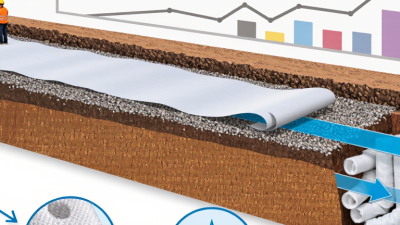
These fabrics separate weak soil from crushed stone beneath roads and railways. This prevents mixing and helps preserve the designed drainage layer. They can also filter sediment, drain excess water, reinforce slopes, and protect surfaces from erosion. Around a drainage trench, a properly selected geotextile lets water pass while retaining fine soil particles. During field inspections, poor overlaps and sharp stones often cause avoidable damage. Small installation errors matter.

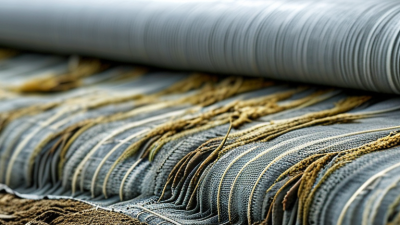
The main types are woven, nonwoven, and knitted geotextiles. Woven fabrics provide high tensile strength and suit road reinforcement or load-bearing applications. Nonwoven fabrics have a felt-like structure and offer strong filtration, drainage, and cushioning performance. Knitted geotextiles are less common but can provide flexibility in specialized designs. Selection should consider soil grading, expected loads, water flow, ultraviolet exposure, and construction equipment. A fabric that appears strong may still clog under fine soil. Laboratory testing and project-specific specifications remain essential.

Top 10 Geotech Fabric Manufacturers Worldwide - Geotextile Fabrics: Definition, Functions, and Main Types

Geotextile fabrics are permeable textile materials used in contact with soil, rock, or other geotechnical materials. The product categories below represent widely manufactured geotextile fabric types and their established engineering functions; no company or brand data is included.

Rank Geotextile Fabric Type Common Polymer or Fiber Manufacturing Structure Primary Functions Typical Applications Key Characteristics
1 Woven Polypropylene Geotextile Polypropylene (PP) Interlaced tape yarns or monofilaments Separation Reinforcement Filtration Road subgrades, haul roads, working platforms, embankments, and soft-soil stabilization High tensile strength, low elongation, good chemical resistance, and generally low water permeability compared with nonwoven products
2 Nonwoven Polypropylene Geotextile Polypropylene (PP) Randomly oriented fibers bonded by needle-punching or heat Filtration Drainage Separation Protection French drains, retaining-wall drainage, underlayment, landfill systems, and erosion-control works High permeability, good soil filtration, flexibility, cushioning capacity, and resistance to many acids and alkalis
3 Nonwoven Polyester Geotextile Polyester (PET) Staple or continuous fibers bonded mechanically or thermally Filtration Drainage Protection Drainage layers, coastal works, rail applications, reservoir protection, and landfill liners Good mechanical performance and creep resistance; requires careful chemical compatibility assessment in high-pH environments
4 Woven Monofilament Geotextile Polypropylene or polyester Woven round monofilament yarns Filtration Separation Flow Control Drainage trenches, shoreline protection, riverbank stabilization, and hydraulic engineering Relatively uniform openings, strong filtration performance, and improved resistance to clogging in suitable soil conditions
5 Woven Multifilament Geotextile Polypropylene or polyester Woven bundles of fine continuous filaments Filtration Separation Reinforcement Road construction, railway formations, embankments, and soil improvement projects High tensile strength, controlled pore openings, and good hydraulic performance when properly selected for the soil
6 High-Strength Reinforcement Geotextile High-tenacity polyester or polypropylene Heavy-duty woven fabric, often with engineered yarn orientation Reinforcement Load Distribution Stabilization Mechanically stabilized earth walls, steep slopes, embankments, basal reinforcement, and mining roads High tensile capacity, controlled strain, resistance to installation damage, and long-term design capability
7 Geotextile Filter Fabric Polypropylene or polyester Usually needle-punched nonwoven fabric Filtration Separation Drainage Pipe surrounds, underdrains, retaining walls, subsoil drainage, and pavement drainage systems Allows water to pass while retaining soil particles; performance depends on apparent opening size, permeability, and soil gradation
8 Geotextile Protection Fabric Polypropylene or polyester Thick needle-punched nonwoven fabric Cushioning Protection Separation Protection of geomembranes, geosynthetic clay liners, reservoirs, canals, and landfill containment systems High mass per unit area, puncture resistance, and cushioning performance against stones or construction stresses
9 Erosion-Control Geotextile Synthetic fibers, natural fibers, or blended fibers Open-weave mesh, mat, blanket, or three-dimensional textile structure Erosion Control Surface Stabilization Vegetation Support Slopes, drainage channels, riverbanks, cut-and-fill areas, and newly seeded surfaces Reduces surface soil movement, slows runoff, and can support vegetation establishment; service life varies by material
10 Biodegradable Natural-Fiber Geotextile Coconut coir, jute, straw, or other plant fibers Woven net, open mesh, mat, or erosion-control blanket Temporary Erosion Control Vegetation Support Surface Protection Landscaping, restoration projects, roadside slopes, streambanks, and short-term soil stabilization Biodegrades over time, provides temporary surface protection, and is suitable where permanent synthetic reinforcement is unnecessary

Criteria for Ranking the Top 10 Global Geotextile Manufacturers

Top 10 Geotech Fabric Manufacturers Worldwide

Criteria for Ranking the Top 10 Global Geotextile Manufacturers

Ranking global geotextile manufacturers requires more than comparing annual sales. Our assessment begins with field experience across roads, drainage systems, railways, ports, and landfill projects. Manufacturers earn stronger scores when their fabrics perform under real soil pressure, repeated loading, moisture, and temperature changes. Laboratory strength matters. Jobsite performance matters more.

Product quality forms the largest ranking category. We examine tensile strength, puncture resistance, filtration stability, permeability, and seam consistency. Independent testing records support technical claims. Clear product data sheets also reveal engineering maturity.

A reliable manufacturer should provide traceable raw materials, controlled production batches, and practical installation guidance. Small details often expose weak systems.

Sustainability and service receive separate scores. We review recycled content, manufacturing waste controls, packaging choices, and the expected service life of each fabric. Technical teams should respond with useful calculations, not vague promises. Delivery reliability, regional stock, warranty clarity, and after-sales support also influence the final position.

No ranking is flawless. Public information can hide production differences between factories, while project results may depend on installation quality. That limitation deserves attention.

We therefore compare evidence from certifications, independent reports, customer case records, and direct technical discussions before assigning each manufacturer a position. Consistent performance beats impressive advertising.

Profiles of the Top 10 Geotextile Fabric Manufacturers Worldwide

Top 10 Geotech Fabric Manufacturers Worldwide

Profiles of the Top 10 Geotextile Fabric Manufacturers Worldwide

The top ten geotextile manufacturers differ by polymer expertise, production scale, and project support. Their products commonly include woven, nonwoven, knitted, and composite fabrics.

According to Grand View Research, the global geotextiles market was valued at approximately USD 8.6 billion in 2023. The same report expects continued growth through 2030, driven by roads, drainage, erosion control, and waste containment. MarketsandMarkets also projects strong expansion, with infrastructure investment supporting demand for durable separation and filtration materials.

A practical manufacturer profile should examine more than revenue. The first profile represents large-scale woven fabric producers serving highways and railways. The second focuses on nonwoven specialists supplying drainage and filtration layers. The third covers manufacturers with high-strength reinforcement products. The fourth emphasizes geotextiles for coastal and hydraulic engineering. The fifth serves landfill and containment applications.

The sixth develops needle-punched fabrics for road maintenance. The seventh supplies construction fabrics with recycled polymer content. The eighth supports regional contractors with rapid delivery. The ninth provides engineered composites for demanding soil conditions. The tenth combines laboratory testing with site-level technical guidance.

Field experience shows that roll width, seam behavior, puncture resistance, and ultraviolet exposure can affect installation results. ISO 10319 tensile testing and ISO 12236 puncture testing provide useful comparison points. Still, laboratory performance may not predict every site outcome. The ranking is not flawless. Soil variability, installer skill, and drainage design can change performance significantly. That gap deserves more attention.

Product Range, Technologies, and Industry Applications

Top 10 Geotextile Fabric Manufacturers Worldwide: Product Range, Technologies, and Industry Applications

Leading geotextile manufacturers typically supply woven, nonwoven, knitted, and composite fabrics. Their ranges cover separation, filtration, drainage, reinforcement, and erosion control.

According to Grand View Research, the global geotextiles market was valued at approximately USD 7.9 billion in 2023. Demand is growing through road construction, railways, landfills, coastal protection, and mining infrastructure.

Technology differences matter on site. Woven fabrics provide high tensile strength for weak subgrades and reinforced embankments. Needle-punched nonwovens offer greater elongation and filtration around drainage pipes. Some producers add geomembrane layers, geogrids, or geocomposites for complex water-control systems.

Manufacturers increasingly use automated coating, laser inspection, and digital batch traceability. These controls help engineers verify mass per unit area, puncture resistance, permeability, and seam quality.

Field performance is not guaranteed by product labels alone. Soil gradation, installation damage, ultraviolet exposure, and clogging can change results. ASTM and ISO testing gives useful evidence, but laboratory values may not mirror harsh construction sites.

A 2024 MarketsandMarkets report identifies infrastructure and environmental applications as major growth drivers for geosynthetics. Still, project teams should request independent test records, installation guidance, and long-term design assumptions.

The better choice is often less obvious. A cheaper fabric may fail after one damaged section, while an overdesigned fabric can waste budget and materials.

Global Market Presence, Standards, and Sustainability Practices

Top 10 Geotech Fabric Manufacturers Worldwide

Global demand for geotextiles is expanding with roads, railways, ports, and flood-control projects. MarketsandMarkets estimated the geotextiles market at about USD 7.1 billion in 2023. Its report projects growth to nearly USD 11.1 billion by 2028. Asia-Pacific remains the largest regional market, supported by rapid infrastructure investment. Europe and North America apply stricter performance documentation and environmental requirements. Market presence now means more than factory capacity. It requires dependable testing, regional technical support, and consistent delivery across borders.

Standards provide the practical baseline. ISO 10318 defines key geosynthetic terms, while ISO 9862 covers sampling and specimen preparation. ASTM methods assess tensile strength, puncture resistance, water flow, and long-term durability. These tests matter on site. A torn roll beside a drainage trench can delay several trades. Independent laboratories and documented quality systems improve confidence, although certificates cannot replace field inspection. That weakness deserves attention.

Sustainability claims need measurable evidence. The European Environment Agency reports that construction and demolition waste represents more than one-third of total waste generated in the European Union. Geotextile manufacturers are therefore increasing recycled polymer content, take-back programs, and environmental product declarations. Life-cycle assessment should examine raw materials, manufacturing energy, transport, installation, and end-of-life recovery. Recycled content alone is not enough. A lower-carbon product may still underperform if replacement is frequent. The industry also needs clearer, comparable data. Current reporting remains uneven across regions, and some environmental claims are difficult to verify.