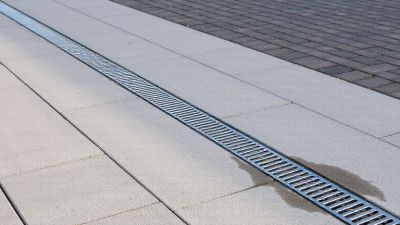
Choosing among China’s best ACO drain manufacturers and suppliers takes more than comparing prices. Buyers need to confirm whether a company supplies genuine ACO products, compatible drainage systems, or its own channel drains. Ask for clear product identification and documentation. Details matter.
A dependable supplier should explain materials, load ratings, channel dimensions, outlet positions, and grate options. For a loading bay, a heavy-duty grate may be essential; a garden path may need a lighter system. Request drawings and installation guidance before placing an order. Check how the channel joins, where water discharges, and whether replacement grates are available. These practical details can prevent costly changes on site.
This guide introduces suppliers, product ranges, and evaluation points for sourcing an aco drain in China. It also highlights questions about manufacturing capability, quality checks, communication, and after-sales support. Look for verifiable factory information, consistent specifications, and sample or inspection options where appropriate. A polished catalog is useful, but it cannot prove product performance on its own. No supplier is perfect. Even experienced buyers can overlook a small outlet detail or assume two grates are interchangeable. Compare evidence, clarify requirements in writing, and match each drainage system to its intended location.
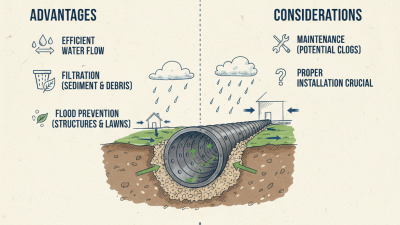
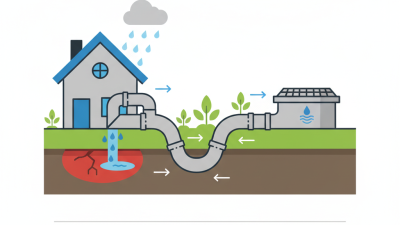
A linear channel drain intercepts runoff before it spreads across a yard, loading bay, or pedestrian walkway. Water passes through a grate, enters the channel, and flows toward an outlet or collection point. The channel’s fall, outlet size, and catchment area all affect performance. Small details matter. Leaves and grit can reduce flow, especially near corners and low points. EPA’s Protecting Water Resources with Smart Growth reports that stream health can decline when impervious cover reaches about 10% of a watershed, with severe impacts often observed around 25%. This helps explain why well-planned surface drainage matters in paved areas.
A drainage system does more than move water away. It helps limit standing water, reduces slip risks, and directs runoff to an approved discharge or treatment point. Designers need local rainfall data, surface area, slope, and expected debris when sizing channels. A narrow outlet may become the bottleneck, even when the channel appears generously sized. It can clog. Regular access for cleaning is therefore part of the design, not an afterthought.
When evaluating Chinese manufacturers and suppliers, buyers can request hydraulic calculations, material specifications, grate load-test documentation, and installation details. Check whether channel sections connect securely and whether the outlet suits the site layout. Ask how sediment is removed after construction; fine mortar residue can remain hidden inside. Product data is useful, but site conditions still matter. A design that works on a clean drawing may need adjustment around real thresholds, uneven paving, and heavy leaf fall.
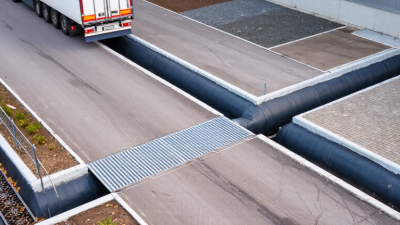
China’s drainage projects use several channel-drain formats, selected by water volume, traffic load, and installation depth. The National Bureau of Statistics reported a 66.16% urbanization rate at the end of 2023. That figure points to sustained demand for urban infrastructure, but each site still needs its own drainage assessment.
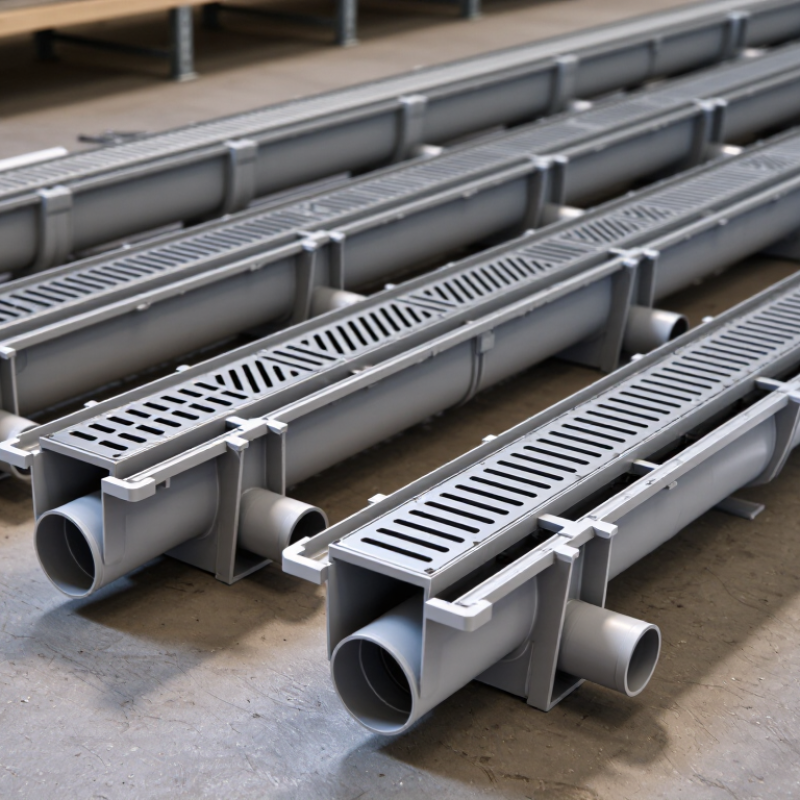
Common types include polymer-concrete channels with removable grates, narrow slot drains, and plastic channel systems. Grated channels suit roads, courtyards, and loading areas where leaves or grit need clearing. Slot drains create a discreet line across paved surfaces. Plastic channels are lighter and easier to cut on site, though their load rating must match expected traffic. Shallow-profile units can help where excavation depth is limited. A detail is easy to miss: channel capacity depends on the outlet and pipework, not just the visible opening.
Tips: Check the channel’s load class, grate material, and outlet position before ordering. Mock up a short run on site. Even a well-sized drain can underperform if the paving slopes away from it.
| Drain Type | Typical Construction and Materials | Common Applications | Typical Load-Class Considerations | Configuration Notes |
|---|---|---|---|---|
| Grated linear channel drain | Linear channel body, commonly made from polymer concrete or plastic, with a removable metal or plastic grate. | Walkways, courtyards, car parks, service areas and road drainage. | Available designs may cover classes from A15 to higher classes such as D400 or above; the rating depends on the complete channel-and-cover system. | Grate pattern, channel depth, outlet position and hydraulic capacity are selected to suit the site design. |
| Slotted channel drain | Channel with a narrow, continuous surface opening; the channel body is commonly polymer concrete or plastic. | Pedestrian areas, paved public spaces and locations where a discreet surface opening is preferred. | Often specified for pedestrian or light-vehicle areas, but the permitted class is product-specific and must be checked against the system rating. | The narrow opening can provide a less visually prominent finish; access for cleaning should be considered during design. |
| Kerb drainage channel | Combined kerb and drainage arrangement, typically using a precast or engineered channel with a surface inlet. | Road edges, traffic islands and urban streets where runoff needs to be collected along the kerb line. | Roadside installations commonly require a class appropriate to the traffic area, often C250 or D400; confirm the specified location and system certification. | Inlet layout, kerb alignment, outlet connections and maintenance access should be coordinated with the road design. |
| Heavy-duty industrial channel drain | Reinforced channel system with a load-rated cover; channel bodies may use polymer concrete or other engineered materials. | Industrial yards, loading areas, logistics facilities and other sites exposed to heavy vehicles or concentrated loads. | Classes D400, E600 or F900 may be relevant depending on the traffic and load conditions; not every system is rated for every class. | Selection should account for wheel loads, installation surround, bedding, cover type and the manufacturer’s installation requirements. |
| Point drain or catch basin | Square or rectangular collection unit with a removable grate or cover, commonly connected to a below-ground drainage pipe. | Local low points, small paved areas, courtyards and locations where water is collected at a single point. | Load class depends on the grate, frame, body and installation; pedestrian and vehicle-rated versions are available across the market. | Useful where a linear channel is not needed; size and outlet arrangement should match the expected flow and pipework. |
| Indoor floor channel drain | Linear floor channel, commonly stainless steel or plastic, with a grate or slot-style cover. | Commercial kitchens, wash-down areas, changing facilities and other wet interior spaces. | Usually selected for pedestrian or light service loads; confirm chemical, hygiene and load requirements for the intended environment. | Floor falls, waterproofing, trap or outlet requirements and ease of cleaning are important design considerations. |
Load classes refer to EN 1433 classifications for linear drainage channels. The suitable class and dimensions depend on the exact product, installation method, site conditions and local project requirements; verify technical documentation before specification.
Drainage systems begin with site conditions, not a standard drawing. Designers assess expected water flow, channel length, slope, traffic load, and the finished surface. A loading bay may need stronger grates than a garden path. They also check outlet positions and access for cleaning. Small changes matter. A poorly placed outlet can leave water standing after rain.
Production turns those requirements into channel sections, grates, and fittings. Depending on the design, components may be formed from polymer concrete, stainless steel, or other suitable materials. Teams inspect dimensions, surface finish, and how sections connect. Samples or trial assemblies can reveal alignment problems before large batches are made. Still, drawings do not capture every site condition; installation feedback may show that a detail needs revisiting.
Tips: Ask suppliers for load ratings, material details, and installation guidance. Compare these with actual site conditions. Check outlet compatibility early. It saves avoidable rework.
China’s leading channel-drain manufacturers and suppliers serve projects ranging from factory yards to pedestrian plazas. China’s National Bureau of Statistics reported an urbanisation rate of 67.00% at the end of 2024. That figure provides useful context for the continuing need to manage runoff around dense buildings and paved surfaces. It does not, by itself, prove market growth for any particular drainage product.
Experienced suppliers should help buyers compare channel dimensions, outlet positions, grating materials, and load ratings against site conditions. Ask for hydraulic calculations, installation drawings, material specifications, and traceable quality-control records.
EN 1433 provides a classification framework for drainage channels in vehicular and pedestrian areas; confirm that a quoted product’s class suits the actual traffic and installation. Check how the supplier verifies dimensions and coating quality, not just what appears in a catalogue. Small details matter. A sample may look robust, yet still be difficult to clean or connect on site.
For overseas projects, clarify packaging, lead times, replacement-part availability, and whether technical documents match the supplied batch. A short factory audit or third-party inspection can resolve questions that product photos cannot.
Not every supplier will provide the same level of evidence, so compare documented performance rather than relying on broad claims.
A reliable channel-drain supplier should be able to match the product to the site, not just quote a low price. Share drawings, expected water flow, traffic loads, and the outlet position. Ask for technical data covering channel dimensions, grate material, load rating, and connection details. Clear answers matter.
Request installation drawings and relevant test reports before ordering. Check that the documents apply to the exact model, not a similar product. Ask how the supplier handles custom lengths, replacement grates, and damaged deliveries. Ask for proof. A sample can reveal rough edges, loose fit, or a grate that is difficult to lift.
Compare lead times, warranty terms, and technical support in writing. Speak with customers who have used the same drain in similar conditions, and ask what went wrong as well as what worked. No checklist catches everything. Even a careful review may miss a site constraint, so have an installer verify levels and outlet placement before purchase. A supplier who admits limits can be more useful than one who promises every detail will work.