China Top 10 Geotextile Fabric Manufacturers
China’s geotextile sector serves projects ranging from road construction and drainage to erosion control and landfills. Choosing a supplier takes more than comparing prices or reading a product catalogue. A fabric that looks similar in a sample may perform differently when exposed to heavy loads, wet soil, or repeated installation stress. Details matter.
This introduction to China’s top 10 geotextile fabric manufacturers is intended as a practical starting point, not a fixed ranking. Company capabilities, product ranges, and export experience can change, so buyers should verify current information directly. Ask for technical data sheets, test reports, production details, and samples relevant to the intended project. Check whether reported test methods match the requirements in your project documents. A certificate alone may not answer every question.
Look closely at material type, mass per unit area, tensile strength, permeability, and quality-control practices. These specifications help narrow the field, but they should be assessed together rather than in isolation. Site conditions matter too. A road subbase and a drainage trench do not place the same demands on geotextile fabric. Confirm lead times, packaging, communication, and after-sales support before making a decision. Even a well-established manufacturer may not suit every application. That is worth remembering. A careful comparison can help engineers, contractors, and distributors identify suppliers whose products and service fit real project needs.
What Geotextile Fabrics Are and Where They Are Used
Geotextile fabric is a permeable material placed in contact with soil or rock. It helps manage how soil and water interact.
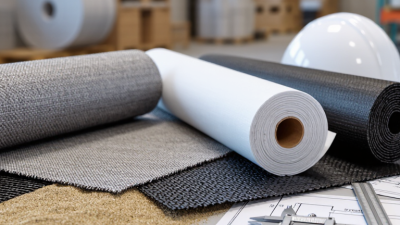
Woven fabrics use interlaced yarns and often provide strong separation or reinforcement beneath roads. Nonwoven fabrics resemble dense felt; they commonly filter water while holding back fine soil particles. Some products also support drainage or protect membranes from sharp stones. These functions can overlap.
The right choice depends on soil, water flow, loads, and installation conditions.
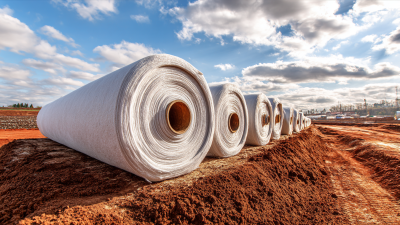
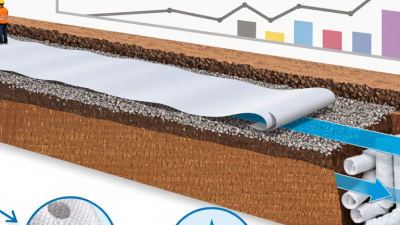
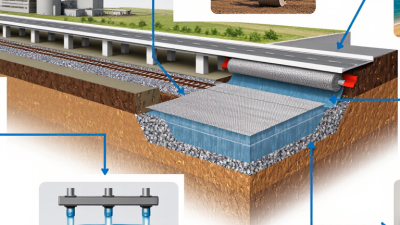
On a road project, fabric may sit between soft subgrade and crushed stone. It can limit mixing when trucks pass over the new surface. In a drainage trench, water moves through the fabric while soil stays outside the pipe bedding.
Geotextiles are also used beneath railways, around retaining structures, and on slopes exposed to runoff.
Small details matter. A loose fold or poorly secured edge can let soil migrate into the aggregate.
Fabric selection should follow the project design, not appearance alone. A material that works well in clean sand may clog in silty soil.
That distinction is easy to miss.
China’s Geotextile Manufacturing Industry at a Glance
China’s geotextile manufacturing industry serves projects ranging from road construction to drainage and soil protection. Producers commonly make woven and nonwoven fabrics from polypropylene or polyester. The right structure depends on the job. A needle-punched nonwoven may help separate soil layers while allowing water to pass; a woven fabric may suit applications requiring greater tensile strength. Details matter.
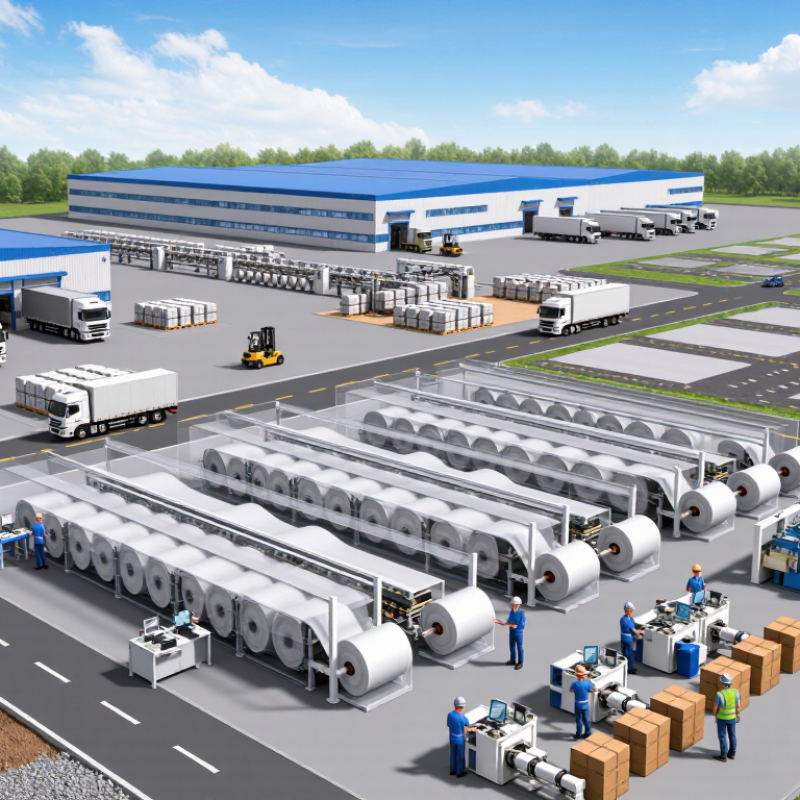
Manufacturing capacity is supported by established textile supply chains and varied production equipment. Buyers can often request different weights, widths, roll lengths, and performance targets. Quality checks may include tensile, puncture, and permeability testing, alongside inspection of roll consistency. Ask for test methods and recent product data, not just a specification sheet. The numbers need context.
Conditions in the field can differ from a laboratory sample. Soil type, installation, drainage design, and exposure all affect performance. A fabric selected only by price or weight may not fit the project. That is easy to overlook. Compare requirements with an engineer’s design, and confirm that samples and delivered rolls match the agreed specifications. Industry capability is broad, but product quality and technical support can vary between manufacturers.
Criteria for Evaluating Chinese Geotextile Fabric Manufacturers
Evaluating Chinese geotextile fabric manufacturers begins with your project’s ground conditions, not a sales brochure. Specify the required fabric type, mass per unit area, tensile strength, and filtration needs. Ask for technical data sheets and independent test reports that match the product being quoted. Check how the manufacturer controls fiber quality, needle-punching, and roll consistency. A neat sample matters, but so does repeatable production.
Review experience with projects similar to yours, such as road subgrades, drainage layers, or erosion control. Request references or project records with sensitive details removed. Confirm production capacity, inspection procedures, packaging, and realistic lead times. Ask how defects are recorded and resolved. A polished factory visit can be reassuring, though it cannot replace verified test results. No checklist is perfect; I would still want to compare actual rolls against the stated specifications.
Tips: Send the same written specification to each supplier. Compare test methods, units, and tolerances, not just headline figures. Request a labeled sample roll and inspect its width, seams, and visible uniformity. Keep answers in writing. If a claim is vague, ask for evidence before placing an order.
Profiles of 10 Notable Geotextile Fabric Manufacturers in China
A useful profile of a geotextile manufacturer starts with its materials and production focus. Among ten notable Chinese manufacturers, some specialize in woven polypropylene fabrics for soil separation and road reinforcement. Others focus on needle-punched nonwovens, where thickness and water flow matter. Several concentrate on high-strength polyester products for demanding civil engineering projects. These are capability snapshots, not a verified ranking. Details matter.
Other profiles may highlight drainage and filtration fabrics, erosion-control applications, railway construction, or customized widths for large projects. Some manufacturers offer broad product ranges, while others focus on a narrower set of specifications. Buyers should compare tensile strength, elongation, apparent opening size, and permittivity against project requirements. A fabric that performs well in one soil condition may not suit another. Not interchangeable.
Production capacity and quality checks also distinguish suppliers. Look for documented testing, consistent roll labeling, and clear technical data sheets. Ask how the manufacturer handles sampling and batch variation; a polished brochure cannot answer everything. This overview has limits without project-specific test results, and even a capable supplier may need time to confirm a custom specification. The practical details deserve scrutiny.
Comparing Their Products, Certifications, and Export Capabilities
Comparing ten leading Chinese geotextile manufacturers means looking beyond quoted prices.
Product fit matters. Woven fabrics commonly serve reinforcement and separation needs, while nonwovens are selected for filtration, drainage, and cushioning. Ask suppliers for mass per unit area, tensile strength, elongation, apparent opening size, and water permittivity. These figures help assess whether a roll suits a road subgrade or a drainage trench. Grand View Research estimated the global geotextiles market at USD 8.5 billion in 2023 and forecast 6.2% annual growth from 2024 to 2030. That growth makes clear specifications more useful, not less.
Check test methods and documents carefully. ASTM D4595 addresses wide-width tensile properties; ASTM D4491 covers water permeability. An ISO 9001 certificate concerns a quality management system, not proof that every product meets a project specification. Small details matter. Request recent third-party test reports and confirm that sample results match the quoted production grade. Export capability also varies: compare available roll widths, container loading plans, packaging against moisture, lead times, and experience preparing destination-specific documents. A supplier may offer broad product ranges yet have limited records for a particular market. That is worth questioning. Price comparisons are shaky when test conditions, fabric weight, or delivery terms differ.