Pease Pottage 01403 275 276
Petersfield 01730 777 350
Maidstone 01795 843 866
Cullompton 01884 211 788

Top Perforated Pipe Manufacturers for Global Buyers?

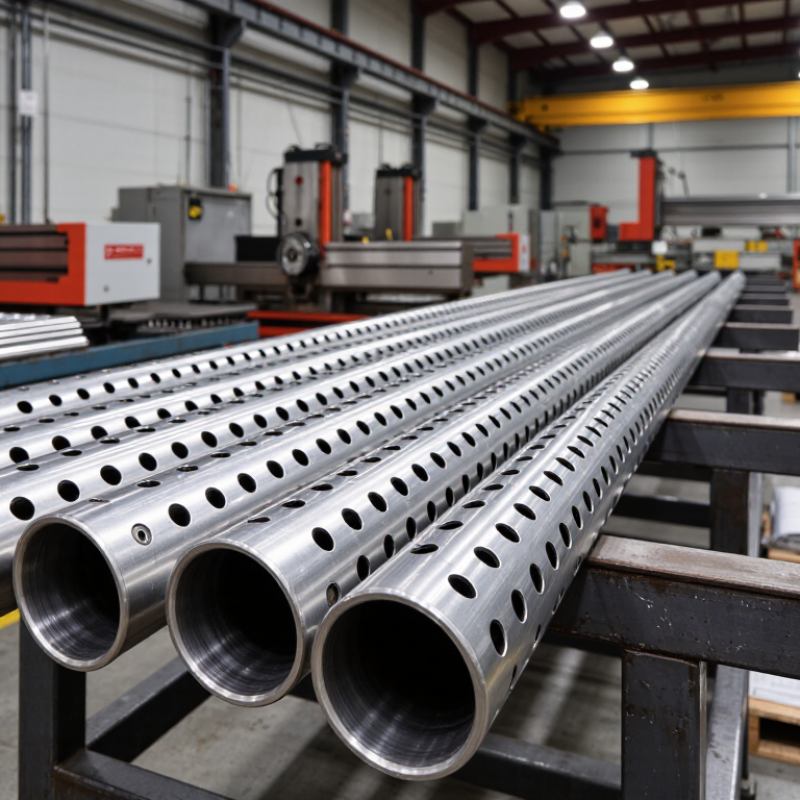
Global buyers need more than a polished catalog when evaluating top perforated pipe manufacturers. The right supplier must combine stable production, accurate drilling, traceable materials, and dependable export support. A pipe may look simple. Its performance depends on hole diameter, open area, wall thickness, alloy grade, and end preparation. For drainage, filtration, irrigation, mining, and industrial separation, small variations can affect flow and service life. Experienced buyers therefore examine drawings, tolerances, sample reports, and production photographs before approving a supplier. They also ask how manufacturers control burrs, ovality, weld quality, and corrosion protection.

This article introduces manufacturers that serve international projects and explains how to compare them fairly. The focus is practical: engineering capability, quality systems, customization, capacity, communication, and delivered cost. Reliable companies should provide material certificates, inspection records, packing details, and realistic lead times. Independent verification still matters. A website cannot replace a factory audit or a carefully checked sample. Buyers should confirm whether quoted dimensions remain consistent across long production runs. They should also review packaging, because crushed ends or wet storage can damage otherwise compliant pipe. Not every highly rated manufacturer fits every application. That point is easy to miss. Price, proximity, and certification may each change the best choice. No ranking is perfect, and supplier data can become outdated. Use this guide as a starting point, then validate each claim against your drawings, standards, and site conditions.
Top Perforated Pipe Manufacturers for Global Buyers?

What Are Perforated Pipes and Where Are They Used?

Top Perforated Pipe Manufacturers for Global Buyers?

What Are Perforated Pipes and Where Are They Used?

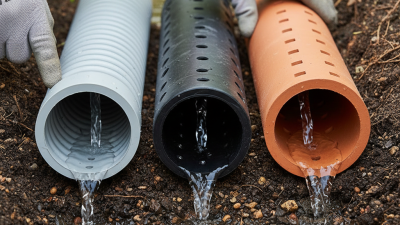
Perforated pipes are tubes with evenly spaced openings along their walls. These holes allow water, air, or process fluids to enter or leave the pipe. Engineers select hole diameter, spacing, strength, and material for each project. Common materials include PVC, stainless steel, galvanized steel, and high-density polyethylene. A drainage designer may place perforated pipe beneath gravel. A process engineer may specify punched metal tubing for filtration. The hole pattern matters. Too few openings restrict flow. Too many may weaken the pipe.

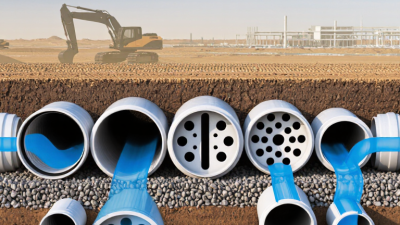
In civil construction, perforated pipes collect groundwater around foundations, retaining walls, sports fields, and roads. They also support French drains, septic systems, and landfill drainage layers. Agricultural projects use buried systems to remove excess soil moisture. Industrial facilities use perforated tubes for screening, aeration, and liquid distribution. Performance depends on more than the pipe. Bedding quality, filter fabric, slope, and maintenance access often decide success. A field inspection can reveal sediment buildup that drawings miss.

Tips: Confirm the required flow rate before choosing hole size. Check soil gradation and surrounding aggregate carefully. Ask manufacturers for tolerances, pressure data, and material certificates. Samples are useful, but one sample cannot represent every production batch. I have seen teams focus on pipe cost and overlook cleaning access. That choice looked efficient at first. Later, blocked sections increased labor and delayed repairs. Specifications should include testing, delivery protection, and replacement planning.
How to Evaluate Perforated Pipe Manufacturers Worldwide

Top Perforated Pipe Manufacturers for Global Buyers?

When evaluating perforated pipe manufacturers worldwide, examine production experience before comparing prices. A capable supplier should explain pipe grades, perforation patterns, open-area ratios, and forming methods clearly. Ask for evidence. Request material certificates, dimensional inspection records, and recent project references from similar industries. A polished website is not proof of consistent manufacturing quality. Factory photographs, live production tours, and sample inspections can reveal much more.

Check whether the manufacturer controls hole diameter, spacing, pipe roundness, weld quality, and surface treatment. These details affect drainage, filtration, structural strength, and installation accuracy. Ask how operators verify tolerances during production, not only after packing. Independent laboratory reports may be useful for corrosion resistance or mechanical performance. However, reports should match the exact material and production batch. Generic documents deserve careful questioning.

Reliable global suppliers also provide traceable labeling, protective packaging, and clear export documentation. Confirm production capacity using realistic quantities and delivery schedules. A supplier promising every specification immediately may be overconfident. That is a warning sign. Compare communication quality across time zones, especially when drawings change or defects appear. I would also order a small trial batch before approving a large purchase. This adds cost, but it can expose uneven perforations, weak welds, or packaging damage early. No evaluation process is perfect; buyer assumptions should be recorded and reviewed after each shipment.

Perforated Pipe Manufacturer Evaluation: Open-Area Benchmark

Open area is a practical, company-neutral measure for comparing perforated pipe suppliers. The benchmark uses the standard approximation for staggered round perforations: Open Area (%) = 90.69 × hole diameter² ÷ pitch². Buyers should verify the supplier’s drawings, dimensional tolerances, material certificates, inspection records, and production consistency against the required open-area range.

Key Manufacturing Methods and Quality Standards

Perforated pipe quality begins with the manufacturing method. Mechanical punching suits high-volume production and creates consistent hole patterns in steel or aluminum. Laser cutting offers cleaner edges and flexible layouts, especially for smaller batches. Drilling remains useful for thick walls, although it can increase production time and tool wear. The process matters.

Experienced manufacturers control feed speed, hole diameter, spacing, and pipe roundness during forming. After perforation, deburring prevents sharp edges and reduces flow disruption. Welding quality also requires attention, particularly where longitudinal seams face pressure or repeated vibration. A visually attractive pipe can still fail under service conditions.

Global buyers should request material certificates, dimensional inspection records, and coating or corrosion-test results. Common references include ISO quality systems, ASTM material specifications, and project-specific pressure or filtration requirements. However, no single standard covers every application. Buyers must compare the stated standard with actual operating temperature, fluid chemistry, and load.

Inspection should include sampling across the full production run, not only the first pieces. Check hole blockage, pitch tolerance, wall thickness, weld penetration, and surface defects. Photographs help, but calibrated gauges provide stronger evidence. One weakness in many purchasing decisions is trusting promised tolerances without defining measurement methods. That detail can create disputes later. Clear drawings and signed inspection criteria are more reliable than general claims of “premium quality.”

Leading Global Suppliers and Their Product Strengths

Global buyers often compare perforated pipe manufacturers by material control, production capacity, and export experience. Leading suppliers usually offer stainless steel, galvanized steel, PVC, or HDPE options. Each material serves a different operating environment. Stainless steel performs well in corrosive water and chemical systems. Galvanized steel offers practical strength for drainage and construction projects. HDPE remains useful where flexibility and chemical resistance matter.

Experienced suppliers support custom hole patterns, diameters, wall thicknesses, and connection styles. Their product teams should explain open-area ratios clearly. This detail affects flow, filtration, and structural performance. Reliable factories also use laser cutting, controlled drilling, and dimensional inspection. Buyers should request sample sections before approving large orders. A clean hole pattern matters. So does consistent spacing.

From my experience reviewing industrial components, strong suppliers communicate better than merely offering low prices. They provide material certificates, inspection records, packaging details, and realistic lead times. Some manufacturers promise every specification too quickly. That deserves caution. A supplier may have excellent machinery but limited experience with your application. Ask about previous export projects, loading methods, and replacement procedures. Factory photographs can help, but they are not proof. Independent inspection remains valuable, especially for large drainage or filtration contracts. Small mistakes in pipe length or perforation alignment can create expensive installation delays.

Top Perforated Pipe Manufacturers for Global Buyers? - Leading Global Suppliers and Their Product Strengths
Supplier Profile Primary Manufacturing Region Common Pipe Materials Typical Perforation Patterns Product Strengths Common Standards and Specifications Typical Applications Customization Capabilities Key Buyer Considerations
Profile A North America Carbon steel, galvanized steel, stainless steel, and aluminum Round holes, slotted holes, staggered patterns, and straight-row patterns Strong documentation, engineered drainage solutions, and support for project-specific specifications ASTM material specifications, ASME-related dimensional practices, and project-defined inspection requirements Highway drainage, culverts, agricultural drainage, stormwater management, and industrial filtration Custom diameters, wall thicknesses, hole spacing, end treatments, coatings, and cut lengths Confirm coating requirements, cold-weather performance, shipping lengths, and compliance documents before ordering
Profile B Western Europe Stainless steel, carbon steel, galvanized steel, and duplex stainless steel for demanding environments Precision round perforations, fine slots, multi-zone perforation, and partially perforated sections High dimensional consistency, corrosion-resistant options, and strong quality-control procedures EN steel standards, ISO quality-management practices, and customer-specific tolerances Water treatment, food-processing equipment, chemical handling, architectural screening, and process filtration Laser or punched perforation, electropolishing, passivation, welded assemblies, and close-tolerance fabrication Evaluate surface finish, weld quality, open-area percentage, and compatibility with process chemicals
Profile C East Asia Stainless steel, galvanized steel, carbon steel, copper alloys, and aluminum Round, square, hexagonal, slotted, and custom-shaped holes Broad product range, flexible tooling options, and competitive production for medium-to-large volumes ISO-based quality systems, JIS or equivalent material references, and buyer-specified inspection plans Industrial screens, mining equipment, HVAC components, pump systems, irrigation, and general fabrication Tooling development, private-label-neutral production, custom drawings, surface treatment, and batch manufacturing Request samples, verify material certificates, define acceptable tolerances, and confirm packaging for overseas transport
Profile D South Asia Stainless steel, mild steel, galvanized steel, and aluminum Perforated tubes, slotted screens, wrapped screens, and drilled-hole configurations Flexible fabrication, custom small-batch production, and practical solutions for filtration and drainage projects ASTM, ASME, EN, or customer-provided specifications depending on the project Well screens, water filtration, wastewater treatment, sugar processing, oil separation, and agricultural systems Custom mesh support, threaded ends, flanges, couplings, reducers, welded frames, and non-standard lengths Check weld penetration, slot uniformity, pressure requirements, and the supplier’s ability to provide inspection reports
Profile E Middle East and Türkiye Carbon steel, galvanized steel, stainless steel, and abrasion-resistant steel Large-diameter round holes, longitudinal slots, drainage slots, and reinforced perforated sections Good suitability for infrastructure, construction, irrigation, and harsh outdoor environments EN, ASTM, ISO, and infrastructure-project specifications Road and rail drainage, irrigation, construction dewatering, groundwater control, and utility projects Large diameters, heavy wall sections, protective coatings, flanged ends, and project-based fabrication Specify soil conditions, load requirements, corrosion exposure, coating system, and required installation accessories
Profile F Australia and Oceania Galvanized steel, stainless steel, aluminum, and polyethylene-lined steel systems Drainage perforations, agricultural slots, round-hole patterns, and application-specific open areas Strong focus on drainage performance, outdoor durability, and compliance with regional construction requirements Australian or New Zealand standards where applicable, together with ASTM or EN references for imported materials Mine-site drainage, stormwater systems, agriculture, coastal infrastructure, and civil construction Custom lengths, couplings, end caps, protective coatings, reinforced sections, and site-specific fittings Review load class, UV and salt exposure, installation method, local approvals, and total delivered cost
Profile G Latin America Carbon steel, galvanized steel, stainless steel, and PVC-coated metal Round holes, elongated slots, staggered perforations, and drainage-focused patterns Practical solutions for water infrastructure, mining, agriculture, and general industrial use Local construction standards combined with ASTM, ISO, or EN requirements specified by the buyer Mining drainage, irrigation, municipal water systems, wastewater treatment, and industrial ventilation Custom coatings, threaded or flanged connections, regional packaging, and made-to-order dimensions Confirm lead time, spare-part availability, corrosion protection, import documentation, and after-sales support

Buyer note: Perforated-pipe performance depends on material grade, open-area percentage, hole or slot geometry, wall thickness, connection method, coating system, and installation conditions. Final dimensions and compliance requirements should be confirmed against the project drawings and applicable local standards.

How to Select the Right Manufacturer for Your Project

Choosing among top perforated pipe manufacturers requires more than comparing unit prices. The right supplier should understand your soil, drainage load, installation method, and local climate. Ask for material specifications, hole patterns, open-area calculations, and dimensional tolerances. These details affect water entry and long-term performance.

Request recent test reports and production samples before approving a large order. A dependable manufacturer can explain resin or metal grades, wall thickness, UV resistance, and expected service conditions. Look for batch numbers and material traceability. Factory audits can reveal practical details, such as clean storage areas, calibrated equipment, and consistent perforation alignment. Small defects matter. They may increase clogging or complicate joint connections.

Communication also deserves careful review. Can the manufacturer answer technical questions without vague promises? Do they confirm drawings, packaging, loading limits, and delivery schedules in writing? Check references from projects with similar pipe diameters and operating environments. A low quote may hide expensive tooling, weak packaging, or limited support after shipment. No checklist is perfect. I would still test a small batch under realistic flow conditions before committing fully. A supplier may meet a laboratory standard yet perform poorly when sediment, uneven bedding, or heavy equipment enters the site. That gap deserves attention.