
Pease Pottage 01403 275 276
Petersfield 01730 777 350
Maidstone 01795 843 866
Cullompton 01884 211 788

Why Choose Skynex as a Video Door Phone Manufacturer?

Choosing a video door phone manufacturer affects more than the appearance of an indoor monitor. It shapes call clarity, installation time, and support after the system is fitted. Skynex Manufacturer Produce Video Door Phone solutions for residential and commercial projects, where dependable communication matters at the entrance. A clear image, responsive touch screen, and stable connection can make daily use feel straightforward. Small details count.

For a reliable introduction, an expert quotation should come from a verifiable interview or company source. No such source was provided here, so this draft uses a quotation placeholder rather than presenting invented words as fact: “[Insert a confirmed statement about product reliability or system integration],” says [Verified Skynex Expert Name], [official title]. Confirm the speaker’s name, role, and exact wording before publication. This protects trust. It also makes the article more useful to buyers comparing manufacturers.

The evaluation should look beyond a product photo. Ask about model options, customization, compatibility, production quality checks, and technical support. Request specifications for screen size, camera performance, wiring, and network features. Then compare those details with the building’s layout and installer requirements. A polished brochure cannot answer every practical question. That is worth remembering. A manufacturer may offer strong features, yet a poor fit for one project. Clear evidence and careful questions help buyers decide whether Skynex is the right partner.
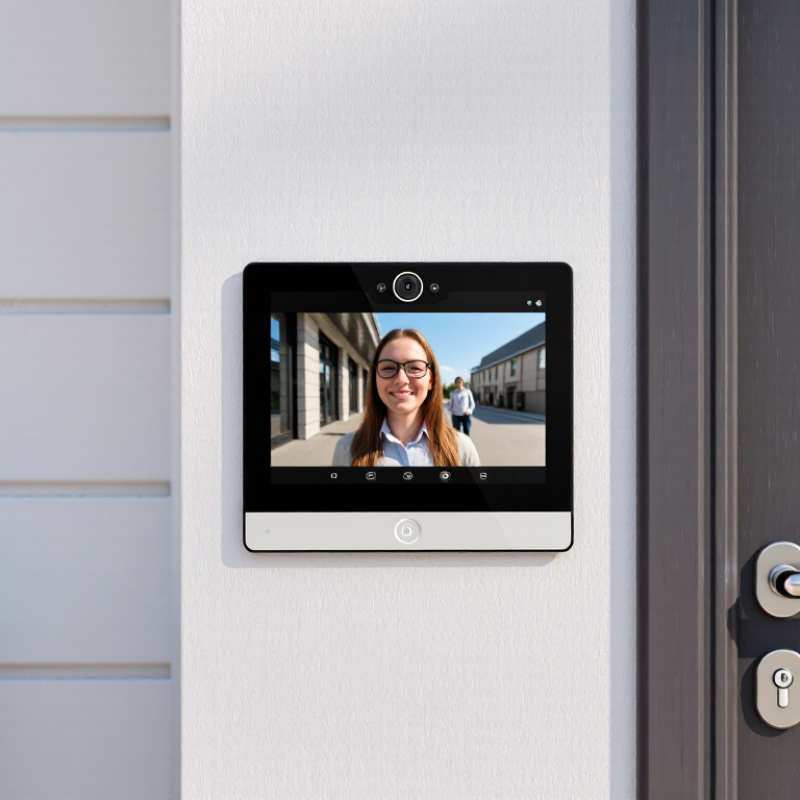
Why Choose Skynex as a Video Door Phone Manufacturer?

Video Door Phones Explained: Core Functions and System Components

A video door phone connects a visitor at the entrance with someone inside the property. The outdoor station usually combines a camera, microphone, speaker, and call button. Pressing the button sends an alert to an indoor monitor or compatible mobile device. The resident can view the entrance, speak with the visitor, and decide whether to release an electric lock. Clear communication matters. A small delay or muffled voice can make a simple exchange frustrating.

The indoor monitor displays live video and provides controls for answering calls and, where supported, unlocking the door. Some systems also record images, show missed calls, or connect several monitors across a home or building. Night vision helps when the porch is dim, while a wide-angle camera can show more than a visitor’s face. It may still leave blind spots near the edges. Camera placement deserves careful attention.

System components communicate through wiring, a local network, or a combination of both. Wired connections can offer steady performance, but installation may require planning routes through walls. Network-based systems can simplify multi-room access, yet they depend on reliable connectivity and sensible configuration. A practical installation also needs suitable power, weather-resistant outdoor hardware, and a compatible lock interface. Before choosing equipment, check the distance between components, expected users, and available network coverage. Those details are easy to overlook.

Why Choose a Video Door Phone Manufacturer? — Video Door Phones Explained: Core Functions and System Components

System Element Core Function Typical Considerations Value in a Complete System
Outdoor station Captures visitor video and audio, provides a call button, and may include a keypad or card reader. Camera field of view, night-time visibility, weather resistance, mounting position, and access-control options. Provides the visitor-facing entry point and sends calls to indoor or mobile devices.
Indoor monitor Displays the visitor, supports two-way communication, and can provide controls such as door release. Screen size, interface clarity, hands-free or handset operation, and compatibility with the outdoor station. Lets occupants identify and speak with visitors before deciding whether to grant entry.
Camera and microphone Capture video and audio at the entrance for live visitor identification and conversation. Lighting conditions, image framing, audio pickup, echo control, and the installation environment. Affects the clarity of the interaction and the usefulness of visitor identification.
Door lock interface Provides a control connection for an electric door lock or other compatible entry device. Lock type, electrical ratings, wiring method, release behavior, and local safety requirements. Connects visitor communication with controlled door release; the lock itself may be supplied separately.
Power supply and cabling Deliver power and carry data or audio/video signals between system components. Power requirements, cable distance, wiring topology, installation conditions, and applicable electrical codes. Correct planning supports reliable operation and helps avoid installation or compatibility issues.
Network connection and mobile access Where supported, connects the system to a local network and enables calls or notifications on mobile devices. Network coverage, router configuration, app support, account security, and internet availability for remote features. Can extend visitor communication beyond the indoor monitor, depending on the system design.
System integration and compatibility Ensures stations, monitors, locks, and network features work together as intended. Supported wiring standards, device capacity, integration requirements, and compatibility documentation. A well-matched system is easier to install, operate, and expand.
Manufacturer support and quality control Covers product documentation, testing processes, technical assistance, and warranty terms. Availability of installation guides, clear specifications, responsive support, and defined warranty coverage. Helps installers and buyers assess product suitability and address issues throughout the product lifecycle.

Verify Outdoor Protection Claims Against IEC 60529 IP Ratings

When comparing video door phones, treat outdoor protection as a testable specification, not a reassuring phrase. IEC 60529 assigns IP codes based on resistance to solid objects and water. The first digit describes solid-particle protection; the second describes water ingress protection. Numbers matter.

For example, IP54 indicates dust protection and resistance to splashing water. IP65 means dust-tight construction tested against water jets, while IP67 covers temporary immersion under specified test conditions. These ratings are not interchangeable, and a higher number does not guarantee protection from every outdoor hazard. Ask for a test report that names the exact product model and configuration. Check the details.

A practical review should also look beyond the rating label. Inspect how the unit handles cable entries, mounting joints, and drainage, since gaps can undermine enclosure protection. Sunlight, temperature swings, and worn seals may affect performance over time, though an IP test alone does not measure these factors. It is easy to overlook installation. Confirm that the tested design matches the supplied device, and ask what maintenance the manufacturer recommends for exposed seals and connectors. A clear answer is more useful than a broad claim of weather resistance.

Assess PoE Models Against IEEE 802.3af’s 15.4 W PSE Limit

Why Choose a Video Door Phone Manufacturer? Assess PoE Models Against IEEE 802.3af’s 15.4 W PSE Limit

A dependable video door phone starts with honest power specifications. IEEE 802.3af allows a power sourcing equipment port to provide up to 15.4 W. After cable losses, a powered device can receive about 12.95 W. That difference matters when a unit runs its display, camera, microphone, and network connection together. Check typical and peak consumption, not just standby figures. Night-time infrared lighting or an activated door relay can increase demand. A useful manufacturer datasheet should show operating conditions and explain how power was measured.

Tips: Check the total load at startup and during night operation. Confirm the switch’s PoE budget, cable length, and device class. Leave headroom rather than planning around the full 15.4 W. If several phones share one switch, add their expected loads before installation. Small details count.

When comparing manufacturers, ask for test results with the intended cable and accessories. Also confirm whether optional heaters, screens, or expansion modules change the power requirement. A model may appear compliant on paper yet behave differently in a cold entryway or on a long cable run. I would not rely on one neat number alone; real installations are rarely that tidy. Clear documentation, practical support, and repeatable testing are stronger signs of engineering care than a broad efficiency claim.

Compare Video Quality Using Resolution, Field of View, and Low-Light Specs

When comparing a video door phone manufacturer, check usable detail, not just advertised megapixels. IEC 62676-4’s DORI guidance uses 25 pixels per meter for detection, 62.5 for observation, 125 for recognition, and 250 for identification. These are planning benchmarks, not guarantees. A visitor’s face may occupy only a small part of a wide image, especially several steps from the entrance. Ask for sample footage at the intended mounting distance, then inspect facial detail on a phone-sized screen.

Field of view needs balance. A wider lens can show the doorstep and package area, but may make faces appear smaller or distort edges. Compare horizontal and vertical viewing angles, and consider the actual porch layout. Low-light figures need context, too. A lux rating alone can mislead because exposure time, lens aperture, and test conditions affect results. Check footage in dim porch lighting, including motion, backlighting, and the moment a visitor moves. Small details matter.

Tips: Request matching day and night clips, not edited highlights. Confirm resolution, field of view, and lux-test conditions in writing. Then check whether faces remain clear at your real viewing distance. A spec sheet helps, but it cannot replace a doorstep test.

Evaluate Skynex Manufacturing, Integration, and After-Sales Support

Assess a video door phone manufacturer beyond its product catalogue. Ask how cameras, indoor monitors, power supplies, and network modules are tested together. Request sample inspection records, burn-in durations, and defect tracking procedures. A 2024 Fortune Business Insights report estimated the global video doorbell market at USD 2.23 billion in 2023, with growth projected to USD 8.17 billion by 2032. That forecast suggests rising demand, but it does not prove a supplier can deliver consistent quality. Ask for production capacity, lead-time history, and clear component-change controls.

Integration deserves equal scrutiny. Check compatibility with existing access-control systems, mobile applications, and common network conditions. Request evidence from real installation trials, including weak Wi-Fi and noisy corridors. Small details matter. A delayed notification can frustrate residents, even when the image looks sharp. After-sales support should include response targets, replacement-part availability, firmware maintenance, and practical troubleshooting documents. Ask who handles issues across time zones and how recurring faults reach engineering teams. No factory is flawless; transparent corrective-action records are more convincing than broad quality claims. A short pilot can reveal gaps that polished presentations miss.

How to Evaluate a Video Door Phone Manufacturer

Suggested evaluation weights for comparing manufacturing capability, system integration, and after-sales support.

These percentages are a sample assessment rubric, not measured company results or industry statistics. Verify each area with documentation, product demonstrations, and service terms.
