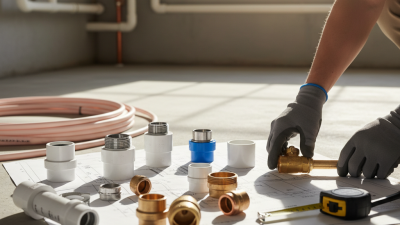
Choosing a supplier for mdpe fittings is not just a matter of comparing prices. These components connect polyethylene pipelines in water, irrigation, and utility projects, where a poor fit can mean leaks, delays, and costly repairs. A dependable supplier should provide clear product data, consistent manufacturing information, and responsive technical support. Small details matter.
This guide introduces ten Chinese suppliers for buyers who want a practical starting point. It considers product range, fitting types, available specifications, quality documentation, export experience, and communication. Buyers should check whether a supplier offers the required sizes, pressure ratings, and connection methods, such as compression or electrofusion. Ask for current test reports and confirm that documents match the exact products being quoted. A polished catalog alone is not proof.
Supplier rankings can simplify research, but they cannot replace project-specific checks. Verify factory capabilities, sample quality, lead times, packaging, and after-sales arrangements before placing an order. If possible, compare the same fitting specification across several quotations; otherwise, the prices may not be comparable. Even careful research has limits. Product details and certifications can change, and a supplier suited to one project may not suit another. Use the list as a shortlist, then confirm every critical requirement directly with the manufacturer.
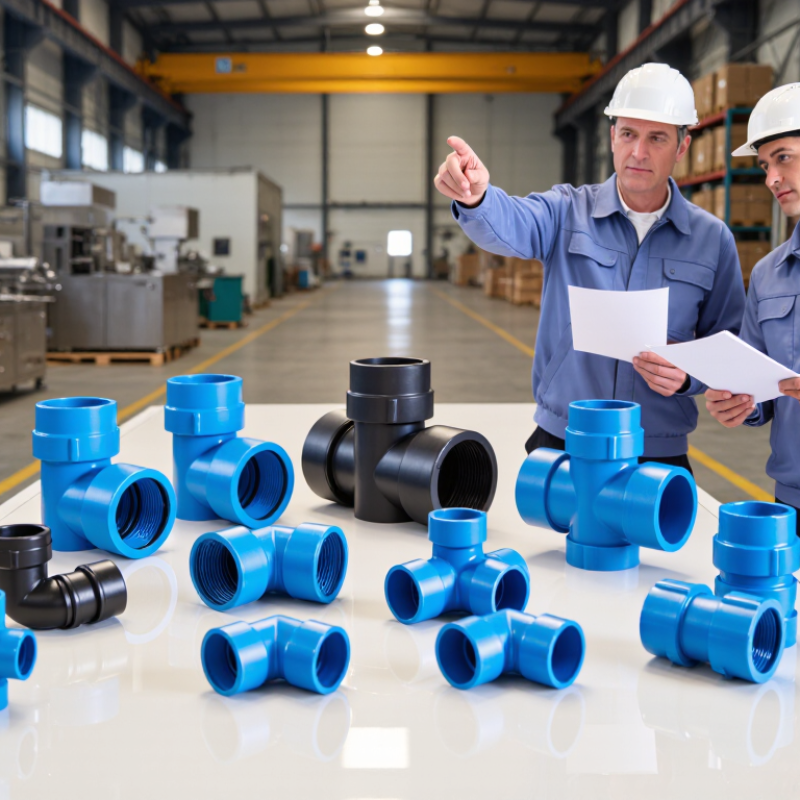
MDPE describes medium-density polyethylene, while PE80 and PE100 identify strength classes. The distinction matters when selecting fittings for a water network. ISO 12162 assigns PE80 a minimum required strength of 8 MPa and PE100 10 MPa, based on long-term hydrostatic testing. The Plastics Pipe Institute’s Handbook of PE Pipe also explains how material properties and design conditions affect pressure ratings. These figures are not a promise of service life; temperature, installation, and operating pressure matter too. Small details count.
SDR is the ratio of a pipe’s outside diameter to its wall thickness. Lower SDR means a thicker wall. Under ISO 4427 design assumptions for water at 20°C, PE100 pipe at SDR11 is commonly rated PN20, while PE80 at SDR11 is commonly PN16. Ratings can vary with temperature and design factors, so verify the product documentation rather than relying on a label alone. For a practical check, compare fitting and pipe dimensions, material class, SDR, and joining method before installation. A fitting that looks right may still be incompatible. That comparison is easy to overlook.
This is a non-ranked guide to ten common supplier capability profiles, not a directory of verified companies. “MDPE” is often used informally for PE pressure-pipe systems; confirm the applicable product standard, material grade, dimensions, and pressure rating for each project.
| Profile | Typical product focus | Common joining method | Material and SDR notes | Useful checks when sourcing |
|---|---|---|---|---|
| 01 · Electrofusion couplings | Straight couplers for PE pressure-pipe connections | Electrofusion | PE80 or PE100 versions may be available; compatibility depends on the fitting design and pipe system. SDR 11 and SDR 17/17.6 are common pipe classes. | Check diameter range, fusion parameters, barcode or data sheet, and compatibility with the pipe SDR. |
| 02 · Electrofusion elbows and tees | Bends and branch connections for distribution networks | Electrofusion | Grade and pressure capability are product-specific; common pipe SDRs include 11, 17, and 17.6. | Confirm branch size, angle, outlet configuration, dimensional standard, and pressure rating. |
| 03 · Butt-fusion molded fittings | Molded elbows, tees, reducers, and end caps | Butt fusion | Often specified in PE100 for pressure applications; PE80 products also exist. Confirm the fitting’s own SDR and compatibility with the pipe. | Request dimensions, material designation, fusion instructions, and applicable test documentation. |
| 04 · Fabricated large-diameter fittings | Segmented bends, fabricated tees, and special assemblies | Butt fusion and fabrication welds | PE100 is commonly specified for pressure systems; design and pressure capacity depend on geometry, wall thickness, and fabrication details. | Review drawings, weld procedures, inspection records, dimensions, and project-specific calculations. |
| 05 · Compression fittings | Mechanical couplers, elbows, tees, and adaptors, often for smaller diameters | Mechanical compression connection | Do not assume a pipe SDR alone establishes fitting suitability; use the manufacturer’s stated pipe-size and pressure limits. | Check seal materials, connection dimensions, allowable pressure, temperature limits, and potable-water approvals where required. |
| 06 · Service saddles and tapping fittings | Branch connections from distribution mains | Electrofusion or mechanical attachment, depending on design | Compatibility depends on main-pipe diameter, material, wall thickness, and fitting design. | Verify tapping method, outlet size, pipe compatibility, installation instructions, and pressure rating. |
| 07 · Reducers and transition fittings | Diameter changes and connections between PE and other systems | Butt fusion, electrofusion, or mechanical connection | PE grade, SDR, and end connection must match the application; transition components may use metal or other materials. | Confirm both end dimensions, joining method, corrosion considerations, and system pressure limits. |
| 08 · PE valves and valve adaptors | Isolation valves and PE-end connection components | Butt fusion, electrofusion, or mechanical connection | Check the valve assembly rating and end-connection compatibility; the pipe SDR does not by itself define the valve rating. | Review pressure class, operating conditions, materials, dimensions, and required product approvals. |
| 09 · PE80-focused fitting range | Fittings designed and declared for PE80 pipe systems | Depends on fitting type: fusion or mechanical | PE80 is a polyethylene material classification. Verify the product standard and declared pressure rating rather than inferring performance from the grade alone. | Ask for material designation, applicable standard, test evidence, and explicit PE80 system compatibility. |
| 10 · PE100-focused fitting range | Fittings designed and declared for PE100 pipe systems | Depends on fitting type: fusion or mechanical | PE100 is a polyethylene material classification. Common pipe SDR classes include 11, 17, 17.6, 21, and 26; the applicable rating depends on the standard and service conditions. | Confirm PE100 compatibility, fitting dimensions, pressure rating, and project-required conformity documents. |
SDR means standard dimension ratio, generally the pipe outside diameter divided by its minimum wall thickness. Lower SDR values indicate a thicker wall relative to diameter. For water-pipe specifications, ISO 4427 is a commonly used standards series; always confirm the current applicable edition and local requirements.