2025 Top Applications of Non Woven Geotextile in Construction and Landscaping
In the ever-evolving fields of construction and landscaping, the integration of innovative materials is paramount to achieving efficiency and sustainability. Among these, non woven geotextile stands out as a pivotal solution that addresses a myriad of challenges, from soil erosion to land stabilization. According to Dr. Emily Carter, a renowned expert in civil engineering and geosynthetics, "The application of non woven geotextile is revolutionizing how we approach soil management and site development in modern construction." Her insight highlights the significance of this material in enhancing the structural integrity of various projects.
The year 2025 promises to showcase the top applications of non woven geotextile, presenting opportunities for industry professionals to harness its benefits in groundbreaking ways. As urban landscapes expand and environmental considerations become critical, understanding the diverse uses of non woven geotextile will be essential. This versatile material not only improves drainage and filtration but also plays a crucial role in reducing maintenance costs and prolonging the lifespan of construction projects. As we delve into the innovative applications and benefits of non woven geotextile, it becomes clear that it is not merely a construction tool but a cornerstone for sustainable development in the built environment.
Overview of Non Woven Geotextiles and Their Benefits in Construction
Non-woven geotextiles are synthetic fabrics commonly used in construction and landscaping due to their unique characteristics and benefits. Unlike woven geotextiles, non-woven variants are made by bonding fibers together through mechanical, thermal, or chemical processes. This structure allows for excellent filtration, drainage, and separation capabilities. In construction, they effectively prevent soil erosion and provide stability to structures by acting as a barrier between different soil layers. They also enhance the lifespan of pavements by reducing the chances of cracks and deformation, making them an essential material for road and foundation work.
In landscaping, non-woven geotextiles serve multiple functions that improve both aesthetics and functionality. They can be employed in the creation of drainage systems, helping to manage water flow and avoid pooling in gardens and landscaped areas. Additionally, they help in weed control by providing a physical barrier that inhibits plant growth while allowing moisture and nutrients to permeate. Their lightweight nature and ease of installation further contribute to their popularity among landscape architects and contractors looking for efficient, cost-effective solutions. Overall, the integration of non-woven geotextiles in both construction and landscaping projects results in enhanced durability, sustainability, and performance.
Key Applications of Non Woven Geotextiles in Civil Engineering Projects
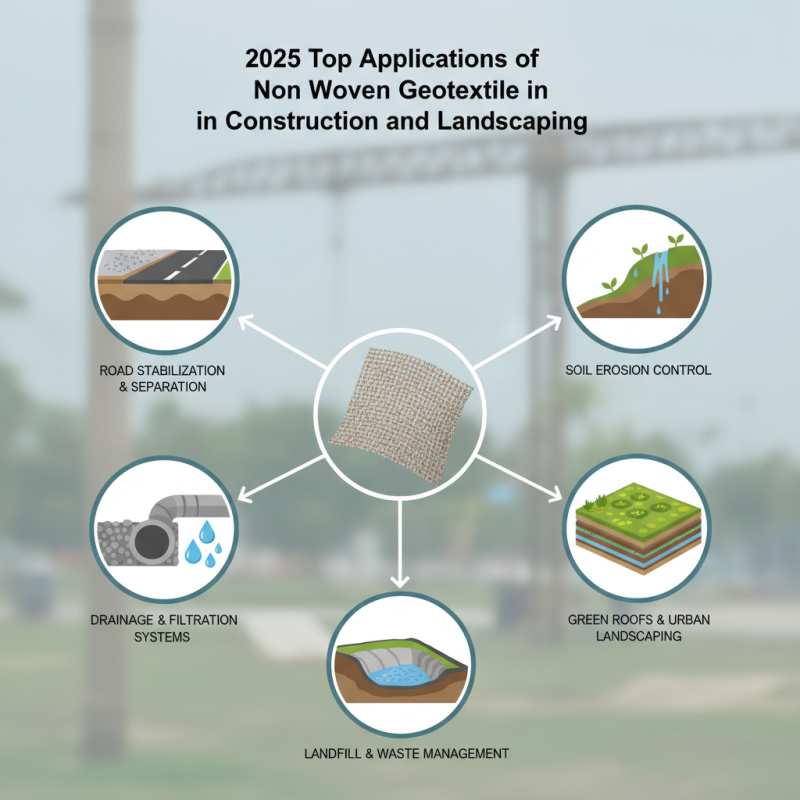
Non woven geotextiles play a crucial role in enhancing the overall performance and longevity of civil engineering projects. These materials are designed to provide essential functions such as separation, filtration, reinforcement, and drainage, making them ideal for various applications in construction and landscaping. For instance, they are commonly used in road construction to separate different soil layers, preventing mixing and ensuring a stable foundation. Additionally, their filtration properties help in preventing soil erosion while allowing for the proper drainage of water, which is essential in maintaining the integrity of the structures built above them.
Tips: When selecting non woven geotextiles for your projects, consider the specific environmental conditions and the functions you need, such as filtration or reinforcement. It’s advisable to consult with engineering experts to determine the appropriate material specifications that align with your project requirements.
In landscaping applications, non woven geotextiles are utilized in gardens and parks for weed control and moisture retention. By allowing water to permeate while preventing weeds from sprouting, they contribute to healthier soil conditions and promote the growth of plants. Their lightweight and durable nature make them easy to install, further streamlining the landscaping process.
Tips: To enhance the effectiveness of non woven geotextiles in landscaping, ensure that the surface is adequately prepared by removing any debris or large stones. This step helps to maximize water flow and prevents future damage to the geotextile material.
2025 Top Applications of Non Woven Geotextile in Construction and Landscaping
| Application Area |
Description |
Benefits |
Typical Usage |
| Erosion Control |
Used to protect soil from erosion due to water or wind. |
Reduces soil loss and promotes vegetation growth. |
Slopes, riverbanks, and coastal areas. |
| Drainage Systems |
Enhances drainage in areas by allowing water to pass while retaining soil. |
Prevents waterlogging and promotes healthy plant growth. |
Landscaping, road construction, and agricultural fields. |
| Separation Layer |
Acts as a barrier to separate different soil types. |
Prevents mixing of materials and maintains structural integrity. |
Pavement layers and landfill applications. |
| Reinforcement |
Provides additional strength to soil structures. |
Improves load-bearing capacity and stability. |
Retaining walls and gravel roads. |
| Landfill Liner |
Used in landfills to control leachate and protect groundwater. |
Minimizes environmental impact. |
Waste management sites and industrial applications. |
Uses of Non Woven Geotextiles in Landscaping and Soil Management
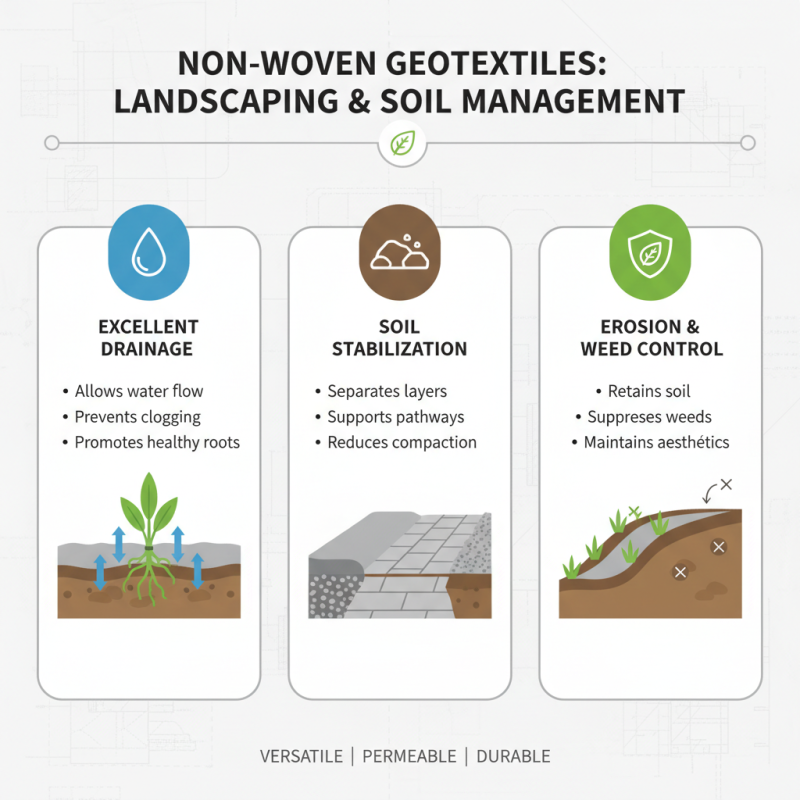
Non-woven geotextiles play a significant role in landscaping and soil management, owing to their versatile properties. These synthetic fabrics are designed to provide excellent drainage, soil stabilization, and erosion control. In landscaping projects, non-woven geotextiles serve as an effective barrier between soil and decorative elements such as gravel or mulch, preventing soil erosion and maintaining a clean aesthetic appearance. Their permeability allows water to flow freely while retaining soil particles, thus promoting healthy plant growth and reducing the risk of weed intrusion.
In addition, non-woven geotextiles are crucial in soil management practices. By utilizing these materials, landscapers can create stable infrastructure for paths, driveways, and other outdoor features. They help in distributing loads evenly across the soil surface, reducing the likelihood of settling or cracking. Moreover, in wet or variable soil conditions, non-woven geotextiles facilitate drainage, preventing waterlogging that could be detrimental to plant health. Overall, their usage enhances the durability and aesthetic value of landscape designs while ensuring that the underlying soil is effectively managed for long-term sustainability.
Comparative Analysis of Non Woven vs. Woven Geotextiles in Construction
When considering the applications of geotextiles in construction and landscaping, a critical aspect is the comparison between non woven and woven geotextiles. Non woven geotextiles, typically made from synthetic fibers, offer several advantages primarily due to their unique properties. They are excellent at filtration, allowing water to pass through while retaining soil particles, which makes them particularly beneficial in applications such as erosion control, drainage systems, and road construction. Their ability to accommodate soil movement without losing structural integrity positions them as a reliable choice in various environmental conditions.
On the other hand, woven geotextiles exhibit a high tensile strength due to their interlaced fabric design, making them suitable for applications requiring load-bearing capabilities. They are commonly used in applications like reinforcement of unpaved roads and stabilization of soil. Although they provide superior strength and durability, woven geotextiles can be less effective in filtration compared to their non woven counterparts since water does not flow through them as easily. Thus, the choice between these two types of geotextiles should be based on the specific requirements of the project, taking into consideration factors like drainage needs, soil characteristics, and load considerations to optimize performance and longevity in construction and landscaping endeavors.
Future Trends and Innovations in Non Woven Geotextile Applications
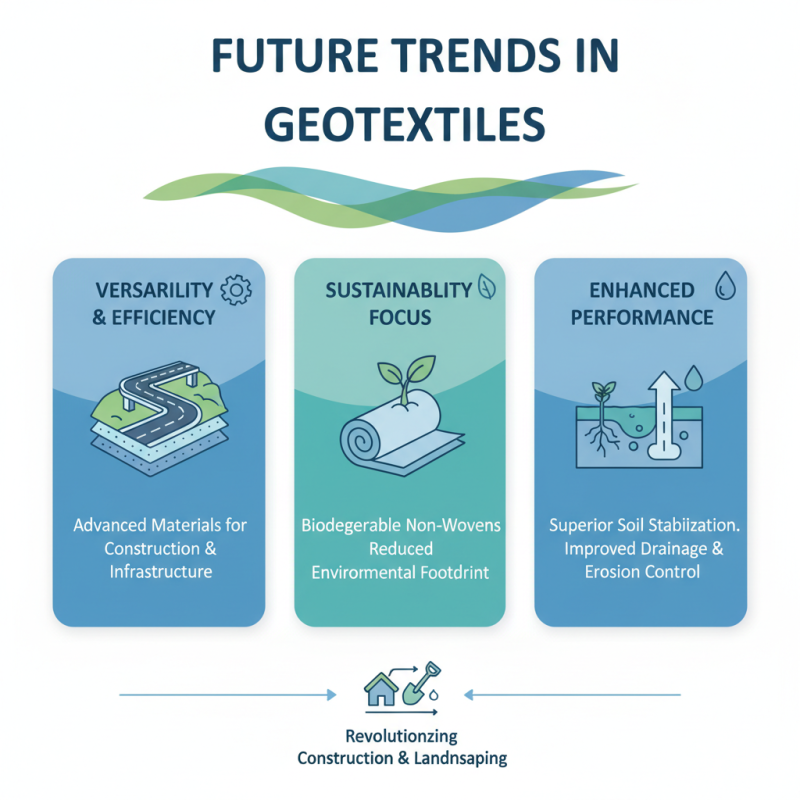
The future trends in non-woven geotextile applications are poised to revolutionize the construction and landscaping industries. With advancements in technology, these materials are becoming increasingly versatile and efficient. Innovations include the development of biodegradable non-woven geotextiles, which align with the growing emphasis on sustainability in construction practices. These eco-friendly materials not only reduce the environmental footprint but also offer enhanced soil stabilization and drainage capabilities, making them ideal for a variety of landscaping projects.
Moreover, the integration of smart technologies into non-woven geotextiles is on the rise. Sensors can be embedded within these materials to monitor soil conditions, moisture levels, and erosion, providing real-time data to engineers and landscape architects. This trend facilitates more informed decision-making and allows for proactive maintenance of infrastructure, ultimately leading to cost savings and improved project outcomes. As innovations continue to emerge, non-woven geotextiles will undoubtedly play a crucial role in shaping the future landscape of construction and environmental management.