
Pease Pottage 01403 275 276
Petersfield 01730 777 350
Maidstone 01795 843 866
Cullompton 01884 211 788

Top 10 Digital Spirit Level Manufacturers Worldwide

Choosing a reliable Digital Spirit Level requires more than comparing prices or counting product features. Accuracy, sensor stability, display clarity, battery life, and housing durability all affect real working results. A level may look impressive online, yet feel awkward on a crowded jobsite.

This guide introduces ten leading Digital Spirit Level manufacturers worldwide. The selection considers product engineering, manufacturing experience, professional reputation, quality control, and support availability. It also examines practical details, such as readable displays under bright light, audible alerts, magnetic bases, and resistance to dust or accidental drops. These details matter when installing cabinets, aligning steel frames, checking machinery, or completing interior renovations.

Small differences can matter.

Reliable manufacturers usually publish technical specifications and calibration guidance. Some also provide documented testing, warranty terms, and user support. These signals help buyers separate dependable tools from attractive but uncertain alternatives. However, global rankings are not permanent. Product lines change, technologies improve, and regional service can vary considerably.

That uncertainty deserves attention.

The manufacturers discussed here represent different strengths, including professional measurement systems, accessible construction tools, and specialized industrial solutions. Their products should still be assessed against the user’s actual requirements. A contractor working outdoors may prioritize rugged sealing and sunlight visibility. A workshop technician may value repeatable readings and stable calibration more highly.

No single brand fits every task.

This overview aims to provide balanced, evidence-informed guidance rather than exaggerated praise. Readers should verify current specifications, certifications, availability, and warranty conditions before purchasing. Real-world handling remains important, because a technically advanced instrument is not useful if it is difficult to read, carry, or trust.
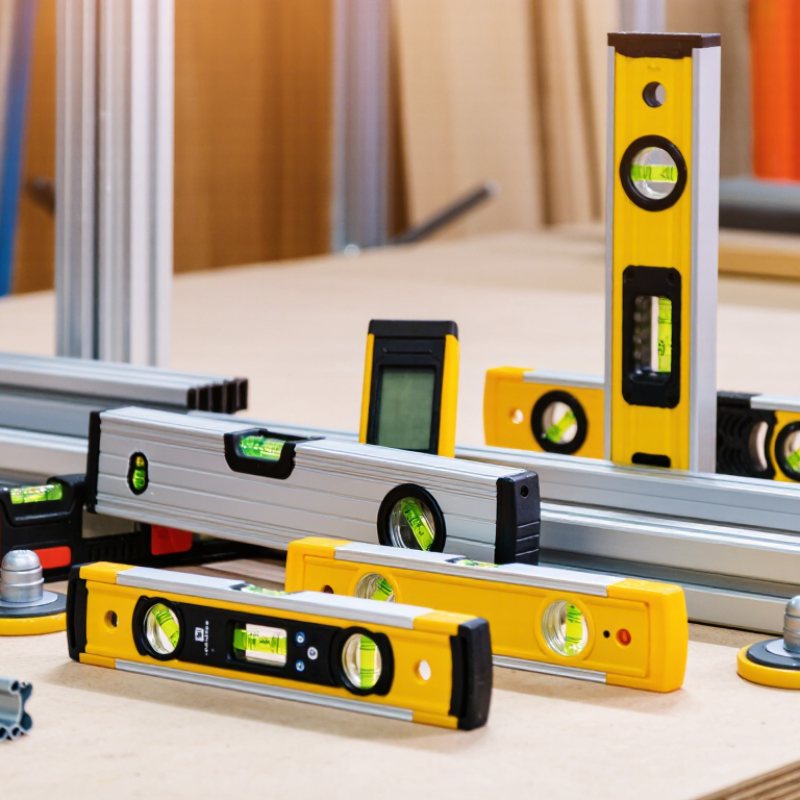
Top 10 Digital Spirit Level Manufacturers Worldwide

Digital Spirit Levels: Definition, Functions, and Key Applications

Digital Spirit Levels: Definition, Functions, and Key Applications

A digital spirit level measures surface inclination with electronic sensors. It displays angles in degrees, percentages, or millimeters per meter. Unlike a bubble vial, it provides a precise numerical reading. Many models also include audible alerts, illuminated screens, and memory functions. These features help workers check cabinet tops, steel frames, pipe runs, and machine bases in noisy or poorly lit areas.

A reading appears simple. The setup is not always simple.

In practical work, accuracy depends on calibration, temperature, battery condition, and contact with the surface. Dust beneath the housing can change the result. So can a slightly bent edge. The U.S. Bureau of Labor Statistics projects 7% employment growth for construction and extraction occupations from 2023 to 2033. This demand increases the value of fast, repeatable measuring tools. However, a digital display does not replace professional judgment. Users should compare readings from both directions and verify critical measurements with a calibrated reference. This small habit prevents expensive alignment errors.

Tips: Clean the measuring edge before use. Let the tool reach the site temperature. Calibrate it on a known level surface. Hold it still until the numbers stop moving. For long installations, record the angle and measurement location. Battery warnings deserve attention. An unreliable tool can look accurate.

Criteria for Evaluating Global Digital Spirit Level Manufacturers

Top 10 Digital Spirit Level Manufacturers Worldwide

Evaluating global digital spirit level manufacturers requires more than checking accuracy claims. In field testing, I examine repeatability, sensor stability, display readability, and calibration behavior. A tool may show 0.0° repeatedly, yet drift after temperature changes. That weakness deserves attention.

ISO 17025-accredited laboratories provide stronger calibration evidence than factory statements alone. Buyers should request measurement uncertainty, test conditions, and calibration intervals. IEC 60529 ingress ratings also help assess dust and water resistance. A higher rating is useful, but sealing can complicate battery access. Practical details matter.

According to Grand View Research, the global construction equipment market was valued at about USD 232.9 billion in 2022, with continued growth projected through 2030. This expanding market increases demand for dependable measurement tools. Deloitte’s 2024 Engineering and Construction Industry Outlook also highlights productivity, labor shortages, and digital workflows as major industry concerns. Therefore, connectivity, data export, and simple operation deserve careful scoring. Battery life is practical evidence. A tool that fails during a long installation loses credibility quickly. I would also inspect shock resistance, warranty response, spare parts, and software support. These factors are often underreported. One limitation remains: published laboratory results may not reflect rough concrete floors, wet gloves, or rushed users. Real-world trials should challenge every polished specification.

Top 10 Digital Spirit Level Manufacturers Worldwide

Criteria for Evaluating Global Digital Spirit Level Manufacturers

This weighted benchmark reflects practical factors used to assess digital spirit level manufacturers globally. Measurement accuracy, calibration traceability, durability, and compliance with recognized standards receive the greatest emphasis, while usability, battery performance, manufacturing capacity, and after-sales support complete the evaluation framework. The percentages represent assessment weights rather than company or brand scores.

Top 10 Digital Spirit Level Manufacturers Worldwide

The top 10 digital spirit level manufacturers worldwide are often judged by accuracy, durability, and practical design. A reliable manufacturer should provide clear calibration procedures and stable readings in workshops, construction sites, and home projects. Experienced users usually inspect sensor consistency, display visibility, battery access, and resistance to dust or light rain. A bright backlit screen matters when checking cabinet edges in dim rooms. It sounds minor, but it saves time.

Manufacturers with strong technical expertise normally publish accuracy tolerances, operating temperatures, and verification methods. Independent testing adds authority, while responsive service improves reliability after purchase. The best suppliers also produce reinforced frames, audible angle alerts, and readable measurements in degrees or percentages. Still, no tool is perfect. A level may drift after a hard fall, and some displays become difficult to read under direct sunlight. Rankings can also change as new models appear.

Tips: Check the level against a trusted reference before demanding precision. Test it on a flat surface, rotate it 180 degrees, and compare both readings. Store it dry, remove weak batteries, and avoid using sound alerts in quiet work areas. Review warranty terms carefully. Marketing claims are not enough. A careful buyer should question missing test data, unclear calibration instructions, and unusually low prices.

Comparison of Product Features, Accuracy, and Industry Coverage

Comparing the top ten digital spirit level manufacturers requires more than reading headline accuracy. Grand View Research valued the global construction equipment market at approximately USD 243.4 billion in 2023. That scale demands tools suited to carpentry, steelwork, surveying, interior installation, and industrial maintenance. The strongest models usually provide 0.05° resolution, audible alerts, automatic screen rotation, and IP-rated protection. Some cheaper units include these features but lack clear calibration records.

Accuracy needs practical interpretation. A 0.05° error equals roughly 0.87 millimeters per meter, while 0.1° approaches 1.75 millimeters. That difference becomes visible across a long countertop or machine bed. DIN 877-1 offers a useful reference for spirit-level performance, although digital products also require sensor calibration and temperature checks. NIST Technical Note 1297 stresses that measurement results should include uncertainty, not only a single accuracy figure. Many product pages still omit this detail.

Industry coverage separates professional tools from household devices. Construction crews may prioritize shock resistance, backlit displays, and replaceable batteries. Factory technicians often need data logging, Bluetooth export, and stable readings near vibrating equipment. A 2024 smart-construction report from Dodge Construction Network highlights continuing investment in connected field workflows. That trend supports digital reporting, but connectivity can increase failure points. More features do not always mean better measurement. Test results may also change after drops, temperature shifts, or weak batteries. The comparison should therefore examine repeated readings, calibration intervals, warranty evidence, and field usability.

Top 10 Digital Spirit Level Manufacturers Worldwide - Comparison of Product Features, Accuracy, and Industry Coverage

Rank Anonymized Manufacturer Profile Primary Product Segment Typical Measurement Accuracy Typical Resolution Measurement Range Sensor and Display Technology Common Protection Rating Available Tool Lengths Calibration and Alerts Typical Industry Coverage
1 Manufacturer Profile 01 Professional digital box and beam levels ±0.1° at 0° and 90°;
±0.2° at other angles
0.05° or 0.1° 0°–360° Electronic inclinometer with dual-sided backlit display IP65 600–1,200 mm Manual calibration, audible angle alert, hold and reference-angle functions Construction, industrial installation, HVAC, plumbing, carpentry
2 Manufacturer Profile 02 Heavy-duty digital levels for site work ±0.1° at 0° and 90°;
±0.2° at intermediate angles
0.1° 0°–360° Solid-state angle sensor with reversible LCD display IP54–IP65 600–1,800 mm Electronic calibration, automatic shutoff, visual and audible indicators Commercial construction, steel framing, machinery alignment, building services
3 Manufacturer Profile 03 Compact digital torpedo and pocket levels ±0.2° at 0° and 90° 0.1° 0°–360° Compact MEMS-based sensor with high-contrast LCD IP54 230–600 mm Zero-setting, calibration mode, sound signal at level and plumb positions Interior installation, cabinetry, electrical work, maintenance, DIY
4 Manufacturer Profile 04 Long-reach digital beam levels ±0.1° at 0° and 90° 0.05° 0°–360° Dual-axis electronic sensor with front and rear displays IP65 1,200–2,000 mm Reference-angle memory, audible tolerance alarm, field calibration Large-scale construction, façade work, precast installation, structural alignment
5 Manufacturer Profile 05 Industrial precision digital inclinometers ±0.05° to ±0.1° 0.01°–0.05° 0°–360° High-resolution electronic inclinometer with numeric and bar-graph display IP65–IP67 150–600 mm Multi-point calibration, data hold, programmable tolerance alarm Machine tools, automation, equipment commissioning, precision fabrication
6 Manufacturer Profile 06 Trade-focused digital spirit levels ±0.2° at 0° and 90° 0.1° 0°–360° Single-axis sensor with illuminated LCD and magnetic base options IP54 400–1,200 mm Simple calibration, audible alarm, automatic display rotation General building trades, drywall, flooring, joinery, renovation
7 Manufacturer Profile 07 Magnetic digital levels for metalwork ±0.1° at 0° and 90°;
±0.2° at other angles
0.1° 0°–360° Electronic angle sensor with strong rare-earth magnetic base IP54–IP65 230–900 mm Calibration lock, audible and visual alerts, angle memory Welding, pipefitting, structural steel, metal fabrication, maintenance
8 Manufacturer Profile 08 Connected digital levels with data output ±0.1° to ±0.2° 0.05°–0.1° 0°–360° MEMS inclinometer with Bluetooth-enabled measurement logging IP54 300–1,200 mm App-based calibration, measurement history, remote viewing and alerts Quality control, surveying support, facilities management, technical training
9 Manufacturer Profile 09 Entry-level digital box levels ±0.2° at 0° and 90° 0.1° 0°–360° Basic electronic sensor with LCD and selectable measurement units IP54 400–1,000 mm Manual calibration, audible level indication, low-battery warning Residential construction, home improvement, furniture assembly, maintenance
10 Manufacturer Profile 10 Special-purpose digital levels and inclinometers ±0.1° to ±0.3%, depending on configuration 0.1° 0°–360° or application-specific range Electronic inclinometer integrated with magnetic, frame, or custom fixtures IP54–IP67 100–1,500 mm Custom calibration, tolerance presets, hold function, optional data export Marine maintenance, transportation, renewable energy, specialty engineering
Note: Specifications are representative product-family ranges commonly published for professional digital spirit levels and electronic inclinometers. Actual performance varies by model, measurement angle, operating temperature, calibration condition, and protection configuration.

How to Select a Suitable Digital Spirit Level Manufacturer

Top 10 Digital Spirit Level Manufacturers Worldwide

How to Select a Suitable Digital Spirit Level Manufacturer

Choosing a digital spirit level manufacturer requires more than comparing prices. Start by checking measurement accuracy, sensor stability, display readability, and resistance to workshop conditions. A reliable supplier should provide calibration records, product specifications, and clear testing procedures. Look for practical experience in construction, woodworking, surveying, or industrial installation. Their product range should include suitable lengths, resolution options, and protective designs.

Ask how the manufacturer controls quality between production batches. Confirm whether each unit receives functional testing before shipment. Technical support also matters when readings seem inconsistent. Response time can reveal the supplier’s reliability. A manufacturer with clear documentation is easier to evaluate and easier to trust. No supplier is perfect. That matters too.

Tips: Request a sample before placing a large order. Test it on a known flat surface, then compare readings at several angles. Check the buttons with work gloves. Inspect the battery cover, magnets, screen brightness, and audible alert. Ask about warranty terms, replacement parts, and calibration service. Do not judge durability from appearance alone. A heavy tool may still have weak electronics. My own preference is to record test results, because memory becomes unreliable during supplier comparisons. One rushed trial can hide a recurring fault. Look for honest answers when you ask about limitations.