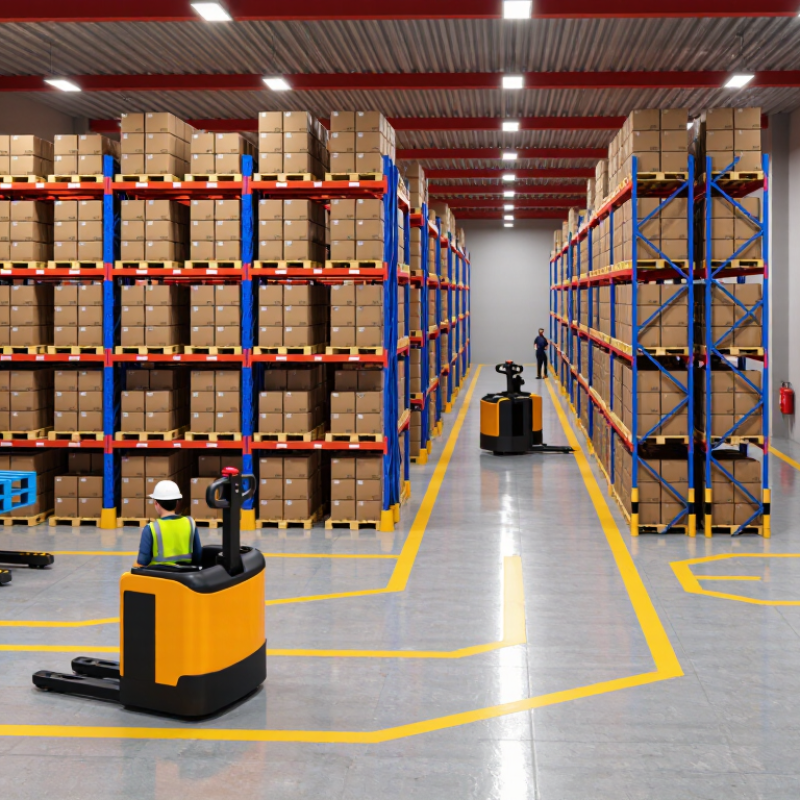
Choosing the right Electric Stacker Lift starts with the warehouse floor, not the product brochure. A narrow aisle, a low-clearance doorway, or a two-shift schedule can change which design makes sense. Walkie stackers suit short trips and compact spaces. Ride-on models help cover longer routes, while straddle and counterbalance types handle different pallet and load requirements. Small details matter. Measure the tightest turn. Check the pallet openings.
MHI and Deloitte’s 2024 Annual Industry Report surveyed supply-chain professionals and identified automation and technology investment as continuing industry priorities. That broad trend does not mean every site needs the same equipment. MHI CEO John Paxton’s industry perspective points to a practical principle: technology investments should address specific operational needs. Applied to stackers, that means comparing load capacity, lift height, travel distance, charging arrangements, and operator visibility against real warehouse tasks. The report provides context, not a substitute for a site assessment.
There is no universal best type. A compact walkie may work well beside a staging lane, yet slow down a high-throughput operation with long travel distances. A taller mast can reach upper levels, but clearance and stability deserve careful review. Safety matters, too. OSHA’s powered-industrial-truck guidance emphasizes operator training and safe operation; equipment selection should support both. Compare specifications with your actual loads and floor conditions. Then test the shortlist in the aisles where it will work. That is where the right choice becomes clear.
An electric stacker lift is a battery-powered material-handling truck designed to raise palletized loads and place them on racks. Unlike a counterbalanced forklift, many stackers use a tall mast and compact chassis, with the load carried ahead of the drive wheels. Operators may walk behind the unit or ride on a platform, depending on its design. The right description is practical: it lifts, transports, and positions pallets in tighter spaces.
Look closely at the mast, forks, power source, and operator controls. Rated capacity changes with lift height and load center, so a 1,000-kilogram rating does not mean every load can be raised to maximum height. A pallet’s weight, dimensions, and stability all matter. In a narrow aisle, even a small turning-radius difference can affect daily workflow. That detail is easy to miss.
OSHA’s Powered Industrial Trucks eTool reports about 85 fatalities and 34,900 serious injuries annually involving forklifts. Those figures cover powered industrial trucks broadly, not stackers alone, but they underline why operator training and clear visibility matter. MHI’s 2024 Annual Industry Report also notes that 55% of surveyed supply-chain leaders planned to increase technology investment. Automation is growing, yet a simple walk-behind stacker can still fit a small warehouse well. Specs help, but watching it handle a real pallet tells more.