How to Choose Scaffolding Equipment for Your Project?
Choosing scaffolding equipment starts with the work, not the catalogue. A façade repair, indoor ceiling installation, and long-running construction project each place different demands on access, stability, and working space. Before comparing products, note the required platform height, expected load, ground conditions, available access, and project duration. Small details matter. A narrow passage or uneven surface can affect which setup is practical.
Common options include frame scaffolds, modular system scaffolds, tube-and-coupler setups, and mobile towers. Each has trade-offs in flexibility, assembly time, transport, and suitability for a particular site. Check the manufacturer’s specifications for load capacity, compatible components, bracing, platform dimensions, and guardrails. Have a qualified person assess the setup and confirm that it matches the work and site conditions. Requirements may vary by location, so verify applicable standards before use.
A useful selection process also considers who will assemble, inspect, and move the equipment. Clear instructions and accessible replacement parts can prevent avoidable delays. Weather exposure, overhead obstacles, and nearby operations deserve attention too. No checklist catches every awkward corner. A rushed choice can look efficient on paper, yet prove difficult once materials arrive. This guide explains how to compare options, assess practical risks, and ask suppliers focused questions—so your decision is based on site needs, reliable product information, and the people who will use the equipment.
Define Project Requirements and Site Conditions
Before comparing scaffold types, define the work: required height, platform length, crew size, tools, and materials. Estimate the heaviest load on each platform, including workers and stored supplies. EN 12811-1 lists working-load classes; Class 3, for example, allows a uniformly distributed load of 2.0 kN/m². This is a useful reference, not a substitute for checking concentrated loads or the scaffold’s design.
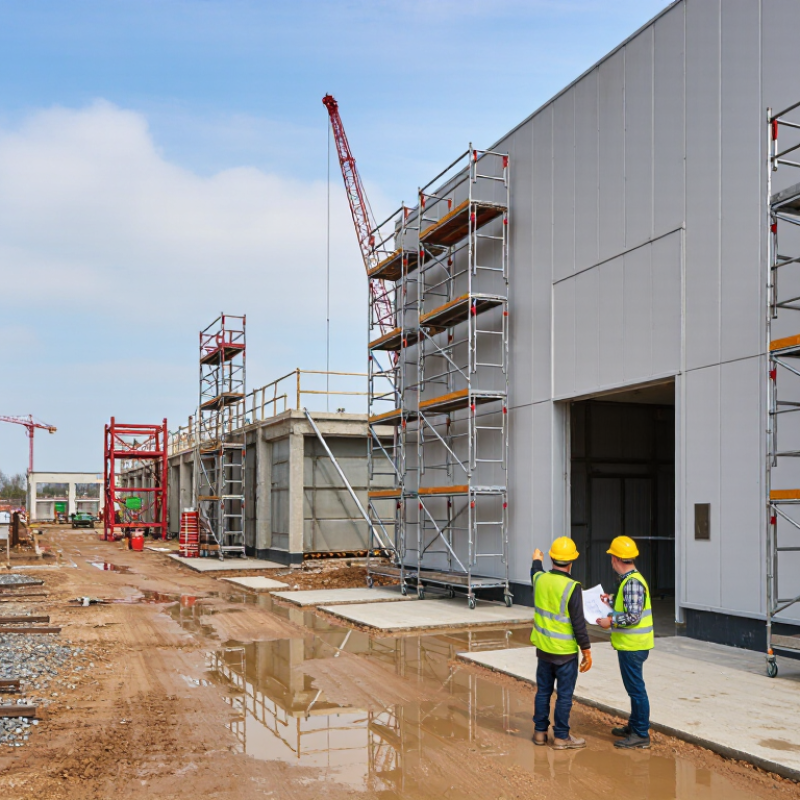
Then inspect the actual site. Soft soil, paving edges, slopes, drains, and buried services can affect base support. Note overhead obstructions, nearby power lines, access routes, and space for delivery and assembly. Wind exposure matters on open façades, especially when sheeting is planned. Small details matter. A doorway that looks wide enough on a drawing may not accommodate the assembled frame.
OSHA estimates that protecting workers from scaffold-related falls could prevent about 4,500 injuries and 50 deaths each year in the United States (OSHA, Scaffolding eTool). That figure makes access, guardrails, and safe erection planning essential—not optional details. Record site measurements and verify ground capacity before selecting equipment. I would not trust a tidy plan alone; actual ground conditions can be uneven, and assumptions sometimes prove wrong. When loads, height, or exposure are unusual, ask a qualified scaffold designer to review the requirements.
How to Choose Scaffolding Equipment for Your Project?
Define Project Requirements and Site Conditions
Compare the platform load class with the people, tools, and materials expected on the scaffold. Values shown are uniformly distributed loads from EN 12811-1; they are not a substitute for checking concentrated loads, wind exposure, ground conditions, access needs, or local regulations. Confirm the scaffold configuration and permitted loads with a qualified person.
Compare Scaffolding Types and Configurations
Choosing scaffolding starts with the work, not the equipment catalogue. A long, open wall may suit a frame scaffold, while a crowded facade with corners and changing elevations may need a more adaptable system. Think about ground conditions, access points, overhead obstructions, and how materials will reach each level.
Frame scaffolds are familiar and can be efficient on regular surfaces. System scaffolds use compatible components to create varied layouts, which helps around obstacles. Tube-and-coupler scaffolds allow highly customized shapes, but planning and assembly require careful attention. None is automatically the best choice. The crew’s experience matters.
Configuration changes how the scaffold performs. A single working platform may be enough for brief access, while multiple lifts can support different tasks at once. Check platform width, tie locations, guardrails, access ladders, and the rated load against the planned work. A narrow passage can make an otherwise sound layout awkward. Still, the neatest drawing does not prove a setup will work on site. Confirm dimensions in the field, follow the equipment instructions, and have a qualified person review the design and inspect the assembled scaffold before use.
Evaluate Load Capacity, Materials, and Safety Standards
How to Choose Scaffolding Equipment for Your Project?
Evaluate Load Capacity, Materials, and Safety Standards
Start with the total load, not just the number of workers. Include tools, building materials, and anything likely to be stored on the platform. A stack of bricks or a mortar tub can quickly change the calculation. Check the scaffold’s rated capacity and the manufacturer’s instructions, and never assume that a wider platform can carry more weight.
Material choice depends on the site. Steel is sturdy and often suits demanding work, but it is heavy to move and can corrode if its finish is damaged. Aluminum is lighter, which can help when equipment needs frequent repositioning. Timber components require careful checks for cracks, splits, and decay. I have seen project plans focus on working height while giving little attention to ground conditions. That deserves a second look. Soft or uneven ground may need suitable base support before assembly.
Check that the equipment meets applicable safety standards for your location and intended use. Confirm that components are compatible, and review inspection records rather than relying on a label alone. Guardrails, safe access, bracing, and ties must follow the scaffold design and local requirements. Ask a competent person to inspect the setup before use and after changes or severe weather. Small details matter. A missing pin can be easy to overlook, especially during a rushed shift.
Check Site Access, Assembly Needs, and Equipment Compatibility
How to Choose Scaffolding Equipment for Your Project?
Start with the route from delivery point to work area. Measure gates, corridors, floor openings, and overhead clearance. A frame that fits the work zone may not pass through a narrow doorway. Check ground firmness too: soft soil, uneven paving, and floor loading can affect the base and stabilizers. The U.S. Bureau of Labor Statistics’ 2022 Census of Fatal Occupational Injuries recorded 395 construction deaths from falls, slips, and trips. That figure is a reminder to treat access and stability as practical safety decisions, not minor details.
Assembly needs matter just as much. Confirm the available space for erecting frames, fitting braces, and installing platforms. Check the manufacturer’s instructions and ensure every component is compatible, including couplers, braces, decks, and guardrails. Mixing parts that appear similar can create a poor fit. A plan can look sound on paper and still fail at a tight corner. Recheck measurements before ordering; it is an easy step to rush.
Tips: Sketch the access route and mark its narrowest point. List the parts needed for the intended height and configuration. Ask a competent person to verify the setup and component compatibility before use. If delivery access is uncertain, test the route with a measured template first. It may feel overly cautious, but discovering a blockage after delivery is worse.