How to Choose the Right Geotextile Membrane for Your Project?
Choosing the right geotextile membrane is crucial for project success. Expert Dr. Linda Foster, a leading authority in geotechnical engineering, emphasizes, "The right geotextile membrane can save time and costs while enhancing project durability." Selecting the appropriate membrane ensures effective filtration, drainage, and soil stabilization.
In many projects, professionals struggle to identify the best geotextile membrane. The market offers various types, each designed for specific conditions. This variety can be overwhelming. It is essential to understand project requirements, soil characteristics, and environmental factors. Understanding why a geotextile membrane matters is necessary for optimal performance.
Experience shows that many overlook this critical decision. Taking time to evaluate membrane options can prevent costly mistakes. A well-chosen geotextile membrane not only protects but also enhances the overall integrity of infrastructures.
Understanding Geotextile Membranes: A Comprehensive Overview
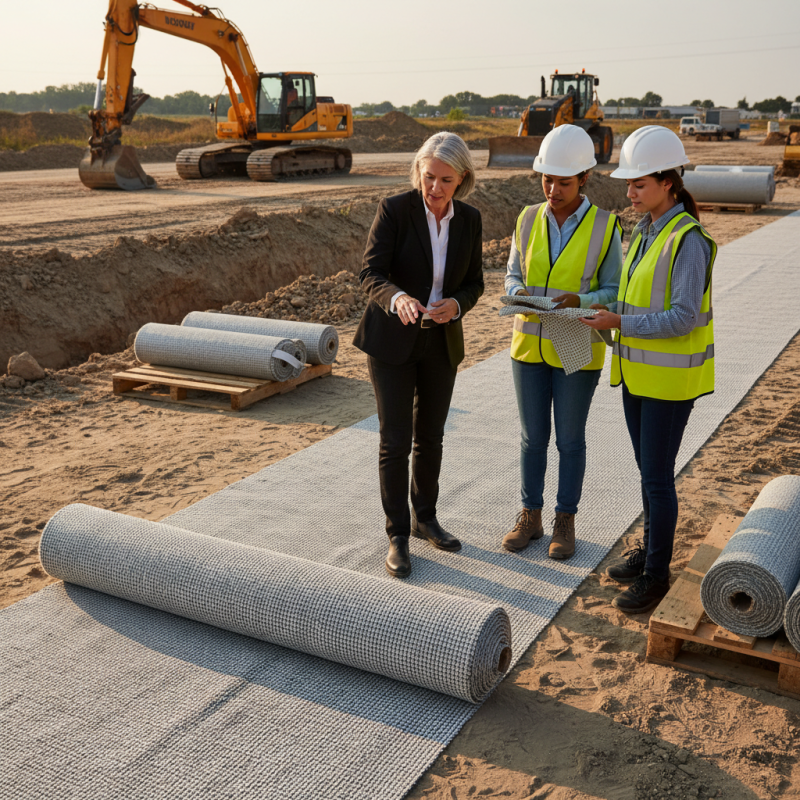
Geotextile membranes play a crucial role in various civil engineering projects. They are designed to enhance soil stability, control erosion, and manage water flow. According to the International Geosynthetics Society, the global geotextile market is projected to reach $13.69 billion by 2025. This growth highlights the increasing need for effective soil management solutions. Homeowners and engineers alike must understand the properties of different geotextiles to ensure they select the right type for their specific needs.
Geotextiles are typically categorized into woven and non-woven varieties. Woven membranes are ideal for applications requiring high tensile strength, such as road construction. Non-woven geotextiles, on the other hand, excel in drainage and filtration tasks. The choice between these options should be informed by the specific requirements of your project. Inadequate selection can lead to costly failures, such as soil erosion or water pooling. Recent studies show that improper usage of geotextiles can reduce their effectiveness by up to 30%. Thus, understanding the unique characteristics of each type is vital for long-term project success.
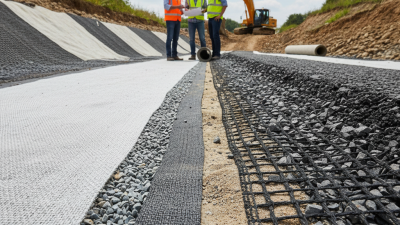
The installation process of geotextile membranes is another factor to consider. Poor installation techniques can negate the benefits of these materials. A study by Geosynthetics Magazine revealed that improper overlapping and insufficient anchoring are common mistakes that compromise membrane performance. A thoughtful approach to both selection and installation is essential. Ultimately, understanding geotextile membranes requires a blend of knowledge and practical experience. It’s important to approach this topic with careful consideration of both technical specifications and real-world applications.
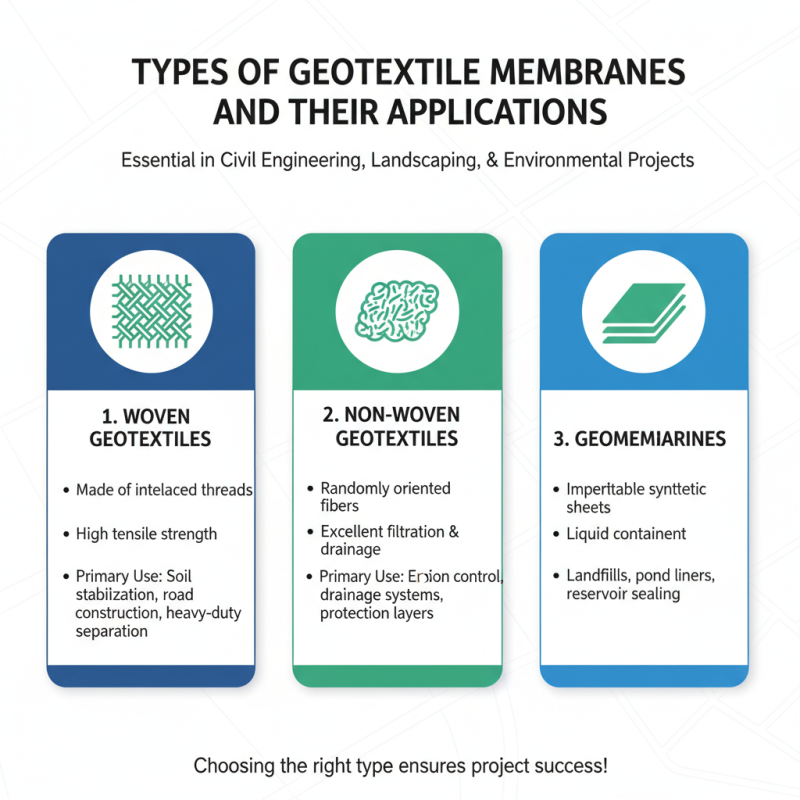
Types of Geotextile Membranes and Their Applications
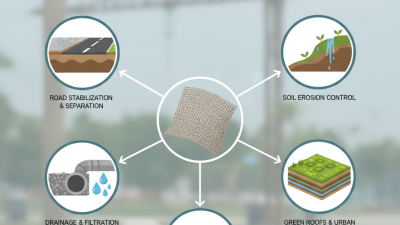
Geotextile membranes are essential in civil engineering, landscaping, and environmental applications. They serve various purposes, from erosion control to filtration. Understanding the types available is crucial for project success.
Woven geotextiles are strong and durable. They excel in applications requiring high tensile strength. These membranes are often used in road construction and stabilizing soil. Non-woven geotextiles, on the other hand, offer excellent drainage properties. They allow water to pass while filtering out soil particles. This makes them ideal for applications like drainage systems and separation layers.
In some cases, selecting the right geotextile can be challenging. Not all projects are the same. Environmental conditions play a significant role. For instance, in areas with high water flow, non-woven membranes may be beneficial. Yet, in high-stress situations, a woven option might be needed. It's essential to evaluate specific project requirements to avoid potential issues. Choosing the incorrect type can lead to project delays and increased costs.
Key Factors to Consider When Selecting Geotextile Membranes
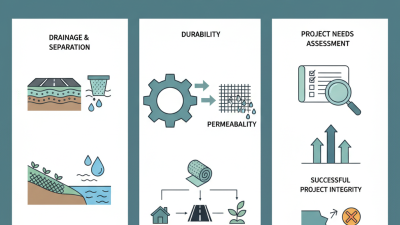
When selecting a geotextile membrane, consider several key factors that impact performance. The primary purpose of the membrane should guide your decision. Is it for drainage, separation, or reinforcement? Each application requires a different type of geotextile. Understand the project requirements thoroughly.
Material properties are vital. Look for durability and permeability. The right balance can enhance soil retention while allowing proper drainage. It's crucial to choose a membrane that fits the environmental conditions, such as temperature and moisture levels. Conducting soil tests can also offer valuable insights.
Tips: Keep an eye on installation practices. Poor installation can lead to failure irrespective of material quality. Evaluate the support structure and ensure compatibility. Pay attention to local regulations and standards. They often dictate the minimum requirements for geotextile usage.
Another factor to reflect on is cost-effectiveness. The cheapest option may not be the best. Evaluate the long-term performance benefits against initial costs. A higher investment upfront may save money over time. Always review your options carefully; rethink your requirements along the way.
Evaluating the Environmental Conditions for Geotextile Use
When selecting a geotextile membrane, evaluating environmental conditions is crucial. Factors like soil type, water flow, and climate significantly influence membrane performance. According to a report by the Federal Highway Administration, improper selection can lead to premature failure and costly repairs. As such, it’s vital to conduct thorough site assessments to ensure compatibility.
Soil composition affects the membrane's filtration and separation functions. For instance, sandy soils may require different properties than clayey types. A study by the Geosynthetics Institute indicates that nearly 30% of geotextile failures stem from inadequate soil analysis. Weather conditions also play a role; heavy rainfall can alter drainage patterns, necessitating membranes that withstand hydrostatic pressure.
Moreover, local flora and fauna can impact the choice of geotextile. Certain membranes are more resistant to biological degradation. A report from the International Society of Soil Mechanics highlights that environmental interactions can reduce a membrane's lifespan by up to 50%. Therefore, understanding the specific ecosystem is essential to ensure long-term performance and reliability.
Cost Analysis and Budgeting for Geotextile Membrane Projects
When budgeting for geotextile membrane projects, understanding costs is crucial. Often, the price per square meter varies widely. Factors such as material type, thickness, and durability play significant roles in determining the final cost. A standard woven geotextile may cost less than a non-woven option, but the latter often provides better filtration.
Beyond material costs, it's essential to consider installation expenses. Labor rates differ significantly based on location and project complexity. Hiring experienced teams can increase the upfront cost. However, quality installation can save money by preventing future issues.
Also, think about long-term maintenance costs. Some membranes require more upkeep than others, impacting the overall budget. During your planning, allocate funds for unexpected expenses. Projects rarely proceed without surprises, and having a financial cushion can make a significant difference. A careful cost analysis ensures you allocate resources effectively, delivering better outcomes.
How to Choose the Right Geotextile Membrane for Your Project? - Cost Analysis and Budgeting for Geotextile Membrane Projects
| Geotextile Type |
Cost per Square Meter ($) |
Durability (Years) |
Applications |
| Non-Woven Geotextile |
1.50 |
10 |
Drainage, Erosion Control |
| Woven Geotextile |
2.00 |
15 |
Separation, Reinforcement |
| Composite Geotextile |
3.20 |
20 |
Filtration, Drainage |
| Biodegradable Geotextile |
2.50 |
5 |
Soil Stabilization, Temporary Use |
| Geosynthetic Clay Liner |
4.00 |
30 |
Containment, Landfills |