How to Choose the Right Geotextile Membrane for Your Project?
Choosing the right geotextile membrane for your project can be a daunting task. According to Dr. Emily Thompson, a leading expert in geosynthetics, “Selecting the correct geotextile membrane is crucial for project success.” The decision involves understanding various factors like soil type, environmental conditions, and project requirements.
Many professionals underestimate the importance of proper selection. Not all geotextile membranes are created equal. Some may not perform effectively under certain conditions. This can lead to failures, increased costs, and project delays. For instance, a membrane that works well in dry conditions may not hold up in a wet environment.
Consider the application of the geotextile membrane. Are you using it for drainage, filtration, or reinforcement? Each application has specific needs. Sometimes, options might seem overwhelming. It's easy to overlook a critical detail in selecting the right product. A little research can save a lot of trouble down the road. Make sure to review material specifications and consult with experts when necessary.
Understanding the Basics of Geotextile Membranes
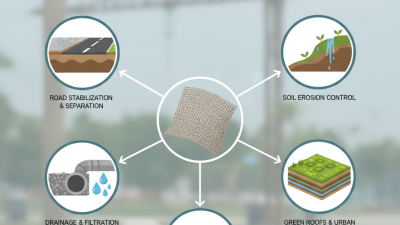
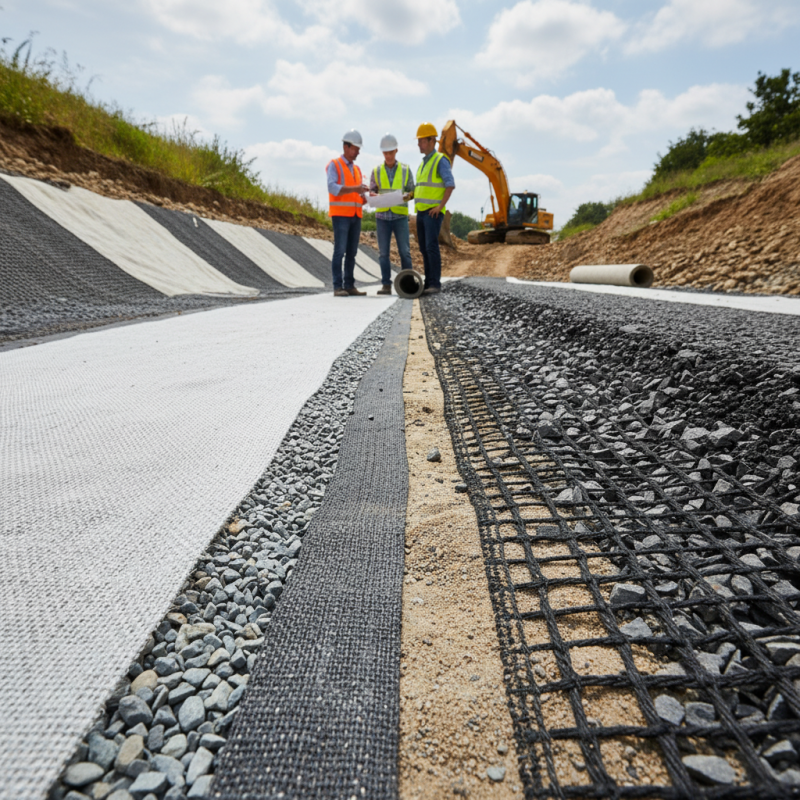
Geotextile membranes play a vital role in various construction and landscaping projects. These materials serve as effective solutions for soil erosion, drainage, and filtration. When selecting the right geotextile, understanding their basic functions is crucial. They can be either woven or non-woven. Woven membranes are strong and durable, while non-woven options offer excellent drainage.
Many people overlook the importance of choosing the right type for their specific needs. It’s essential to evaluate the site conditions and project requirements. Are you dealing with heavy rainfall or soft soil? Knowing the environment will guide your choice. Consider properties like permeability and tensile strength. These factors significantly impact the effectiveness of the membrane.
Mistakes happen. Sometimes, a membrane that seems perfect may not perform as expected. It's easy to focus on cost over quality. However, investing in the right geotextile can save money in the long run. Conduct thorough research and seek advice if needed. It’s about finding that balance between practicality and performance.
How to Choose the Right Geotextile Membrane for Your Project?
| Type of Geotextile |
Primary Use |
Material Type |
Typical Applications |
Usual Thickness (mm) |
Estimated Cost per Meter ($) |
| Non-woven Geotextile |
Separation and Filtration |
Polypropylene |
Road construction, sustainable drainage |
3-10 |
0.50 - 2.00 |
| Woven Geotextile |
Reinforcement |
Polyester |
Slope stabilization, retaining wall |
5-15 |
0.80 - 3.00 |
| Composite Geotextile |
Separation, drainage, and filtration |
Nonwoven and Woven |
Landfills, roadways, and embankments |
8-12 |
1.00 - 4.00 |
| Geocells |
Soil stabilization |
Polyethylene |
Slope protection, load support |
20-40 |
1.50 - 5.00 |
Types of Geotextile Membranes and Their Applications
When selecting a geotextile membrane, understanding the types is crucial. Geotextiles are classified into two main types: woven and non-woven. Woven geotextiles provide high strength and are ideal for soil stabilization projects. Their tensile strength can reach over 200 kN/m, making them suitable for heavy loads. These materials excel in applications like road construction and base reinforcement.
On the other hand, non-woven geotextiles are known for their permeability. They are often used for drainage applications due to their ability to allow water flow while retaining soil. Reports indicate that non-woven geotextiles can have permeability rates exceeding 30 cm/sec, which is beneficial for erosion control. However, these membranes may not withstand heavy weights as effectively as woven types, leading to potential project delays and cost overruns if misused.
Choosing the right type requires a thoughtful assessment of project needs. Misjudging soil conditions or load requirements can lead to ineffective drainage or premature material failure. It’s essential to weigh the advantages of each type against project demands. The decision should consider not just strength and permeability but also environmental factors. Remember, an informed choice today can prevent costly mistakes tomorrow.
Factors to Consider When Selecting Geotextile Membranes
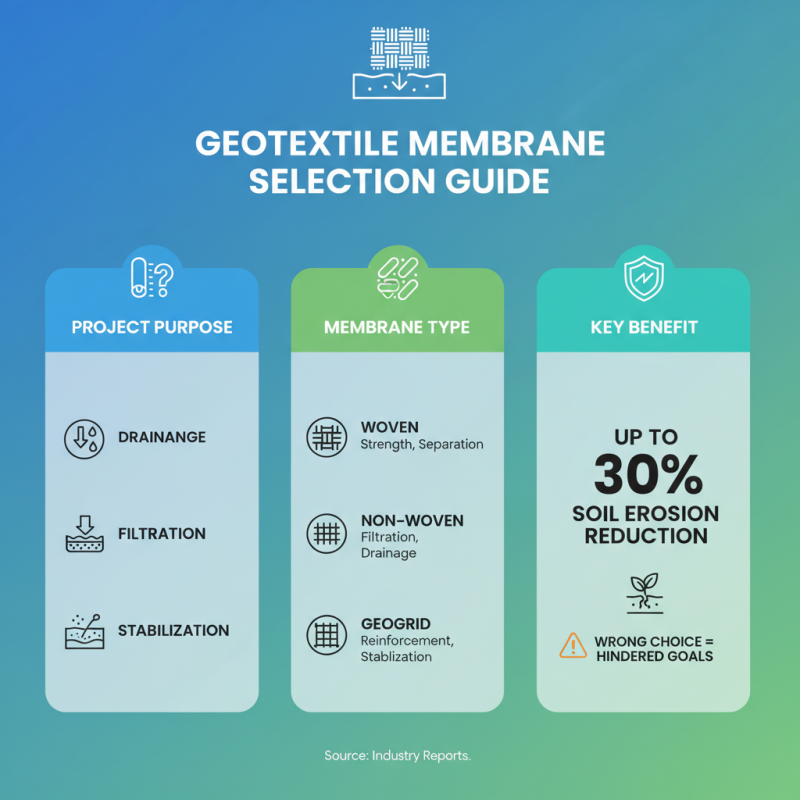
When selecting geotextile membranes, several factors come into play. The project’s purpose is crucial. Are you aiming for drainage, filtration, or stabilization? Different membranes serve different roles. According to industry reports, the effective use of geotextiles can lead to up to a 30% reduction in soil erosion. Choosing the wrong type can hinder project goals.
Consider the physical properties of the membranes. Assess permeability, tensile strength, and durability. Materials vary significantly; some are engineered for short-term use, while others are designed for longevity. It’s essential to analyze environmental conditions that the membrane will face. A membrane exposed to harsh weather will require superior resilience compared to one used underground.
Tips: Always test soil conditions before installation. This can prevent unexpected challenges. Also, consult with industry experts. Their insights can help tailor your choices to specific project needs. Keep in mind that an expensive membrane is not always the best solution for every situation. Some projects may benefit from simpler, less costly options.
Evaluating Performance and Durability of Geotextile Options
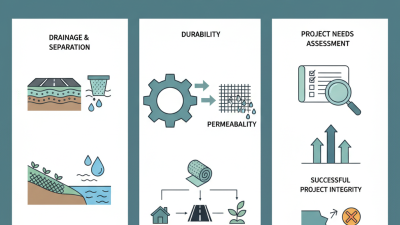
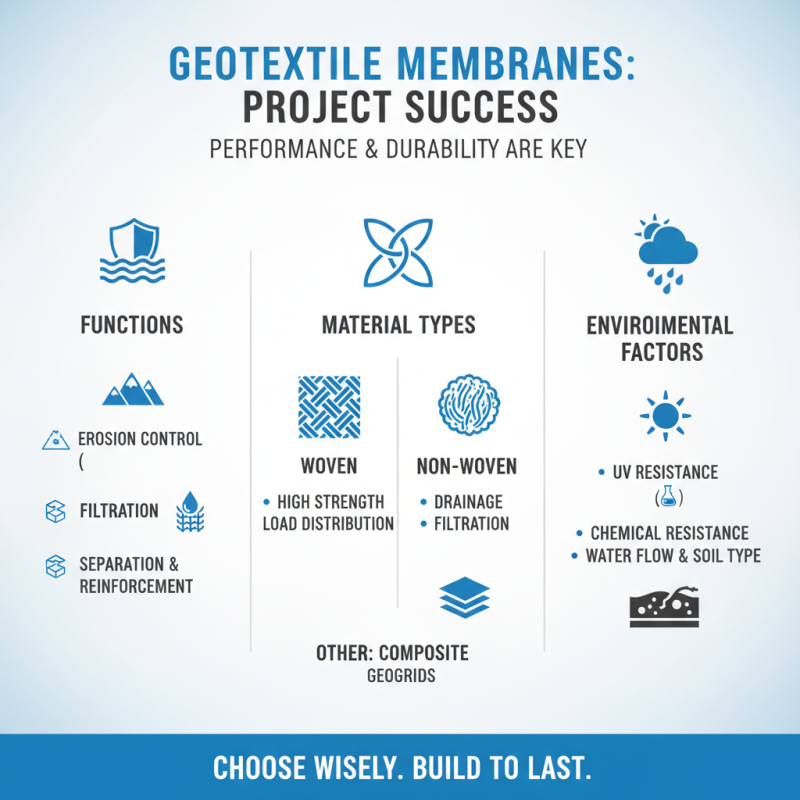
Choosing the right geotextile membrane is critical for project success. Performance and durability must be assessed carefully. Geotextiles serve various functions, from erosion control to filtration. Different materials exhibit distinct characteristics under various environmental conditions.
When evaluating durability, consider the membrane's resistance to degradation. Factors like UV exposure, moisture, and mechanical stress play a role. Some geotextiles offer greater longevity, while others may need replacement sooner. Always check how the material reacts over time.
Tips: Test the geotextile in real-world conditions. Observe how it withstands local weather factors. Don't rely solely on manufacturer claims; hands-on assessments are essential. Adjust your choices based on specific project needs.
Remember, not every option fits every task. You might feel overwhelmed by choices, and that's normal. Focus on the key attributes that suit your objective. A well-informed decision can lead to long-term efficiency in your project.
Cost-Effectiveness and Budgeting for Geotextile Projects
When embarking on a geotextile project, cost-effectiveness is a key factor. A recent industry report indicates that utilizing geotextiles appropriately can reduce project costs by up to 30%. This is substantial, especially for large-scale infrastructure projects. Budgeting wisely can make a significant difference in overall expenses.
Understanding the materials you need is crucial. Geotextiles come in various types, each with different pricing. The average price range is between $0.50 and $2.00 per square meter. An incorrect choice can lead to overspending. It’s essential to assess the project’s requirements carefully. Not all projects require high-end materials. Sometimes, a simpler fabric can suffice.
But here lies a challenge: achieving the right balance between cost and quality can be tricky. Allocating a tight budget may force compromises. This might lead to future issues, like inadequate drainage or erosion control. Reflecting on past projects reveals that a well-planned budget often saves money long-term. Investing in the right type of geotextile can prevent costly repairs down the line.