
Pease Pottage 01403 275 276
Petersfield 01730 777 350
Maidstone 01795 843 866
Cullompton 01884 211 788

China Top Commercial Smart Locks for Global Buyers?

commercial smart locks are moving from premium offices into hotels, warehouses, schools, and managed apartment buildings. Mordor Intelligence estimates that the global smart lock market could grow from about USD 2.3 billion in 2024 to nearly USD 4.9 billion by 2029. Fortune Business Insights reports a different forecast, reaching roughly USD 5.9 billion by 2032. The gap reflects different market definitions, not necessarily poor research.

China is now a major sourcing base for these products. Its manufacturers offer fingerprint readers, RFID cards, mobile credentials, keypad entry, remote management, and gateway-based integrations. For global buyers, however, features are only the visible layer. A reliable commercial smart locks supplier should provide documented factory testing, stable firmware support, encryption practices, and clear access-log controls. Certification may also matter, including CE, UKCA, FCC, UL, ANSI/BHMA, or EN 14846, depending on the destination and installation environment.

Real projects reveal the difference. A hotel lock must survive repeated door cycles, weak network coverage, battery failures, and rushed staff training. A warehouse lock may need stronger metal construction and permission levels for contractors. Low prices can look attractive. They may hide integration costs, replacement batteries, or limited after-sales support. That deserves honest attention.

This guide evaluates China’s top commercial smart locks for global buyers through practical criteria: security design, durability, software compatibility, certifications, customization, supply capacity, and service responsiveness. Market forecasts are useful, but they cannot replace sample testing. A polished catalog is not proof. Buyers should request test reports, API documentation, warranty terms, and pilot units before approving large orders.
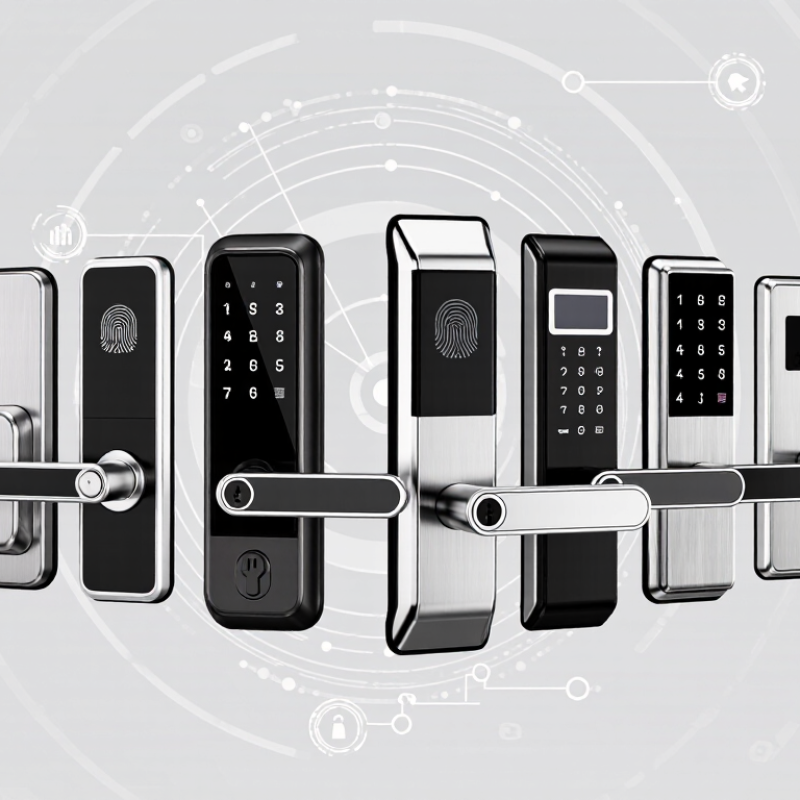
China Top Commercial Smart Locks for Global Buyers?

What Defines a Commercial Smart Lock for Global Buyers?

A commercial smart lock is more than a phone-controlled deadbolt. For global buyers, it must manage people, doors, data, and operational risk across different sites. Grand View Research estimates the global smart lock market will grow strongly through 2030, with commercial buildings among the important application areas. Growth alone, however, does not define quality.

In practice, buyers should examine credential flexibility first. A reliable system can support cards, PINs, mobile credentials, temporary passes, and mechanical override procedures. It should record who entered, which door opened, and when access changed. Offline operation matters too. A network outage should not stop a hotel floor, warehouse, or office entrance. The system also needs clear user permissions, encrypted communication, firmware updates, and integration with access-control platforms. NIST identity guidance supports stronger authentication and lifecycle management, while the Verizon 2024 Data Breach Investigations Report identified credential abuse in 22% of leading initial access cases.

The details become physical. A lock facing rain, dust, frequent deliveries, or emergency evacuation needs suitable durability and tested failure behavior. Procurement teams should request lifecycle data, not only attractive specifications. Some suppliers still emphasize remote unlocking more than audit reliability. That is a warning. No commercial lock is perfectly smart, and connectivity can create new dependence. Global buyers should test local network loss, lost credentials, staff turnover, and after-sales response before signing large orders. One overlooked access rule can become an expensive operational problem.

Key Types of Commercial Smart Locks Made in China

China Top Commercial Smart Locks for Global Buyers?

Key Types of Commercial Smart Locks Made in China

Commercial smart locks made in China now cover offices, hotels, warehouses, and shared facilities. According to MarketsandMarkets, the global smart lock market may grow from about USD 2.2 billion in 2024 to USD 4.4 billion by 2029. This growth reflects stronger demand for managed access and audit records.

Hotel RFID locks remain common. They support room cards, battery alerts, and emergency power contacts. Office keypad locks suit staff entrances and meeting rooms. Mobile-enabled locks use Bluetooth or temporary digital keys. Biometric models add fingerprint recognition for restricted areas. For warehouses, wired electronic locks can connect with access-control panels and door sensors. Cabinet and locker locks are smaller, but they still need reliable logs.

The best type depends on traffic, door material, and network conditions. A busy factory may need wired power and mechanical override. A small office may prefer keypad access with local storage. According to Fortune Business Insights, commercial applications are a major smart-lock growth area, but market forecasts vary by region and definition. That matters when comparing suppliers.

Tips: Ask for test reports, IP ratings, battery-cycle data, and firmware update procedures. Check compatibility with your door thickness and mortise size. Request sample units before bulk purchasing. A low price can hide weak hinges, poor seals, or limited support. No lock is perfect. I would also test access recovery during a network outage, because real buildings rarely behave like showroom demonstrations.

China-Made Commercial Smart Locks: Key Types for Global Buyers

Typical battery life and supported access methods by commercial smart-lock category. Values are indicative industry ranges based on common commercial specifications and are not brand-specific market data.

Hotel RFID locks prioritize card-based access, office locks typically combine PIN, RFID, mobile, and mechanical override, while fingerprint and gate locks emphasize higher-security identity verification and broader access control.

Core Features and Standards to Evaluate Before Purchase

Commercial smart locks should be evaluated as access-control equipment, not fashionable door accessories. Check whether they support PIN codes, cards, mobile credentials, and mechanical override. Different sites need different entry methods. A warehouse may require offline access during network outages. A hotel may need temporary codes that expire automatically.

Ask for clear audit logs showing who entered, when, and through which door. Data should be encrypted during transmission and storage. Confirm administrator permissions, remote deletion, firmware updates, and account recovery procedures. A convenient app means little if access data remains exposed. Request independent cybersecurity evidence when available, rather than relying on marketing claims.

Physical performance matters just as much. Review lock-cycle testing, emergency egress behavior, battery endurance, and low-power warnings. Check fire, weather, dust, and corrosion requirements for the installation site. Relevant standards may include ANSI/BHMA or EN-based testing, but acceptance rules differ by country and building type. Verify certificates with the issuing body. Do not assume CE marking alone proves security or durability. A lock may pass laboratory tests and still perform poorly on an uneven door. Measure the frame, latch position, and door thickness before ordering. I have seen installation errors create more failures than electronic defects. Require sample testing, written warranty terms, spare-part availability, and local technical support before approving a large shipment.

China Top Commercial Smart Locks for Global Buyers? - Core Features and Standards to Evaluate Before Purchase

Evaluation Category Key Criterion Recommended Commercial Baseline Relevant Standards or Protocols What Global Buyers Should Verify
Security & Certification Product security certification Select products supported by documented third-party testing for the target market. Certification should apply to the complete lock or access-control system, not only to an individual electronic module. UL 294 EN 14846 IEC 60839-11-1 Request current certificates, certification scope, model numbers, test laboratory details, and the countries or regions covered.
Mechanical Security Lock case, cylinder, and lever durability Use commercial-grade components with tested cycle performance, protected mounting points, anti-drill provisions where required, and a mechanical key or emergency override policy suitable for the site. ANSI/BHMA A156.13 EN 12209 EN 14846 Check the tested cycle rating, door thickness range, backset, handing, cylinder format, fire-door compatibility, and replacement-part availability.
Authentication Credential options Support at least two independent credential methods, such as RFID card, mobile credential, PIN, biometric verification, or a mechanical override, with configurable permissions and revocation. ISO/IEC 14443 ISO/IEC 15693 BLE Confirm supported card technologies, credential encryption, offline operation, lost-card blocking, temporary access, audit records, and administrator roles.
Mobile Access Bluetooth and smartphone compatibility Bluetooth Low Energy access should support current Android and iOS versions used by the target market. The system should allow credential expiry, remote revocation, and event logging. Bluetooth Low Energy AES-128/256 TLS Test real phones, operating-system versions, pairing distance, credential sharing, offline behavior, and access recovery when a phone or account is lost.
Connectivity Online and offline operating modes The lock should continue to enforce locally stored permissions during temporary network outages. Online systems should synchronize events and configuration after connectivity is restored. Ethernet Wi-Fi LTE/4G Measure recovery time, event synchronization behavior, local memory capacity, network failover, and the effect of internet or cloud-service interruption.
Cybersecurity Data protection and secure updates Use encrypted communication, unique device credentials, role-based administration, secure firmware updates, audit logs, and a documented vulnerability-response process. TLS 1.2 or later HTTPS Secure Boot AES Ask about encryption at rest and in transit, password policy, certificate management, firmware signing, update frequency, penetration testing, and security incident notification.
Access Management Administration and audit trail Provide multi-level administrators, time schedules, zones or doors, visitor permissions, bulk user management, exportable reports, and tamper or forced-entry alerts. RBAC NTP CSV/API Export Confirm user capacity, event-retention period, time-zone handling, daylight-saving support, API documentation, and compatibility with existing identity systems.
System Integration Building and access-control integration For larger sites, prefer documented interfaces for access-control panels, property-management systems, visitor systems, elevators, alarms, and identity platforms. OSDP v2 Wiegand REST API SIP/HTTP Confirm wiring, reader compatibility, event direction, encryption support, licensing, API limits, and whether integration requires a proprietary gateway.
Power Battery life and power backup Battery-operated locks should provide a clearly stated service-life estimate under defined usage conditions. Wired units should include power-failure behavior and an emergency power method where appropriate. Alkaline/Lithium Battery PoE 802.3af UL 294 Test battery life using the expected daily access volume, temperature range, credential type, wireless mode, and alarm settings. Confirm low-battery alerts and emergency power access.
Environmental Protection Weather, dust, and corrosion resistance Exterior hardware should have an enclosure rating appropriate to the installation location, along with corrosion-resistant materials and operating-temperature specifications. IEC 60529 IP Ratings ISO 9227 IEC 60068 Check the exact IP rating, salt-spray test duration, operating temperature, humidity limits, UV exposure, drainage design, and suitability for coastal or outdoor environments.
Fire & Life Safety Fire-door and egress compatibility The lock must not compromise required emergency egress, fire-door assembly performance, or local building-code requirements. Fail-safe and fail-secure behavior must be selected by risk and code requirements. NFPA 80 NFPA 101 EN 1634-1 UL 10C Obtain door-assembly listings, release-time behavior, emergency-exit documentation, local authority approval requirements, and fire-rating limitations.
Accessibility Usability and accessible operation Controls should be reachable and usable by people with different abilities. The installation should preserve required clearances, opening forces, visual indicators, and accessible egress. ADA ICC A117.1 EN 17210 Review mounting height, lever operation, keypad visibility, tactile or audible feedback, door-opening force, wheelchair approach space, and local accessibility rules.
Installation Door and hardware compatibility The product should support the actual door material, thickness, swing direction, mortise or cylindrical preparation, frame condition, and power or network routing available at the site. ANSI/BHMA EN Hardware Series Local Building Codes Complete a door survey covering dimensions, alignment, fire rating, existing hardware, strike position, cable paths, and installation tolerances before ordering.
Performance Response time and throughput Authentication should be fast enough for the site’s traffic pattern, with predictable unlocking, relocking, and event-reporting behavior during peak periods. Manufacturer Test Method Site Acceptance Test Measure authentication time, unlock time, relock time, simultaneous-user handling, offline response, and peak-hour queue impact using representative credentials.
Supply & Lifecycle Warranty, spare parts, and support Commercial procurement should include a written warranty, defined technical support, firmware-maintenance policy, replacement batteries or parts, training, and an end-of-life plan. SLA RMA Process Change Control Confirm warranty duration, response times, local service coverage, spare-part lead times, minimum order quantities, software fees, and data-export rights if service is discontinued.
Compliance & Privacy Personal-data and regional compliance Collect only necessary personal data, define retention periods, restrict administrator access, and provide suitable data-processing and cross-border-transfer controls for the target region. GDPR CCPA/CPRA ISO/IEC 27001 Review hosting location, sub-processors, data deletion, access requests, breach notification, biometric-data handling, and contract terms for international data transfers.
Purchasing note: Standards and approval requirements vary by door type, building use, installation country, and local authority. Request product-specific certificates and complete a site acceptance test before placing a large commercial order.

How to Compare China’s Leading Commercial Lock Suppliers

China Top Commercial Smart Locks for Global Buyers?

Comparing China’s leading commercial lock suppliers requires more than checking price lists. Start with the lock’s daily operating environment. A hotel corridor, warehouse gate, and office entrance need different hardware. Review access methods, battery life, emergency power, weather resistance, and mechanical override options. Test samples with real doors, not only demonstration panels. Small alignment problems can become expensive service calls.

Ask each supplier for factory audit records, product test reports, and clear certification details for your destination market. Confirm whether reports cover the exact model and firmware version. Examine encryption practices, administrator permissions, event logs, and data storage locations. A reliable supplier should explain software updates in plain language. Request a written warranty, spare-parts list, repair process, and response time. Do not accept vague promises.

Commercial buyers should also compare manufacturing capacity, minimum order quantities, packaging quality, and production lead times. Inspect sample locks after repeated use, low-battery conditions, and network interruptions. The cheapest quote may hide installation labor or replacement costs. I have seen attractive proposals fail because the management platform was difficult for local staff. That mistake is easy to repeat. Leave room for training, pilot testing, and honest feedback before a large order. Supplier communication matters too; delayed answers during sampling often predict harder project support later.

Import, Installation, Security, and After-Sales Considerations

Commercial smart locks from China can serve hotels, offices, warehouses, and rental buildings. Global buyers should assess more than appearance and access methods. Import documents, product classifications, packaging quality, and destination requirements must match before shipment. Request technical sheets, test reports, wiring diagrams, and sample units. Confirm whether the lock fits local doors, cylinders, power systems, and network standards.

Installation is unforgiving. A strong lock still fails when door gaps, strike plates, or batteries are ignored. Ask for installation videos and clear mounting templates. Test fingerprint readers, cards, mobile access, emergency power, and offline operation before scaling. A pilot room can reveal problems that product photos hide. Local installers also need training, especially for fire exits and emergency release settings.

Security should include encrypted communication, administrator controls, event logs, and controlled firmware updates. Ask where access data is stored and how it is removed. Requirements differ by country, so local legal and privacy reviews remain necessary. After-sales support deserves equal attention. Confirm response times, spare-part availability, warranty coverage, and remote troubleshooting procedures. Keep replacement batteries, readers, cables, and mechanical components nearby. Details decide uptime.

The lowest purchase price can become expensive after installation. This calculation is often incomplete. Some buyers also overlook software fees or changing cloud requirements. Written service terms reduce that uncertainty. A reliable supplier should answer technical questions directly, disclose limitations, and support testing instead of promising perfection. That honesty matters when a lock controls hundreds of daily entries.