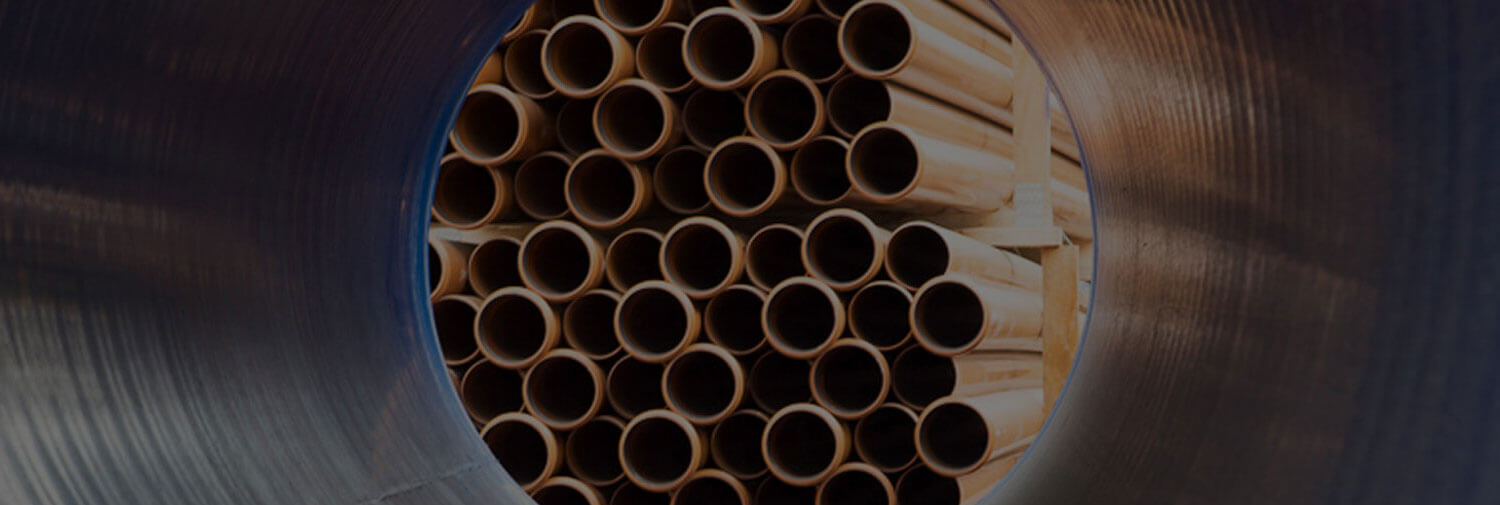
China’s underground drainage industry has developed quickly, supported by large infrastructure projects, expanding cities, and stronger demand for durable pipe systems. However, choosing a reliable manufacturer requires more than comparing factory prices or product photographs. Pipe material, ring stiffness, joint design, production testing, installation support, and long-term field performance all deserve attention.
Professor Richard Ashley, a respected urban drainage researcher, has emphasized, “Urban drainage must be judged as a system, not merely as a pipe.” This principle guides the selection in this article. The following China Top 10 Underground Drainage Pipe Manufacturers are considered through practical and technical factors, including manufacturing experience, product range, quality controls, project references, export capability, and customer service. The list may help buyers compare HDPE, PVC, reinforced concrete, and other drainage solutions more carefully.
Real projects reveal details that catalogues often hide. A pipe may look strong, yet poor joint alignment can cause leakage beneath a busy road. A lightweight product may reduce handling costs, but local soil pressure still matters. Site conditions can change everything. This article does not treat one manufacturer as perfect, because every supplier has limitations, regional strengths, and areas requiring verification. Buyers should request current certificates, inspection records, test results, and clear warranty terms before making a final decision. Some information can also change over time. That is worth remembering. This introduction provides a practical starting point for evaluating Chinese underground drainage manufacturers with greater confidence and fewer costly assumptions.
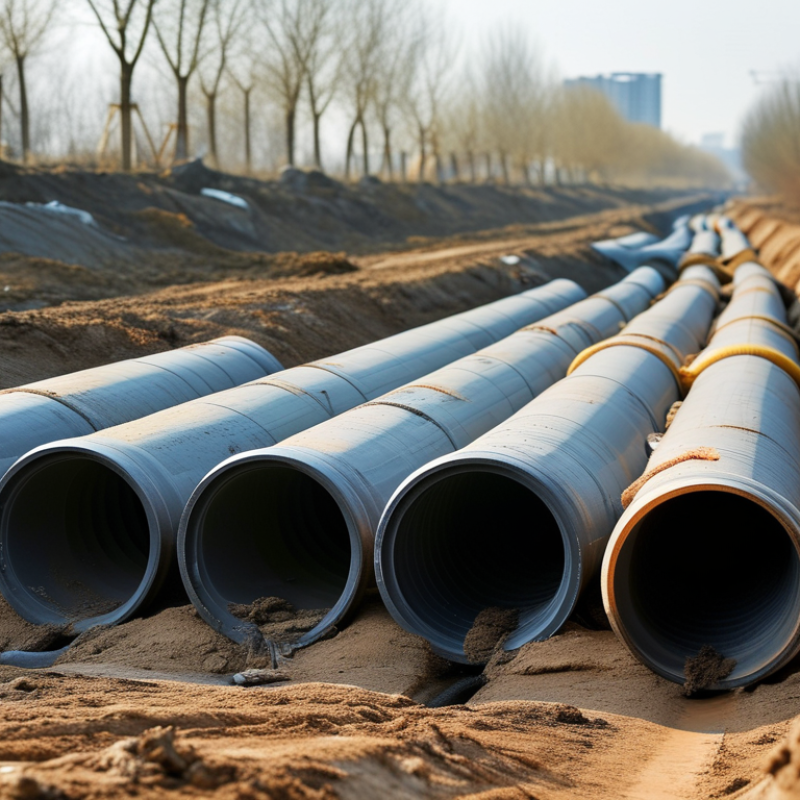
Underground drainage pipes are engineered channels that carry stormwater, wastewater, or groundwater beneath roads, buildings, and industrial areas. They include rigid concrete systems and flexible plastic systems, selected according to soil pressure, flow demand, and installation depth. Their work is mostly invisible. Their failure is not. A blocked or cracked pipe can leave a familiar street under muddy water within minutes.
China’s need is expanding with urban growth. The National Bureau of Statistics reported that China’s urbanization rate reached 66.16% in 2023, increasing pressure on existing drainage networks.
The Ministry of Housing and Urban-Rural Development’s China Urban Construction Statistical Yearbook also records a nationwide urban drainage pipeline network measured in hundreds of thousands of kilometers. These figures show scale, but not always condition. That is the difficult part. Age, poor joint sealing, soil movement, and undersized inlets can reduce performance long before a pipe visibly collapses.
Professional selection should examine hydraulic capacity, ring stiffness, abrasion resistance, joint design, and inspection access. Field experience suggests that installation quality often matters as much as pipe material. A strong pipe can still fail. Improper bedding, uneven compaction, or careless connections create weak points underground. Designers should therefore match pipe specifications with rainfall data, groundwater conditions, traffic loads, and local maintenance practices. The best system is not simply the largest one. It is the one that remains inspectable and serviceable after years of wet seasons.
China Top 10 Underground Drainage Pipe Manufacturers?
Evaluating China’s underground drainage pipe manufacturers requires more than comparing prices. Start with material evidence. Ask whether pipes use HDPE, PVC, reinforced concrete, or another specified material. Request resin certificates, test reports, and production records for each batch. A reliable factory should explain wall thickness, ring stiffness, joint design, and expected service life clearly.
Visit the production site when possible. Observe extrusion lines, concrete curing areas, storage conditions, and inspection equipment. Check whether workers measure diameter, ovality, pressure resistance, and impact strength regularly. Independent laboratory testing adds credibility, especially for large municipal projects. Ask for project references with similar soil, traffic loads, and drainage capacity. Photos are useful, but installation records are better.
Review technical drawings, packaging methods, and delivery controls before signing. Pipes may pass factory tests yet fail because of poor bedding or damaged joints. The manufacturer should provide installation guidance and respond quickly to field questions. Confirm production capacity through a small trial order. This exposes weaknesses early. A polished brochure can still hide inconsistent dimensions. I have seen specifications change between samples and mass production. That risk deserves attention. No evaluation is perfect. Document every promise, test requirement, and acceptance standard in writing.
| No. | Evaluation Dimension | What to Verify | Relevant Standard or Technical Reference | Recommended Evidence | Suggested Weight |
|---|---|---|---|---|---|
| 1 | Product Scope | Confirm whether the manufacturer supplies non-pressure underground drainage and sewerage pipes, fittings, manholes, inspection chambers, and connection components. | EN 1401 for PVC-U non-pressure underground drainage; EN 13476 for structured-wall plastic piping systems. | Current product catalogue, technical datasheets, dimensional tables, and application references. | 10% |
| 2 | Material Quality | Verify the resin type, material grade, recycled-content policy, additives, compound traceability, and compatibility with the intended wastewater environment. | Applicable PVC-U, PE, PP, or structured-wall pipe product standard; material declarations should match the supplied product. | Raw-material certificates, batch records, laboratory test reports, and incoming-material inspection procedures. | 10% |
| 3 | Ring Stiffness | Check the declared stiffness class and ensure it is suitable for burial depth, soil conditions, groundwater, traffic loading, and installation quality. | ISO 9969 is used for determining ring stiffness of thermoplastics pipes; project requirements may specify SN classes such as SN4 or SN8. | Independent test report, stiffness-class declaration, and installation design calculation. | 15% |
| 4 | Dimensional Accuracy | Evaluate outside diameter, wall thickness, socket dimensions, ovality, length tolerance, and fitting compatibility. | The applicable product standard defines dimensional tolerances and measurement methods. | Factory inspection records, calibrated measuring equipment, and sample dimensional inspection. | 10% |
| 5 | Hydraulic Performance | Assess internal smoothness, flow capacity, joint alignment, allowable deflection, and resistance to leakage under operating conditions. | Product-specific drainage standards and project hydraulic calculations; infiltration and exfiltration testing may be specified. | Hydraulic design data, leakage-test results, joint test records, and approved installation instructions. | 10% |
| 6 | Joint and Sealing System | Verify gasket material, joint design, angular deflection capability, insertion depth, watertightness, and resistance to root penetration where required. | The relevant product standard and project specification should define joint-performance requirements. | Gasket specifications, joint test reports, installation tools, and field-quality checklist. | 12% |
| 7 | Production Capacity | Confirm available extrusion lines, maximum pipe diameter, monthly capacity, tooling availability, production lead time, and ability to support phased deliveries. | Capacity is a commercial qualification factor rather than a product-standard requirement. | Factory audit, production plan, equipment list, capacity statement, and recent delivery records with customer details anonymized. | 10% |
| 8 | Quality Management | Review documented controls for raw materials, extrusion, dimensional inspection, testing, nonconforming products, corrective actions, and product traceability. | ISO 9001 provides a recognized quality-management-system framework. | Valid certificate issued by an accredited certification body, audit report, inspection plan, and calibration records. | 12% |
| 9 | Compliance and Sustainability | Check environmental controls, energy management, waste handling, product declarations, and compliance with destination-market requirements. | ISO 14001 addresses environmental management systems; additional requirements depend on the destination market. | Environmental certificate, material declaration, restricted-substance statement, and factory environmental records. | 8% |
| 10 | Export Service and Total Cost | Compare quotation transparency, packaging, container utilization, Incoterms, documentation, warranty, spare fittings, communication, and after-sales support. | Commercial terms should be evaluated against the project contract, delivery schedule, and destination-country import rules. | Itemized quotation, production schedule, packing list, warranty terms, shipping references, and service-response procedure. | 13% |
| Total Recommended Evaluation Weight | 100% | ||||
China’s Top 10 Underground Drainage Pipe Manufacturers are increasingly judged by project evidence, not factory size alone. A 2024 Global Market Insights report estimated strong long-term growth in the global plastic pipes market, driven by urban drainage and water infrastructure. China remains a major production base, supported by extensive municipal construction and a mature polymer supply chain.
Reliable manufacturers usually provide structured quality records. These include melt-flow testing, ring stiffness results, impact checks, and joint-sealing inspections. For underground systems, engineers commonly compare GB/T 5836.1, GB/T 19472, ISO 9969, EN 1401, and ASTM D3034 requirements. Wall thickness matters. So does installation guidance. A pipe can pass factory testing yet fail after poor bedding, uneven backfill, or excessive site loading.
China’s Ministry of Housing and Urban-Rural Development has reported urban wastewater treatment rates above 98% in recent years, increasing attention on collection networks and leakage control. The strongest manufacturers therefore show traceability from resin batches to finished pipe sections. Some also use online dimensional monitoring and laboratory pressure testing. That sounds reassuring, but documentation is not field performance. Buyers should inspect reference projects, delivery consistency, and technical support during installation. I would also question unusually low quotations. They may reflect thinner walls, recycled inputs, or incomplete testing, although price alone never proves poor quality. Underground defects remain hidden for years. That makes practical verification essential.
A practical top-ten review should examine products, testing, and site experience. Leading Chinese factories commonly produce HDPE corrugated pipes, PP structured-wall pipes, PVC-U pipes, and reinforced concrete systems. Typical diameters range from 200 to 4,000 millimeters. Many production lines support ring stiffness classes such as SN4, SN8, and SN16. These ratings matter under roads, parking areas, and deep burial conditions.
Modern facilities use twin-screw extrusion, spiral winding, automatic socketing, and controlled thermal welding. Some plants operate online wall-thickness monitoring and barcode traceability. Independent laboratories usually verify ring stiffness, impact resistance, watertightness, and dimensional accuracy under ISO 9969, ISO 11296, EN 13476, or ASTM requirements. Standards help, but they do not replace field inspection. That assumption is convenient, but incomplete.
UN-Water has estimated that more than 80% of global wastewater is discharged without adequate treatment. This figure increases pressure on reliable collection networks, especially in fast-growing cities. Manufacturers with strong engineering teams can provide hydraulic calculations, manhole connections, trench guidance, and jointing procedures. Production capacity alone is not enough. A factory may advertise large output, yet struggle with consistent recycled-material control or complex fittings. Buyers should request recent test reports, batch records, raw-material certificates, and installation references. Small details decide performance.
China Top 10 Underground Drainage Pipe Manufacturers
How to Choose the Right Chinese Manufacturer for Your Project
A top-ten list can narrow your search, but it cannot replace project-specific checking. Start with the pipe material, diameter, stiffness class, joint design, and burial depth. Ask each Chinese manufacturer for recent test reports, production records, and installation references from similar soil conditions. Experienced suppliers should explain pressure resistance, chemical durability, temperature limits, and expected service life in clear technical language.
Visit the factory when possible. Watch how resin, reinforcement, extrusion, dimensional inspection, and pressure testing are controlled. Request a production sample before signing a large order. Check wall thickness at several points, not only at the pipe end. Small variations can create difficult site problems. Review quality certificates, packing methods, lead times, and export documentation. Communication matters too. A technically strong factory may still fail if it answers slowly or changes specifications without written approval.
Tips: Compare total project cost, not only the unit price. Include molds, testing, inland transport, spare joints, and replacement risks. Confirm inspection responsibility before production begins. Keep drawings and acceptance standards in one approved file. I have seen low-cost orders become expensive after unclear tolerances caused installation delays. That warning is easy to overlook. Also, ask how complaints are handled after delivery. A reliable manufacturer should provide traceable batch numbers, practical installation guidance, and evidence rather than confident promises.