China Top 10 Corrugated Drain Pipe Manufacturers?
China’s corrugated drain pipe market includes manufacturers serving farms, road projects, landscaping, and municipal drainage. Choosing among them takes more than comparing prices. Buyers should check pipe diameter, wall profile, material specifications, connection design, and test documentation. Small details matter. A gasket that fits poorly can leak; a pipe that arrives without clear specifications can delay installation.
This guide reviews ten Chinese manufacturers as a starting point, not a final ranking. Company capabilities and product ranges can change, so confirm current certificates, production capacity, sample quality, and delivery terms directly. Ask for technical data sheets and inspect the pipe’s inner wall, corrugation consistency, and joint fit. A useful expert quotation belongs here only after its source is verified: “[Insert a named drainage expert’s accurately sourced quotation about corrugated drain pipe selection.]” That check matters. An invented quotation would weaken trust, not strengthen it.
The comparison ahead focuses on practical signals: product range, manufacturing experience, quality controls, customization, and export support. No single supplier suits every project. Soil conditions, expected water flow, installation depth, and local project specifications can change the right choice. Treat this list as a shortlist for careful evaluation, and verify each manufacturer’s claims before placing an order.
How Corrugated Drain Pipes Are Designed and Classified
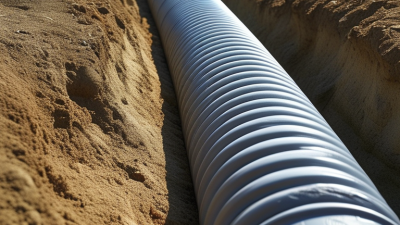
Corrugated drain pipes are designed to move water while resisting pressure from surrounding soil. Their ridged walls add stiffness without making the pipe solid or excessively heavy. Engineers consider pipe diameter, burial depth, soil type, expected flow, and traffic loads. A pipe beneath a garden path may need different support from one beneath a service road. Details matter.
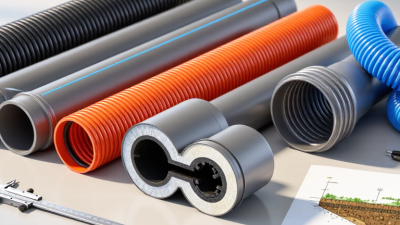
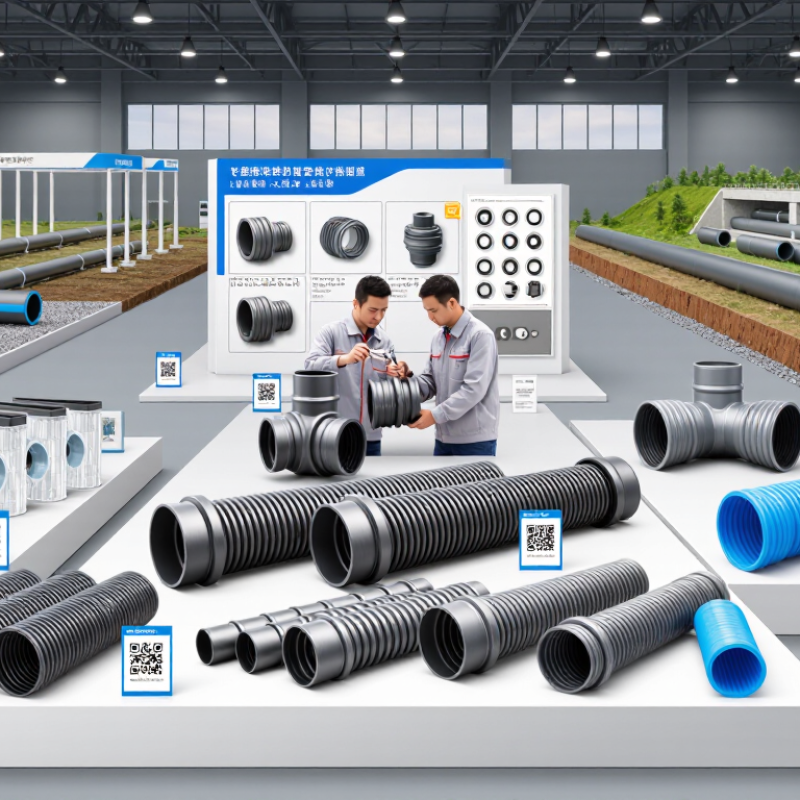
Classification often begins with wall construction. Single-wall pipes have corrugations inside and out, while dual-wall designs typically pair a corrugated exterior with a smoother interior. The smooth bore can help water flow and reduce places where debris collects. Pipes are also described as perforated or non-perforated. Perforations admit groundwater through slots or holes; solid walls carry water between collection points.
Material, stiffness rating, and joint style provide further distinctions. Some systems use flexible plastic, so correct bedding and backfill are important to prevent deformation. Installation guides and local project specifications should be checked before selection. Measurements help. A useful field check includes the trench width, connection fit, and outlet position. Classification labels are helpful, but they do not replace site assessment. Even a well-chosen pipe can underperform if its slope is too shallow or sediment enters at the inlet. That part is easy to overlook.
Key Applications in Infrastructure, Agriculture, and Drainage
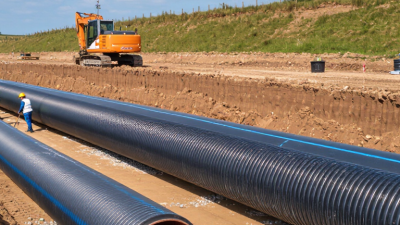
Corrugated drain pipes support infrastructure projects by moving stormwater away from roads, embankments, and building foundations. Their ribbed exterior helps resist soil pressure, while the inner wall carries water toward an outlet. Pipe diameter, stiffness, and joint design should match expected flow and burial depth. A mismatch can cause standing water or deformation.
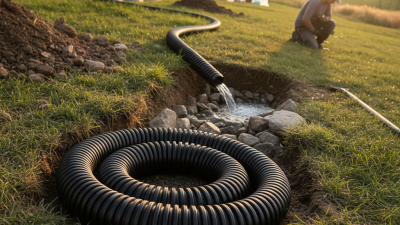
On farms, buried drainage lines can help lower excess groundwater around fields. Perforated pipe allows water to enter through small openings, often with a filter wrap or gravel surround to limit soil intrusion. Installation needs a consistent slope and accessible outlets. Details matter. Local soil and rainfall patterns vary, so one layout rarely suits every field.
For site drainage, solid-wall corrugated pipe can collect runoff from catch basins and convey it to approved discharge points. Crews should check bedding, connection alignment, and backfill compaction before covering the line. These steps are easy to rush. They are also difficult to fix later. Material selection should follow project specifications and relevant engineering guidance, rather than price alone. A practical design may still need adjustment after excavation reveals unexpected groundwater or unstable soil.
Criteria for Evaluating Corrugated Drain Pipe Manufacturers
Choosing a corrugated drain pipe manufacturer takes more than comparing prices. Start with the pipe’s intended use, soil conditions, expected water flow, and installation depth. A product suited to a shallow garden drain may not perform well beneath a road. Ask for technical data on material, wall profile, diameter, and load performance. Details matter.
Check whether the manufacturer can provide current test reports and clear quality-control procedures. Confirm that stated performance applies to the exact pipe configuration you plan to buy, not just a similar product. Ask how dimensions are checked and how production defects are handled. Then review sample pieces for consistent corrugations, clean cut edges, and secure fittings. Ask for proof.
Reliable suppliers should answer practical questions without vague promises. Discuss stock levels, delivery protection, replacement parts, and support after installation. References from projects with similar ground and drainage conditions can add useful context, though they are not a guarantee. Be cautious when specifications are incomplete or claims cannot be verified. Even a well-made pipe can fail if its design or installation does not match the site. That is easy to overlook.
Profiles of Ten Leading Corrugated Drain Pipe Manufacturers in China
A comparison of ten leading corrugated drain pipe manufacturers should look beyond catalog photos. One profile may specialize in large-diameter drainage for roads. Another may focus on lightweight pipe for farms and landscaping. A third could offer perforated designs for groundwater collection. Practical differences matter. Buyers should check pipe diameter, wall structure, connection style, and available lengths. Ask for technical sheets and sample sections where possible.
Other profiles may stand out through material selection, production capacity, or custom fittings. Some manufacturers serve municipal projects; others are better suited to smaller distributors. A reliable supplier should explain how its products perform under expected soil loads and installation conditions. Look for clear quality-control procedures, traceable specifications, and responsive technical support. These details are more useful than broad claims. Request evidence.
The remaining profiles can be compared by delivery planning, export experience, product range, and after-sales service. A factory visit or video inspection may help confirm equipment and stock conditions. Still, a polished presentation is not proof of consistent production. The comparison is not perfect. Buyers should verify each supplier’s current certifications and test reports independently, then match the evidence to project requirements.
How to Compare Supplier Quality, Capacity, and Support
When comparing corrugated drain pipe manufacturers in China, look beyond catalog photos and quoted prices. Check whether sample pipes have even corrugations, clean cut ends, and secure joints. Ask for written specifications covering material, dimensions, and performance tests. If possible, inspect a sample under the conditions your project expects. Look closely. Small gaps matter.
Tips: Request a recent quality-control record and a sample from regular production, not a specially prepared display piece. Confirm daily output, current production queues, and lead times for your required sizes. A large stated capacity means little if the schedule is already full.
Supplier support matters after the order leaves the factory. Ask who handles technical questions, how quickly they respond, and what inspection documents accompany a shipment. Clear answers are useful; vague assurances are not. Paperwork can look tidy, yet it cannot reveal every production-day issue. I would compare several suppliers using the same questions and keep notes, though no checklist can replace a careful sample review.