China Best Humanoid Robot Manufacturers for Global Buyers?
Choosing the right Humanoid Robot manufacturer in China requires more than comparing factory prices or polished demonstrations. Global buyers need evidence of engineering depth, production discipline, software capability, and dependable after-sales support. A robot walking smoothly across a showroom floor is impressive. It does not prove safe human interaction, stable balance, accurate manipulation, or long-term serviceability.
Joseph Engelberger, widely regarded as the father of industrial robotics, once said, “I can’t define a robot, but I know one when I see one.” His words remain useful today. A modern Humanoid Robot must be judged by measurable performance, not appearance alone. Buyers should examine payload data, battery endurance, joint durability, sensor quality, operating environments, and software update procedures. Factory audits, prototype testing, and independent technical reviews can reveal important differences between suppliers.
This guide explores China’s leading Humanoid Robot manufacturers for global buyers. It considers practical experience, research strength, manufacturing capacity, customization options, export support, and communication standards. It also asks uncomfortable questions. Can the supplier maintain quality during larger production runs? Can it provide replacement parts years later? Are demonstrations repeatable outside controlled conditions?
No manufacturer is perfect. That matters. The strongest choice depends on the buyer’s application, budget, risk tolerance, and deployment timeline. Readers should treat rankings as a starting point, not a final verdict. Careful validation still matters.
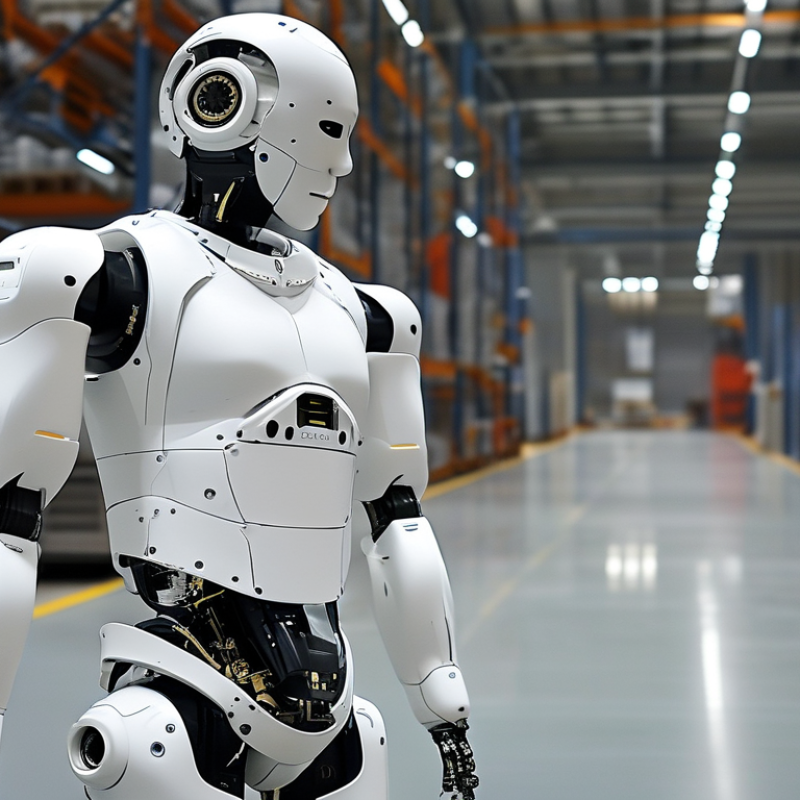
Humanoid Robots in China: Definitions, Types, and Global Buyer Criteria
Humanoid robots are machines designed to imitate selected human features, usually with a torso, arms, hands, and two legs. Their value is not appearance alone. It depends on safe movement, useful manipulation, and reliable operation around people. China’s manufacturing ecosystem combines actuator production, electronics, software, and factory automation. This can support flexible development, but quality still differs between suppliers.
The International Federation of Robotics reported nearly 205,000 professional service robots sold in 2023, a 30% annual increase. This wider service-robot market provides useful context.
However, humanoid adoption remains smaller and less predictable. Goldman Sachs Research estimated a potential humanoid robot market of 38 billion dollars by 2035. Forecasts are not guarantees.
Types matter to global buyers. Research platforms support laboratories and algorithm testing. Industrial humanoids target warehouses, inspection, and repetitive handling. Service models focus on reception, education, or public demonstrations. Some designs use wheels instead of legs. That choice can improve stability and reduce energy use.
Buyers should compare payload, reach, walking speed, battery duration, recovery behavior, and hand accuracy. Ask for tested operating hours, not impressive demonstrations. Check emergency stopping, collision detection, software updates, spare-part access, and technician response times. Integration with existing systems is often harder than expected. Standards and certification should match the destination market. Total cost includes training, maintenance, downtime, and data protection. A lower purchase price may become expensive later.
China’s Humanoid Market: Goldman Sachs’ $38 Billion Forecast for 2035
China’s humanoid robot market is moving from laboratory demonstrations toward factory trials. Goldman Sachs Research forecasts a global humanoid robotics market worth about $38 billion by 2035. Its estimate also suggests annual shipments could reach 250,000 units by 2030.
The opportunity is substantial.
The forecast is not a promise.
China already has a deep automation base. The International Federation of Robotics reported 276,288 industrial robot installations in China during 2023. That represented around 51% of global installations. This installed capacity can support humanoid production, testing, and component supply.
However, industrial robots and humanoids serve different tasks. Humanoids must manage balance, safety, changing objects, and unpredictable workers. These challenges remain expensive and difficult.
A buyer should examine real operating data, not only exhibition demonstrations. Pilot hours, failure rates, battery endurance, and maintenance records deserve attention. My practical concern is simple: impressive movement may hide weak reliability.
Tips
- Ask for task-specific evidence.
- Check performance inside warehouses or production lines.
- Request independent safety certifications and service commitments.
- Compare total ownership costs, including software updates, spare parts, training, and downtime.
- Goldman Sachs’ projection offers a useful market direction, but each factory needs its own validation.
The forecast may also change if batteries, actuators, or artificial intelligence systems develop slower than expected. Be optimistic, but keep testing.
Leading Chinese Manufacturers: UBTECH, Unitree, Fourier, and AgiBot
China’s leading humanoid robot manufacturers are developing distinct strengths for global buyers. One focuses on education, research, and commercial service robots. Another emphasizes lightweight designs, agile walking, and affordable development platforms. A third concentrates on rehabilitation technology, human movement, and safer physical interaction. The newest group combines artificial intelligence, full-body control, and rapid software updates.
Buyers should examine more than a polished demonstration. Ask for walking videos from normal production units, not only selected prototypes. Check payload data, battery duration, joint replacement procedures, and software support in your region. A practical trial might include climbing a low step, carrying a five-kilogram box, and recovering from a controlled stop. These details reveal useful engineering limits. Marketing materials rarely show them.
Tips: Request a live remote test and a written performance specification. Confirm spare-part availability, training, warranty coverage, and integration support before ordering. Compare total operating costs over three years, not only the purchase price. Independent testing is valuable, especially for balance, heat management, and repeated joint movement. No manufacturer is perfect. Some systems still struggle with uneven floors, noisy environments, or long working shifts. That weakness should not end evaluation, but it should shape the contract and deployment plan.
China's Robotics Manufacturing Scale: Industrial Robot Installations
China has remained the world's largest market for industrial robot installations, creating a strong manufacturing and supply-chain foundation for emerging humanoid robotics. The figures show annual industrial robot installations in China from 2019 to 2023, based on the International Federation of Robotics' World Robotics reports.
Source: International Federation of Robotics, World Robotics reports. Figures are rounded to the nearest hundred units.
Supplier Comparison: Degrees of Freedom, Payload, Battery, and Operating Data
For global buyers, a humanoid robot should be judged by measured capability, not polished demonstrations. Degrees of freedom (DoF) show how many joints can move independently. A 40-DoF platform may bend, reach, and balance more naturally than a simpler model. Yet high DoF also increases control complexity, service needs, and potential failure points. More joints do not automatically mean better work. Ask for joint ranges, repeatability, and tested motion cycles under real factory conditions.
Payload needs a practical definition. Does the figure describe one arm, both arms, or a static lift? A robot rated for 10 kilograms may handle a box briefly, but not carry it repeatedly across an eight-hour shift. Check payload at full reach, wrist angle, walking speed, and floor slope. Request video records, test reports, and acceptance criteria. Small details matter. A gripper holding a sealed 5-kilogram carton differs greatly from handling flexible parts.
Battery data should include chemistry, usable capacity, charging time, and runtime during walking, lifting, and idle periods. “Up to eight hours” is weak without duty-cycle data. Operating records should show uptime, intervention frequency, error codes, ambient temperature, and maintenance hours. Compare results from similar tasks, not laboratory claims. I would request a supervised trial with local loads and safety procedures before purchase. Some published figures may be incomplete. That is not a dealbreaker, but it deserves written clarification and a cautious contract.
Global Purchasing Standards: ISO 13482, CE, FCC, RoHS, and After-Sales Support
Global buyers should evaluate humanoid robots through documented compliance, not polished demonstrations. ISO 13482 helps assess safety for personal care robots, including movement, contact, and foreseeable misuse. CE marking requires relevant European conformity evidence, technical files, and a valid Declaration of Conformity. FCC compliance matters when robots use wireless communication in the United States. RoHS documentation should confirm restricted substances in electronics and cables.
Ask manufacturers for current test reports, risk assessments, user manuals, software update records, and component traceability. Check whether the documents match the exact model and configuration. A certificate alone is not enough. In real purchasing work, small differences in sensors, batteries, or communication modules can change compliance requirements. This detail is easy to miss. It should not be.
Tips: Request a live safety demonstration before signing a contract. Test emergency stops, obstacle detection, charging behavior, and remote updates. Confirm spare-part availability, technician response times, warranty limits, and training methods. Ask who handles incidents after installation. A strong supplier provides clear service contacts and measurable response targets. However, support promises can remain vague without written service terms. Buyers should review them carefully and plan for regional maintenance, language needs, and software security updates.