Pease Pottage 01403 275 276
Petersfield 01730 777 350
Maidstone 01795 843 866
Cullompton 01884 211 788

What Is Birch Plywood and What Is It Used For?

Birch Plywood combines pale birch veneers, tight grain, and strong cross-bonded layers. Its smooth face can resemble polished furniture, while its exposed edges reveal thin, precise lines. The USDA Forest Products Laboratory’s Wood Handbook explains that plywood gains stability by arranging veneer grains in alternating directions. Robert H. Falk, a former USDA Forest Products Laboratory researcher, describes the material simply: “Plywood is made from thin sheets of wood veneer glued together.” That definition sounds basic. It is not.

Industry reports place this material within a larger wood-products story. The FAO Global Forest Resources Assessment 2020 estimates that forests cover about 31% of the world’s land area. The report also stresses responsible forest management and changing supply conditions. Meanwhile, the UNECE/FAO Forest Products Annual Market Review tracks plywood production, trade, prices, and regional disruptions. These reports do not make every Birch Plywood product sustainable automatically. Certification, adhesive chemistry, veneer sourcing, and factory controls still matter.

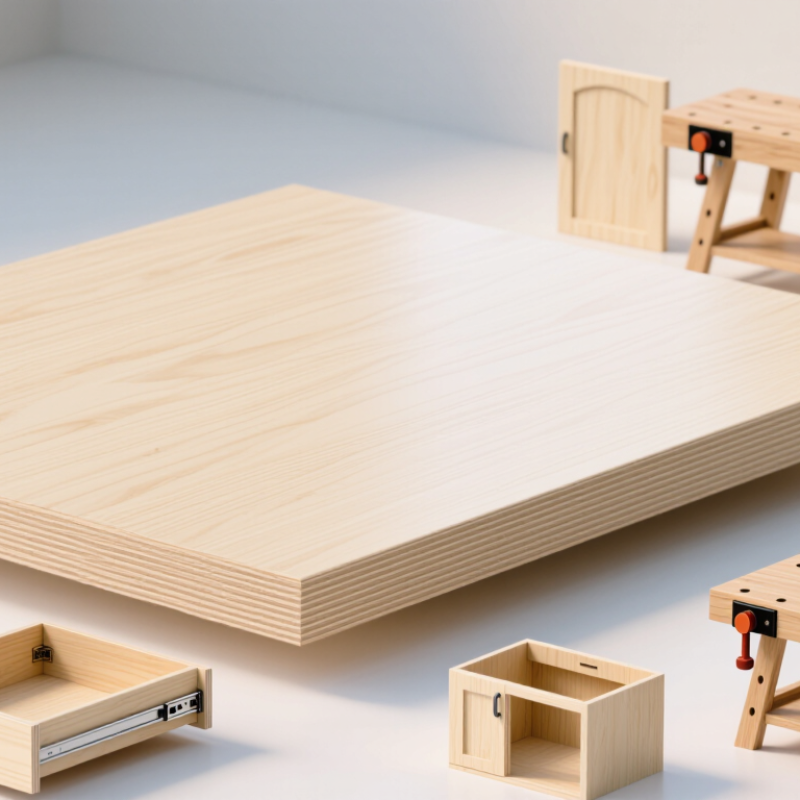
This article examines what Birch Plywood is and where it performs best. Cabinet doors. Drawer boxes. Workbenches. Interior wall panels. Model-making. Its strength-to-weight balance suits many practical projects, but it is not perfect. Moisture can damage unsuitable grades. Decorative faces can vary. Edges may need sealing. The right choice depends on thickness, glue classification, surface grade, and intended exposure. A cheap panel may look attractive under showroom lighting, then disappoint beside a sink. Careful specification matters more than attractive marketing.
What Is Birch Plywood and What Is It Used For?

Birch Plywood: Definition and Basic Characteristics

Birch plywood is an engineered wood panel made from thin birch veneers. These layers are cross-laminated, then bonded under heat and pressure. The grain direction changes between layers. This structure gives the panel useful strength and dimensional stability.

Its surface is usually pale, smooth, and finely grained. It accepts paint, oil, and clear finishes with little preparation. The edges also look attractive because the veneer layers form visible lines. Many furniture makers leave them exposed. That detail feels honest.

Birch plywood is commonly used for cabinets, desks, drawers, shelving, toys, and interior wall panels. Its dense core holds screws well and resists small dents better than softer plywood. However, quality can vary between panels. Some sheets contain internal gaps or uneven veneers. Check the edge before cutting. It reveals a lot.

This material is not automatically waterproof. Ordinary panels may swell when exposed to repeated moisture. Exterior-rated adhesive and a suitable surface coating are needed for damp locations. Even then, exposed edges remain vulnerable. I have found that careful sealing matters as much as the panel itself. Many descriptions praise birch plywood’s strength, but its weight deserves attention. Large sheets can be difficult to carry and install without help.

What Is Birch Plywood and What Is It Used For?

Birch plywood is an engineered wood panel made by bonding thin birch veneers with alternating grain directions. It is known for its smooth surface, consistent layers, strength, and relatively high density.

The chart shows the approximate mass per square metre for common birch plywood thicknesses. Values are calculated using a representative density of 680 kg/m³; actual weight varies with moisture content, veneer construction, and manufacturing tolerances.

Common uses: furniture, cabinets, shelving, interior wall panels, flooring underlayment, drawers, workbenches, packaging, and lightweight structural components.

How Birch Plywood Is Manufactured

Birch plywood begins with straight, pale birch logs selected for consistent grain and limited defects. Mills remove bark, then soften the logs with hot water or steam. This conditioning step makes veneer peeling smoother. It also reduces cracking.

A rotary lathe slices each log into thin veneer sheets, often around 1.4 millimetres thick. Workers clip damaged edges and dry the sheets under controlled heat. Moisture targets matter; uneven drying can create bubbles, gaps, or later warping. The sheets are stacked with alternating grain directions. Usually, manufacturers use an odd number of layers, such as five, seven, or thirteen. Cross-lamination gives birch plywood strength in both directions. Adhesive is spread between veneers before pressing them under heat and pressure. Pressing activates the bond and forms a rigid panel.

The process is precise, not flawless. Knots, density changes, and small repairs remain possible. Quality inspectors check thickness, bonding, surface appearance, and formaldehyde emissions. EN 314-2 classifies plywood bonding performance for different moisture conditions. The FAO’s Global Forest Products Facts and Figures 2023 reported roughly 378 million cubic metres of wood-based panels produced worldwide in 2022. That scale shows why repeatable veneer processing matters. Sanding and edge trimming create the familiar smooth, layered panel. Birch plywood is then used in furniture, drawers, shop interiors, toys, and light structural components. Its clean edges are useful, although exposed surfaces still need suitable sealing.

Grades, Thicknesses, and Surface Finishes

What Is Birch Plywood and What Is It Used For?

Birch plywood is made from thin birch veneers, layered with alternating grain directions. This construction gives it strength, stability, and clean edges. Its pale surface suits furniture, drawers, cabinets, shelves, and interior panels. The visible layers also create an attractive striped edge after cutting. In practice, the surface grade matters as much as the wood species. Check the standard.

Grades usually describe the quality of the outer veneers, not the entire panel. Higher grades have fewer knots, repairs, and visible defects. Lower grades may show patches, small splits, or color differences. Grading codes can vary between suppliers, so request the actual specification before ordering.

For painted furniture, a lower face grade may be sufficient. For clear-coated cabinets, choose cleaner faces. A perfect sheet is not always necessary.

Thickness affects strength, weight, and edge appearance. Thin sheets around 3 to 6 millimeters suit drawer bottoms, curved parts, and lightweight panels. Medium thicknesses, such as 9 to 18 millimeters, work well for cabinets and shelving. Thicker panels support heavier loads but become harder to handle.

Sanded surfaces provide a smooth starting point for clear finishes. Paint requires primer and careful edge preparation. Clear coating highlights the pale grain, though it may reveal sanding marks.

Test the finish on a small offcut first. It can look different after drying.

Common Uses of Birch Plywood

Birch plywood is an engineered panel made from thin birch veneers, layered with alternating grain directions. This structure gives it a smooth face, reliable strength, and clean screw-holding performance. FAO’s Global Forest Products Facts and Figures 2023 reported roughly 400 million cubic metres of wood-based panel production worldwide in 2023. Birch plywood represents only part of that market, but its stable quality supports demanding interior and manufacturing work.

Common Uses of Birch Plywood

Furniture makers use birch plywood for cabinets, desks, drawers, stools, and shelving. Its pale surface accepts clear finishes well, showing a fine, even grain. In workshops, it is also used for jigs, templates, tool cases, and CNC-cut components. A 2023 European woodworking market review identified furniture and interior construction as major applications for decorative and structural panels. The material feels precise.

Birch plywood also suits wall panels, retail fixtures, children’s furniture, and lightweight vehicle interiors. Higher-grade panels can provide clean edges after routing, although exposed edges still need careful sanding and sealing. Select panels tested under EN 636 for intended service conditions, and check formaldehyde documentation before indoor installation. Not every “birch” panel has the same core quality. I have seen attractive faces hide small voids inside. That matters when a shelf carries books or a screw sits near an edge. Moisture-resistant grades help, but they are not automatically suitable for constant outdoor exposure. Sourcing with third-party forest certification can also improve traceability, though certification alone does not guarantee perfect manufacturing.

Advantages and Limitations of Birch Plywood

Birch plywood is an engineered panel made from thin birch veneers, layered in alternating directions. This structure gives it a smooth face, stable shape, and clean machining performance. The USDA Forest Products Laboratory’s Wood Handbook (2021) identifies birch as a relatively dense hardwood with strong mechanical performance. In practical use, its pale surface suits cabinets, drawer boxes, desks, and visible furniture parts. CNC-cut edges usually remain neat, even around small holes and tight corners.

Its main advantage is consistency. Cross-laminated veneers reduce warping better than many solid boards. Birch plywood also holds screws well, especially when pilot holes are drilled correctly. The European Standard EN 323 measures panel density, and common birch plywood products often fall near 650–700 kg/m³. That strength comes with weight. Large sheets can feel awkward during installation.

Moisture remains a serious limitation. Unsealed edges may darken, swell, or separate after repeated wetting. Exterior-grade panels require suitable bonding classifications, not merely a birch surface. Formaldehyde emissions also depend on the adhesive system; EN 717-1 testing is commonly used to assess indoor emissions. Buyers should request test documents instead of trusting vague “eco” claims. Birch plywood can also cost more than basic softwood panels. I have found its smooth face tempting to leave unfinished, but handling marks appear quickly. That choice deserves reconsideration.

What Is Birch Plywood and What Is It Used For? — Advantages and Limitations of Birch Plywood

Data Dimension Typical Information Practical Details
Material Definition Engineered wood panel made from birch veneer layers Birch plywood is produced by bonding thin birch veneers together, usually with the grain direction alternating between adjacent layers. This cross-laminated structure improves dimensional stability compared with solid wood.
Appearance Light-colored surface with fine, relatively uniform grain The face is commonly pale cream to light brown, with a smooth texture and small, attractive grain pattern. Its layered edge can also be used as a visible design feature after sanding and finishing.
Common Thicknesses Approximately 3–25 mm Thin panels are often used for backs, linings, templates, and lightweight components. Medium and thicker panels are selected for furniture, shelving, work surfaces, and structural applications. Actual sizes vary by grade and supplier.
Panel Dimensions Commonly around 1,220 × 2,440 mm Other sheet dimensions are available, including metric and imperial formats. Large panels reduce the number of joints, while smaller panels may be easier to transport and handle.
Density Typically about 650–750 kg/m³ Birch plywood is generally denser and heavier than many softwood plywood products. Density can vary with veneer thickness, adhesive content, moisture level, and manufacturing specification.
Strength and Stiffness High strength-to-thickness performance The multiple veneer layers distribute loads in different directions, making the panel suitable for many furniture, cabinet, interior, and light structural uses. Performance depends on thickness, construction, grain orientation, and grade.
Dimensional Stability Generally more stable than solid birch boards Cross-lamination helps reduce warping and splitting caused by changes in grain direction. The panel can still expand or contract when exposed to moisture, so edge gaps and suitable installation practices may be necessary.
Surface Quality Smooth and suitable for painting, staining, or clear finishing Higher-grade faces usually require less preparation. Sanding should be done carefully because excessive sanding can damage the thin face veneer. A sealer or finish can improve appearance and surface protection.
Machining Performance Good for cutting, drilling, routing, and CNC work The dense material produces clean edges with sharp, properly maintained tools. Cutting across the face veneer may cause splintering, so suitable blades, scoring, support, and feed rates are recommended.
Furniture Applications Cabinets, tables, chairs, shelves, and storage units Its strength, attractive appearance, and exposed layered edges make it popular for contemporary furniture and built-in storage. Edge treatment may include sanding, solid-wood edging, veneer tape, or a contrasting finish.
Construction and Interior Applications Wall panels, partitions, flooring components, and interior fittings Birch plywood can be used where a smooth, stable panel is required. The selected product must match the intended load, moisture exposure, fire requirements, and relevant construction standards.
Workshop and Craft Uses Jigs, templates, tool organizers, toys, and hobby projects Thin and medium-thickness sheets are easy to shape and provide a reliable, flat material for prototypes and small projects. Appropriate dust control and protective equipment should be used during machining.
Advantage Strength The cross-laminated veneer structure provides good stability and load-bearing capability for its thickness, making it more reliable than many low-density sheet materials in demanding applications.
Advantage Consistent Appearance Birch plywood commonly offers a clean, light appearance and uniform surface that works well with clear coatings, paint, laminate, or other decorative finishes.
Advantage Visible Edge Detail When sanded and finished, the alternating veneer layers create a distinctive striped edge that can be left exposed in modern furniture and interior design.
Limitation Higher Weight Its relatively high density can increase shipping, handling, and installation effort. Large or thick panels may require two-person handling or mechanical assistance.
Limitation Moisture Sensitivity Standard interior-grade birch plywood is not automatically waterproof. Prolonged water exposure can cause swelling, veneer separation, or edge damage unless an appropriate moisture-resistant product and finish are used.
Limitation Cost Birch plywood may cost more than basic softwood plywood or some fiberboard products because of its dense birch veneers, surface quality, and manufacturing requirements.
Limitation Edge and Face Damage Unprotected edges can absorb moisture, and the face veneer may chip or splinter during cutting. Correct tooling, edge sealing, and careful handling help reduce these problems.
Selection Criteria Grade, thickness, veneer quality, adhesive type, and exposure rating Choose the panel according to appearance requirements, structural loads, humidity, expected service life, finishing method, and applicable standards. Interior and exterior applications require different specifications.
Typical properties and applications are general industry ranges; exact performance depends on panel construction, grade, adhesive system, moisture conditions, and applicable standards.