What Are the Best Types of Wooden Window Frames?
Choosing the best Wooden Window Frames means balancing appearance, climate, maintenance, and budget. A frame that suits a shaded cottage may struggle on a wind-battered coastal home. The right choice depends on where the window sits and how the building is used. Details matter.
Architect Frank Lloyd Wright wrote, “The space within becomes the reality of the building.” His observation offers a useful lens: window frames shape both a room’s character and its connection to the outdoors. In this guide, we’ll compare common options, including softwood, hardwood, and engineered timber. We’ll look at grain, durability, insulation, finishes, and the upkeep each type needs. A warm oak frame can feel substantial under your hand, while painted pine brings a lighter look at a lower initial cost. Neither is automatically the better choice.
Installation and regular care matter just as much as timber species. Paint can protect exposed surfaces, but missed checks around joints may allow moisture to linger. Wood needs care. And even a premium frame can disappoint if it is poorly fitted or neglected. That is worth remembering when comparing product claims. This overview will help you assess trade-offs, ask informed questions, and choose frames that suit your home’s conditions. There is no universal winner; the most reliable choice is the one you can maintain and that performs well in your local climate.
What Are the Main Categories of Wooden Window Frames?
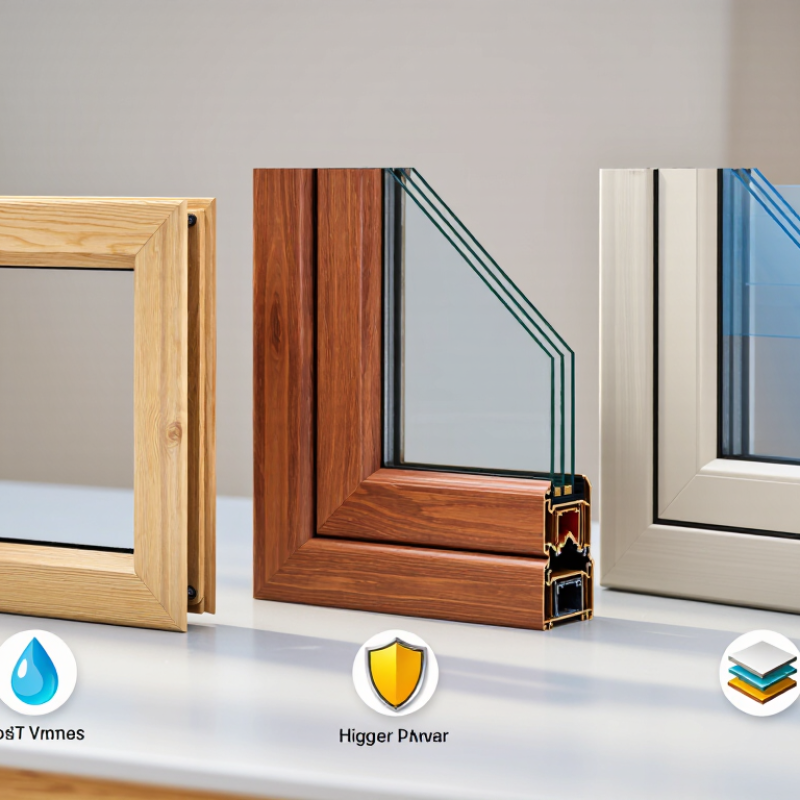
Wooden window frames generally fall into three categories: solid wood, wood-clad, and engineered wood. Solid-wood frames use natural timber throughout, often with painted or stained surfaces. They offer a warm interior finish and can be repaired, but exposed edges need regular paint or sealant checks. A damp sill can swell or soften if maintenance slips.
Wood-clad frames pair a wood interior with an exterior layer, commonly aluminum, vinyl, or fiberglass. That outer skin helps shield the timber from rain and sun, while the room-facing surface keeps a natural appearance. Engineered-wood frames use bonded wood layers, veneers, or wood-based composites. Their construction can improve dimensional consistency, though performance depends on the specific materials and assembly. Labels can blur these categories, so inspect a cross-section or product specification rather than relying on the name alone.
Frame choice matters, but it is only part of window performance. The U.S. Department of Energy reports that heat gain and heat loss through windows account for about 25%–30% of residential heating and cooling energy use. That figure applies to windows overall, not wooden frames specifically. Compare whole-window ratings, glazing, seals, and installation details. A beautiful frame can still feel cold beside a poorly sealed joint.
What Are the Best Types of Wooden Window Frames? - What Are the Main Categories of Wooden Window Frames?
| Frame type | How it is made | Main advantages | Considerations | Maintenance and typical use | Relative cost |
| Solid softwood | Made from solid softwood boards, commonly from species such as pine, fir, or spruce. | Natural appearance; easy to paint or stain; generally lighter and often less expensive than hardwood. | Can be more vulnerable to dents, moisture, and decay if the finish or seals are not maintained. | Inspect finishes and joints regularly; repaint or reseal when needed. A common choice for traditional and budget-conscious projects. | Low to medium |
| Solid hardwood | Made from solid hardwood, with species varying by region and availability. | Distinctive grain and a substantial feel; some species offer greater hardness and wear resistance than common softwoods. | Usually heavier and more costly; performance varies by species, joinery, finish, and exposure conditions. | Protect exposed surfaces from moisture and renew the finish as required. Often selected for premium, custom, or heritage-style windows. | High |
| Engineered or laminated wood | Built from bonded wood layers or joined wood sections; construction methods differ between products. | Can make efficient use of timber and may provide more consistent sections than a single solid piece when properly manufactured. | Quality depends on materials, adhesive, manufacturing, and moisture protection; it is not automatically maintenance-free. | Follow the product’s finish and care requirements. Suitable for many modern and traditional designs where stable, uniform frame components are desired. | Medium to high |
| Wood-aluminum-clad | A wood frame on the interior with protective aluminum cladding on the exterior; the wood core may be solid or engineered. | Keeps a wood interior appearance while the exterior cladding helps shield the frame from weather and reduces exterior repainting needs. | Typically costs more than an unclad wood frame; cladding details, drainage, and installation still matter. | Clean the exterior and inspect seals and drainage paths. Often chosen for exposed elevations or where lower exterior upkeep is preferred. | High |
| Wood-fiberglass-clad | A wood interior frame combined with a fiberglass exterior surface or cladding; configurations vary by window design. | Combines a natural wood interior with a weather-resistant exterior surface; fiberglass generally expands and contracts less than many materials as temperatures change. | Availability and construction details vary; upfront cost is often higher than that of basic wood frames. | Check seals and clean surfaces as recommended. Consider for projects seeking a wood interior with reduced exterior finish upkeep. | High |
Note: These categories describe frame construction and can overlap—for example, a wood-clad window may use an engineered wood core. Actual durability, energy performance, and cost depend on the complete window, installation, climate, and maintenance.
Which Softwoods Are Commonly Used for Window Frames?
Pine is a common softwood for window frames because it is widely available, workable, and usually less costly than many hardwoods. Its pale surface accepts paint well, which helps when a frame needs to match a home’s trim. But untreated pine can absorb moisture, swell, or decay. A durable finish and careful sealing around joints matter. Details matter.
Douglas fir is another frequent choice. It has a relatively strong, straight-grained structure, making it useful for frames that must resist everyday strain. Cedar is valued for its natural resistance to moisture and insects, though its softer surface can dent more easily. Spruce may also be used, especially where cost is a priority, but it needs suitable protection from weather. The species alone does not determine performance. Joinery, finish quality, exposure, and maintenance all affect how long a frame lasts. I would be wary of calling any softwood maintenance-free; that promise overlooks real differences in climate and installation. Inspect painted frames for cracked edges and soft spots, particularly near the sill, where rainwater tends to linger.
Common Softwoods for Wooden Window Frames
Approximate air-dry density of selected softwoods (kg/m³)
Pine, Douglas fir, spruce, western red cedar, and larch are used for wooden window frames. Density varies with species, growing conditions, and moisture content; it is one useful comparison, but not a measure of overall frame quality or durability.
Which Hardwoods Are Suitable for Window Frames?
White oak and teak are suitable hardwoods for window frames, but they behave differently. White oak heartwood resists decay and takes paint or stain well. Keep water from sitting on joints, though; even durable wood can fail when moisture stays trapped. Teak is naturally durable and moves relatively little as humidity changes. That helps around sash corners. Still, it is not maintenance-free.
The USDA Forest Products Laboratory’s 2021 Wood Handbook reports total shrinkage from green to oven-dry of about 5.6% radially and 10.5% tangentially for white oak. For teak, the figures are about 2.6% and 5.3%. These are not predictions of movement in a finished window, but they show why grain orientation and careful joinery matter. A reflective detail: I would not choose by species name alone. Heartwood quality, drying, and sound construction can matter just as much. White oak’s tannins may also darken where wet wood contacts iron, so specify corrosion-resistant fasteners. Teak’s natural oils can complicate coatings; test the finish on a sample before committing to a full set of frames.
How Do Solid and Engineered Wood Frames Compare?
Solid wood frames are milled from single pieces of timber, so their grain, color, and knots remain visible. They can be repaired and refinished, but seasonal humidity may cause swelling, shrinkage, or sticking sash. The USDA Forest Products Laboratory’s Wood Handbook (FPL-GTR-282, 2021) reports average shrinkage of roughly 7% tangentially and 4% radially as wood dries from green to oven-dry. These are laboratory values, not predicted movement in a finished window, but they explain why moisture control and careful installation matter.
Engineered wood frames bond or laminate smaller wood pieces, often arranging layers to limit movement across the frame. This can make dimensions more consistent and reduce reliance on large, clear boards. The handbook’s wood-science data helps explain the advantage: wood moves differently along and across its grain, while engineered construction can balance those directions. Product designs vary, though, and coatings, joints, and installation still affect performance. Not a magic fix.
For a homeowner, the practical difference shows up at the corners and sash: a well-sealed frame should stay square, open smoothly, and resist water entry. Solid wood may suit a restoration where matching historic profiles matters. Engineered wood can be a sensible choice when consistent dimensions are the priority. Ask for documented moisture protection and maintenance instructions; the label alone tells you little.
What Factors Help Identify the Best Frame for a Home?
The best wooden window frame depends less on a “premium” label than on how the home is used. Start with the local climate: frequent rain, strong sun, and wide temperature swings place different demands on wood and finishes. A south-facing window may need more protection from ultraviolet exposure than a shaded one. Species matter, but careful construction and a sound finish matter too.
Fit matters. A frame should suit the wall opening, glazing, and existing trim, with no gaps that invite drafts or moisture. Ask how joints are sealed and how the frame will be finished on every exposed surface. Wood moves as humidity changes; installation details help manage that movement. A qualified installer can assess the opening, especially in an older home where walls may not be square.
Maintenance is another deciding factor. Some homeowners are happy to inspect and refresh exterior coatings regularly; others want a lower-maintenance setup. Be honest about which kind you are. A beautiful frame can become a burden if neglected. Compare the expected upkeep, insulation needs, budget, and repair options—not just the initial price. There is no perfect wood for every house, and even a sensible choice deserves a second look against your actual weather and routines.