Pease Pottage 01403 275 276
Petersfield 01730 777 350
Maidstone 01795 843 866
Cullompton 01884 211 788

Best Custom Plastic Housing Manufacturer in China?

Choosing the best custom plastic housing manufacturer in China is rarely as simple as comparing prices. A housing may look straightforward on a drawing, yet small choices can affect fit, strength, finish, and assembly time. Think of a handheld device with a thin snap-fit edge: a slight change in wall thickness may make the cover feel loose or difficult to open. Details matter.

A capable supplier should be able to discuss material options, mold design, tolerances, surface texture, and production testing in practical terms. Ask how prototypes are reviewed, how changes are documented, and what inspection records are available. Clear answers are useful. Vague promises are not. Experience with a similar enclosure can help, but it does not guarantee the same result for a new design.

Price still matters, of course. But a low quotation may exclude tooling adjustments, packaging, or later quality checks, so compare the scope carefully. Request samples when possible, and inspect seams, screw bosses, color consistency, and the feel of moving parts. A video call or factory visit may also clarify how the team communicates and handles problems. No checklist removes every risk. Even a well-prepared project can need another mold revision. This guide looks at the factors that can help buyers evaluate a custom plastic housing manufacturer in China, while keeping expectations practical and evidence-based.
Best Custom Plastic Housing Manufacturer in China?

What Is a Custom Plastic Housing and Which Design Requirements Matter?

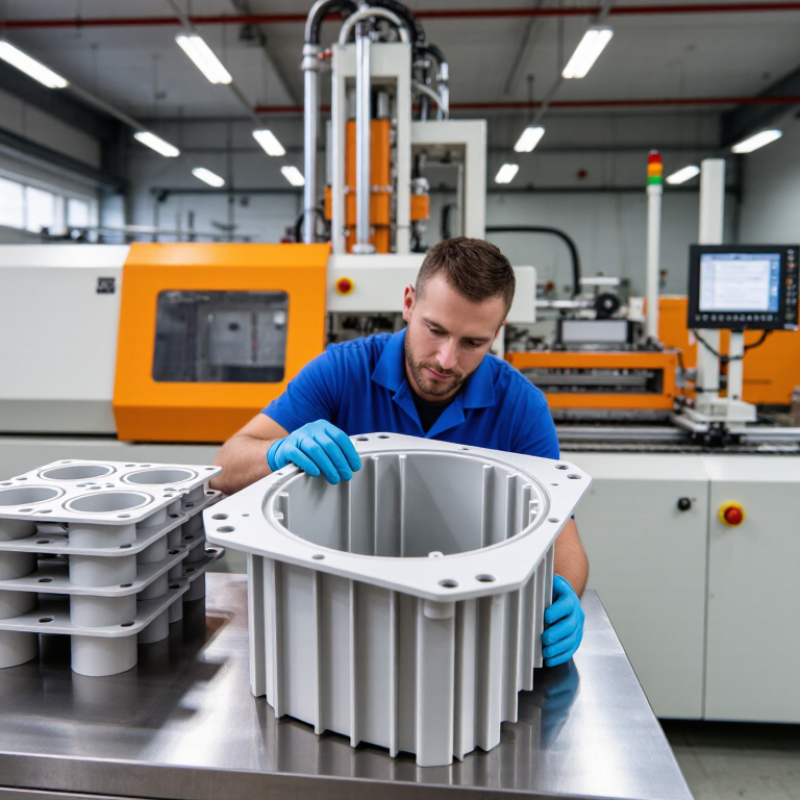
A custom plastic housing is a molded enclosure designed around a product’s shape, components, and working conditions. It may protect a circuit board from dust, hold a sensor steady, or provide a smooth grip for a handheld device. The housing is more than a cover. It affects assembly, heat flow, durability, and how the product feels in use. Small details matter. A connector opening placed only a few millimeters off can complicate installation or expose internal parts.

Good design starts with the real operating environment: temperature changes, vibration, moisture, cleaning, and expected handling. Material choice should match those conditions, not just a target price. Wall thickness, draft angles, ribs, and screw bosses also influence molding quality and strength. Thick sections may sink; undersized bosses may crack during assembly. Not always obvious.

Designers should specify critical dimensions and tolerances, while leaving non-functional surfaces less restrictive where practical. That balance can reduce tooling difficulty and cost. Before production, review a physical prototype with the intended components installed. Check fit, access to fasteners, cable clearance, and surface finish under ordinary lighting. Early supplier feedback can catch issues, though a drawing alone rarely answers every question. Be ready to revise it.

Which Materials and Processes Suit Housings? ABS, PC, and Injection Molding

Choosing a custom plastic housing starts with its working conditions, not a resin label. ABS is often suitable for indoor enclosures that need impact resistance, a clean surface, and economical production. It can be easier to process, but heat and prolonged sunlight may limit its performance. Polycarbonate handles impact and higher temperatures better in many applications. It may cost more and show scratches or molding marks more clearly. That matters.

Injection molding suits repeat production when the housing design and expected volume justify a dedicated mold. Even small design choices affect results. Consistent wall thickness helps reduce sink marks and warping, while draft angles make parts easier to release from the mold. Ribs can add stiffness, but oversized ribs may create visible defects on the opposite surface. I would not choose a resin from a datasheet alone. Test a molded sample with the actual fasteners, finish, and operating conditions. A housing that fits well on a drawing may still feel too brittle or flex around its screw bosses. Real parts can be humbling.

Best Custom Plastic Housing Manufacturer in China? - Which Materials and Processes Suit Housings? ABS, PC, and Injection Molding

Material or Process Typical Properties or Starting Range Advantages for Housings Considerations Common Housing Uses
ABS Density: about 1.03–1.07 g/cm³; tensile strength: roughly 35–50 MPa; heat-deflection temperature: commonly about 70–100°C, depending on grade and test conditions. Good impact resistance, dimensional stability, surface finish, and ease of molding. Often suitable for textured or painted enclosures. Standard ABS has limited outdoor UV resistance and may be affected by some solvents. Check the selected grade against the operating temperature and chemical exposure. Indoor electronics, appliance covers, control panels, and general-purpose enclosures.
Polycarbonate (PC) Density: about 1.20 g/cm³; tensile strength: roughly 55–75 MPa; heat-deflection temperature: often about 120–140°C, depending on grade and test conditions. High impact strength and better heat resistance than many general-purpose ABS grades. Transparent grades are available. Can be more sensitive to scratches and chemical stress cracking than some alternatives. Outdoor applications may require a UV-stabilized grade or protective coating. Impact-resistant covers, transparent windows, instrument housings, and enclosures exposed to higher temperatures.
PC/ABS blend Properties vary widely by formulation; it is commonly selected to balance impact performance, heat resistance, and processability between PC and ABS. Can offer a useful balance of toughness, heat performance, and molded surface quality for complex enclosure designs. Confirm the exact grade’s heat, chemical, flammability, and appearance ratings. Blend properties are not interchangeable across formulations. Automotive interior parts, electronic housings, and equipment enclosures requiring a balance of toughness and heat performance.
Injection molding Typical starting melt-temperature windows: ABS about 220–260°C; PC about 280–320°C; PC/ABS about 240–280°C. Mold temperatures are grade- and part-dependent; supplier recommendations should guide setup. Well suited to repeatable production of detailed parts, integrated ribs and bosses, and consistent enclosure features at volume. Requires suitable tooling, draft, wall-thickness planning, gate placement, and shrinkage control. Actual settings depend on resin grade, mold design, machine, and part geometry. Production of molded shells, covers, frames, and other housing components.
Material and process selection Define operating temperature, impact needs, chemical exposure, UV exposure, appearance, required volume, and any regulatory or flammability requirements before final selection. Matching the resin and molding design to the service environment helps balance performance, manufacturability, and cost. Request grade-specific datasheets and validate the design with prototypes or testing. Published property values are measured under specified methods and are not guaranteed for every molded part. Any custom housing where operating conditions and production requirements are clearly defined.

Note: Property values and processing temperatures are indicative ranges for material screening, not guaranteed specifications. Confirm exact values and molding guidance with the selected resin grade’s technical datasheet and the molding supplier.

How Large Is the Plastics Sector? Global Output Reached 400.3 Mt in 2022

Reported global plastics production reached 400.3 million tonnes in 2022. That figure shows the sector’s scale, but it does not mean all resin becomes durable products. Packaging, construction, transport, and consumer goods use different polymers and processing routes. Scale helps. It does not guarantee consistency.

For custom plastic housings, a large resin market can support a wider choice of materials. Reliable parts still depend on resin drying, molding temperatures, tooling, and inspection. A housing may look simple, with ribbed inner walls, screw bosses, and a neat seam. Yet warpage or a poorly placed gate can affect fit. Process records matter.

China’s manufacturing base serves many industries, but supplier capability varies. Ask for resin grades, dimensional tolerances, sample measurements, and production controls. A measured first article can reveal more than a capacity claim alone. Not every project needs the cheapest resin. The 400.3-million-tonne figure cannot prove that a particular enclosure will perform well. Request test evidence for the intended conditions, such as heat, impact, moisture, or repeated assembly.

How Does ISO 20457:2018 Guide Plastic-Part Tolerances and Quality Checks?

ISO 20457:2018 provides a common framework for specifying tolerances on plastic moulded parts and assessing acceptance. For a custom housing, it helps teams discuss which dimensions matter and how much variation is acceptable. The drawing should identify critical features, such as screw-boss positions, snap-fit gaps, and sealing surfaces. Small details matter. A slight shift can affect assembly. The standard does not guarantee a part will fit or perform correctly; requirements still need to reflect the design, material, and moulding process.

Quality checks should connect directly to those requirements. Inspectors may use calipers for accessible dimensions, gauges for repeatable features, and coordinate measuring equipment for complex geometry. Visual checks can also reveal sink marks, flash, or warpage that measurements alone may miss. Record the measurement method, sampling plan, and environmental conditions, since temperature can influence plastic dimensions. A practical limitation deserves attention: teams sometimes specify tight tolerances without confirming they are achievable in production. Reviewing early samples and revising unclear drawing notes can prevent avoidable disputes. The standard helps organize decisions, but careful engineering judgment remains necessary.

How to Evaluate Chinese Manufacturers: Tooling, Capacity, Certifications, and Cost

Choosing a Chinese custom plastic housing manufacturer starts with the tooling, not the brochure. Ask who owns the mold, how many cavities it has, what steel it uses, and how maintenance is documented. Request a recent first-article inspection report. Check gate marks, sink, and screw-boss alignment on a production-like sample. Small flaws matter. A polished sample alone proves little.

Grand View Research valued the global injection-molded plastics market at about US$330.6 billion in 2023, with projected annual growth of 4.9% through 2030. That scale makes capacity checks essential. Ask for machine tonnage, monthly output, current utilization, and evidence of on-time delivery. Verify that an ISO 9001 certificate is current and covers the relevant manufacturing site. A certificate is useful, but it cannot replace process records or a factory audit.

Cost needs the same scrutiny. Compare quotations using identical resin grades, colorants, tolerances, packaging, and order volumes. Separate mold charges from unit prices, and ask how revisions affect both. PlasticsEurope’s 2024 report estimated global plastics production at 413.8 million tonnes in 2023; this is broad context, not proof of any supplier’s capability. I would still resist choosing the lowest bid. It is easy to miss freight, inspection, or mold-maintenance costs when comparing headline prices.