Pease Pottage 01403 275 276
Petersfield 01730 777 350
Maidstone 01795 843 866
Cullompton 01884 211 788

What Is the Best 63mm MDPE Pipe from China?

Choosing the best 63mm MDPE pipe from China requires more than comparing prices or polished product photos. The right choice depends on resin quality, pressure class, wall thickness, dimensional accuracy, and long-term installation performance. A pipe may look smooth and blue, yet still fail to provide dependable service if its material blend or testing process is inconsistent.

Plastic-pipe specialist Dr. Ian Peattie offers a useful principle: “Quality is not proven by appearance alone.” This idea matters when reviewing Chinese manufacturers. Buyers should request third-party test reports, production records, raw-material details, and evidence of compliance with relevant standards. ISO 4427, EN 12201, and equivalent specifications can provide a useful technical reference. However, certification should be checked carefully. A logo alone proves very little.

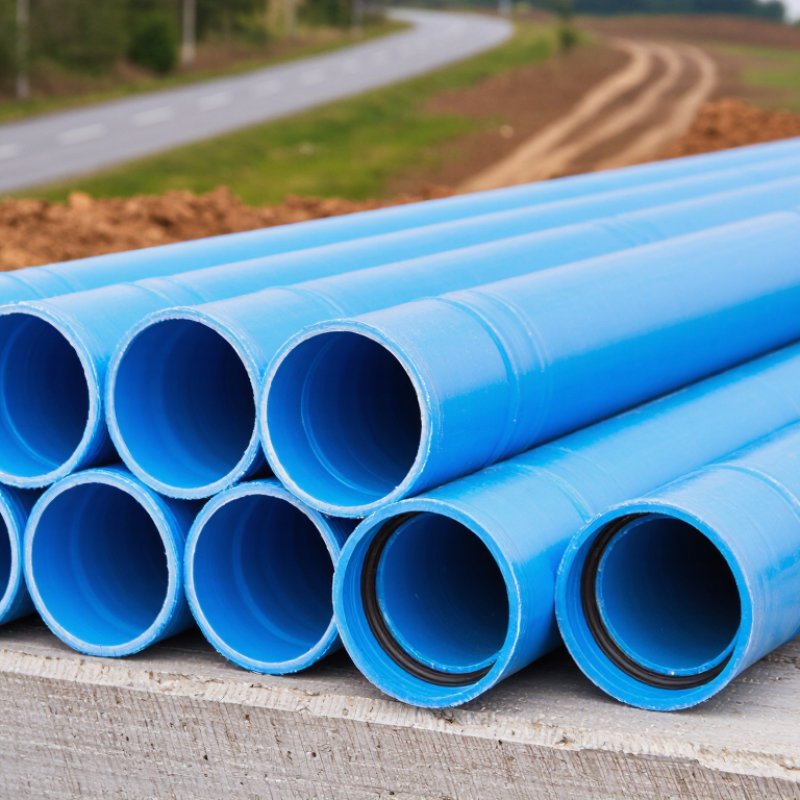
Field experience also matters. Consider a 63mm MDPE pipe installed beside a rural road, exposed to soil movement, summer heat, and repeated water-pressure changes. Its flexibility, fusion performance, and resistance to cracking become more important than a low initial quotation. Supplier communication matters too. Slow replies, unclear drawings, or vague pressure ratings may signal future problems. Sometimes, the cheapest option is not truly economical.

This guide examines Chinese 63mm MDPE pipe suppliers through practical and technical criteria. It considers material traceability, manufacturing control, pressure ratings, connection methods, inspection documents, and export experience. No supplier is perfect. Even a well-reviewed manufacturer may require closer verification before purchase. The best decision comes from matching pipe performance with the project’s actual ground conditions, operating pressure, installation method, and expected service life.
What Is the Best 63mm MDPE Pipe from China?

What Is 63mm MDPE Pipe and Where Is It Used?

63mm MDPE pipe is a medium-density polyethylene pipe with a nominal outside diameter of 63 millimetres. Its actual bore changes with the pressure class and wall thickness. For example, an SDR 11 pipe has an approximate wall thickness of 5.7 millimetres.

It is commonly used for underground potable-water services, irrigation lines, small distribution networks, and approved gas systems. ISO 4427-2 covers polyethylene pipes for water supply and pressure applications. For gas, the pipe, fittings, color coding, and installation method must meet the relevant national standard. A yellow surface alone does not prove compliance.

The Plastics Pipe Institute’s technical guidance commonly uses a 50-year design basis for polyethylene pressure pipe. Field performance can be longer when the trench, joints, temperature, and operating pressure are properly controlled. That figure is not a promise. Poor backfilling can create sharp stress points beneath a garden path or driveway. I have also seen project specifications overlook internal bore loss after choosing a pipe by diameter alone. Flow calculations should include the pipe’s SDR, fittings, elevation, and expected demand. For many medium-scale water projects, 63mm MDPE offers practical flexibility, corrosion resistance, and fewer joints than rigid pipe. Yet it may be undersized for peak commercial demand.
Which Materials and Standards Define High-Quality MDPE Pipe?

For a 63mm MDPE pipe, material selection should begin with the polymer grade, not the price. High-quality pipe commonly uses PE80 or PE100 polyethylene, with PE100 offering higher strength at comparable wall thicknesses. The resin should provide stable melt flow, strong resistance to slow crack growth, and verified carbon-black dispersion. That black layer matters because it helps protect the pipe from ultraviolet exposure. Small details matter.

A 63mm designation usually refers to the outside diameter. The actual wall thickness depends on the SDR class and pressure rating. For drinking-water systems, ISO 4427 and EN 12201 are widely recognized references. Some projects may specify ASTM D3035, but these standards should not be treated as automatically interchangeable. I would check the required pressure, temperature, joining method, and national regulations before approving a drawing. A familiar standard can still be the wrong standard.

Reliable production also requires controlled extrusion, smooth internal surfaces, accurate ovality, and clear batch traceability. Testing should cover hydrostatic strength, dimensions, carbon-black content, and resistance to rapid crack propagation where applicable. Factory certificates are useful, but independent inspection can reveal inconsistent wall thickness or poor marking. I have seen specifications focus heavily on tensile strength while overlooking installation conditions. That is an imperfect approach. Soil movement, bending radius, storage sunlight, and fusion quality can decide whether a 63mm MDPE pipe performs well for decades.

How Do Chinese 63mm MDPE Pipe Manufacturers Compare?

Chinese 63mm MDPE pipe manufacturers differ more in process control than in catalogue claims. PlasticsEurope’s Plastics—The Facts 2023 report states that China produced 32.1% of global plastics in 2022. That scale supports strong resin access and modern extrusion capacity. It does not guarantee consistent pipe quality.

A serious comparison starts with ISO 4427-2 dimensions, not price. For PE100 pipe, a 63mm SDR11 pipe normally has about 5.8mm wall thickness. SDR17 is thinner, at approximately 3.8mm. Buyers should request wall-thickness records, ovality results, melt-flow data, and long-term hydrostatic test reports. The PE100+ Association recommends checking material traceability and documented production controls. Good factories can identify the resin batch used for every shipment.

Look closely at the factory floor. A stable line should show clean calibration sleeves, controlled cooling water, and digital diameter monitoring. Black pipe should also meet the relevant carbon-black content and dispersion requirements under ISO 4427. Some manufacturers provide impressive certificates but weak batch records. That is a warning.

The best supplier is not always the largest. An independent inspection should verify samples before loading, including pressure testing and surface checks. Export packaging matters too. Bent pipe ends, loose straps, or uncovered fittings can create damage before installation. I would still allow room for doubt; a single successful test cannot represent a whole year of production. Deathly simple, but often missed.

What Features Should Buyers Evaluate Before Choosing a Supplier?

Choosing the best 63mm MDPE pipe from China starts with evaluating the supplier, not only the product price. Ask for the pipe’s outside diameter tolerance, wall thickness, SDR classification, pressure rating, and intended application. These details affect flow, flexibility, trench installation, and service life.

Request resin information and independent test reports. A reliable supplier should explain material grade, production controls, hydrostatic pressure testing, and batch traceability. Look for clear markings on the pipe, including size, SDR, production date, and standard reference. Ask for a sample before placing a large order. Small checks can prevent expensive surprises.

Production experience matters. Visit the factory online or in person, and inspect extrusion lines, cooling tanks, measuring tools, and storage conditions. The supplier should control ultraviolet exposure, contamination, ovality, and coil or straight-length packaging. Confirm lead times, minimum order quantities, export documents, and replacement procedures in writing. Communication is part of quality.

No supplier is perfect. That matters. I would compare several quotations instead of trusting the cheapest offer. A low price may hide inconsistent dimensions, weak packaging, or delayed responses. Ask practical questions and notice how precisely the supplier answers. A dependable partner provides evidence, admits limitations, and keeps specifications unchanged after the order.

What Is the Best 63mm MDPE Pipe from China? - What Features Should Buyers Evaluate Before Choosing a Supplier?

Evaluation Dimension Recommended Benchmark for 63mm MDPE Pipe Why It Matters Evidence Buyers Should Request
Nominal Outside Diameter 63 mm, manufactured to the selected dimensional standard and tolerance class Correct outside diameter is essential for compatible fittings, electrofusion equipment, and installation tools. Recent dimensional inspection report, calibrated measuring equipment records, and product drawings.
Material Classification Clearly identified PE grade, such as PE80 or PE100, with a declared density and design basis “MDPE” describes density, but pressure performance also depends on the resin grade, compound formulation, and design stress. Resin technical data sheet, batch traceability, and an independent material test or certificate of analysis.
Pressure Class and SDR Common options include SDR 11, SDR 13.6, or SDR 17; pressure rating must be stated at the applicable temperature and design life A smaller SDR indicates a thicker wall, but the final pressure rating depends on the material grade, standard, temperature, and safety coefficient. Product datasheet showing SDR, wall thickness, pressure rating, operating temperature, and design standard.
Indicative Wall Thickness Approximately 5.7 mm for SDR 11, 4.6 mm for SDR 13.6, and 3.7 mm for SDR 17, subject to the selected standard and tolerance Wall thickness affects pressure capacity, flexibility, weight, joining requirements, and material consumption. Cross-sectional drawing and inspection records showing minimum, average, and measured wall thickness.
Applicable Standards A recognized standard such as ISO 4427 for water systems, EN 12201, or the specified national standard Standards define dimensions, material performance, testing, marking, and suitability for the intended application. Full standard reference, declaration of conformity, and test reports that match the exact pipe grade and size.
Long-Term Hydrostatic Strength Performance demonstrated through the applicable long-term hydrostatic pressure test method and material classification Short-term burst results alone do not prove the pipe’s long-term service performance. Laboratory reports, test conditions, test duration, failure records, and the laboratory’s accreditation status.
Resistance to Slow Crack Growth Compliance with the crack-growth and environmental stress-cracking requirements of the chosen standard This property helps the pipe resist damage propagation caused by scratches, point loading, soil movement, or installation stress. Slow-crack-growth test results, notch or full-notch creep test data where applicable, and quality-control records.
Resistance to Rapid Crack Propagation Documented compliance where required by the project specification, climate, operating pressure, or national regulation The risk can increase in cold conditions, high-pressure applications, or systems exposed to sudden operating changes. Relevant test report and declared operating-temperature limits.
UV and Weathering Protection Carbon-black stabilized compound for outdoor storage or above-ground use, when required by the application Ultraviolet exposure can affect polymer performance if the formulation and storage conditions are unsuitable. Compound formulation, carbon-black or weathering test data, storage guidance, and maximum permitted outdoor exposure period.
Chemical and Application Suitability Compatibility confirmed for potable water, irrigation, gas, mining, or industrial service as applicable PE pipe suitability varies with fluid type, concentration, temperature, pressure, and regulatory requirements. Chemical-resistance guidance, application approval, operating limits, and potable-water certification when relevant.
Jointing Compatibility Compatible with specified butt-fusion, electrofusion, compression, or mechanical fittings A pipe can meet dimensional requirements yet still create installation problems if the joining system is not matched correctly. Fitting compatibility chart, fusion parameters, installation manual, and sample joint qualification records.
Pipe Surface and Appearance Smooth internal and external surfaces without cracks, blisters, voids, inclusions, or visible damage Surface defects may indicate poor extrusion control or create stress-concentration points. Inspection checklist, production photographs, defect limits, and acceptance criteria.
Marking and Traceability Permanent marking showing size, SDR, material grade, standard, production date or batch, and intended application where required Traceability allows nonconforming batches to be identified and supports installation and warranty control. Marking sample, batch coding system, production records, and certificate-to-batch matching procedure.
Quality Management Documented quality system with routine dimensional, visual, hydrostatic, and material checks Consistent process control is more reliable than evaluating a single sample alone. Quality manual, inspection and test plan, calibration certificates, corrective-action records, and audit access.
Third-Party Certification Certification from a recognized body that covers the exact material, size range, SDR, and application A certificate is only useful when its scope matches the product being purchased. Certificate number, issuing body, validity period, scope, surveillance details, and verification link.
Packaging and Shipping Protection Packaging that prevents deformation, contamination, impact damage, and excessive bending during transport Poor handling can damage pipe before installation even when the extrusion quality is acceptable. Packaging specification, loading photographs, reel or bundle dimensions, and shipping protection procedure.
Commercial and Technical Support Clear quotation, defined Incoterms, realistic lead time, technical submittals, and responsive after-sales support The lowest unit price may create higher total costs if documentation, delivery, or installation support is inadequate. Detailed quotation, production schedule, warranty terms, technical contact, sample policy, and documented export experience.
Buyer’s selection principle: The best 63mm MDPE pipe is not necessarily the lowest-priced option. Select the product that matches the required material grade, SDR, pressure rating, application standard, test evidence, traceability, joining method, and total delivered cost.

How Can You Verify Quality, Certification, and Total Cost?

What Is the Best 63mm MDPE Pipe from China?

A good 63mm MDPE pipe starts with traceable material, not a low quotation. The Plastics Pipe Institute’s PE Handbook commonly uses a 50-year design basis for properly designed polyethylene pressure systems. Ask the supplier for the resin grade, SDR classification, PN rating, and batch number. ISO 4427-2 defines polyethylene pipe dimensions, performance requirements, and test methods for water applications. Check whether the certificate names the exact 63mm pipe, not only the factory.

Request independent test reports for hydrostatic strength, carbon black content, oxidation induction time, and dimensions. A production sample should show uniform black color, clean extrusion, and consistent wall thickness. Measure several points around the pipe; one attractive sample proves little. Certification can be confusing. ISO 9001 confirms management procedures, but it does not certify pipe performance. For drinking-water projects, verify approval from the destination market’s recognized authority, such as a national sanitation or water-contact scheme.

Calculate total landed cost carefully. Include pipe, fittings, inspection, packaging, ocean freight, insurance, customs charges, local transport, and installation. A lower factory price may hide thicker packaging risks or higher rejection rates. The International Trade Centre recommends checking trade costs through tariff and logistics data, rather than relying on supplier estimates. Compare the delivered cost per usable metre. Ask for third-party inspection before shipment. I would still keep a reserve for delays; forecasts are rarely perfect.